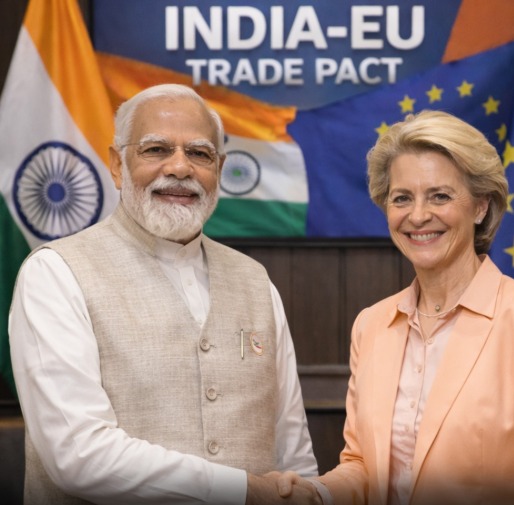

India and the European Union have concluded their Free Trade Agreement (FTA) negotiations after 18 years. The landmark pact is expected to boost bilateral trade, enhance strategic cooperation, and strengthen global supply chains. It marks a turning point in India’s integration with global markets and EU’s Indo-Pacific outreach.
Historic Conclusion
After nearly two decades of negotiations, India and the EU have finalized their FTA, signaling a new era of economic and strategic partnership. The agreement covers trade in goods, services, investment, and sustainable development, aiming to reduce tariffs and expand market access.
Economic Impact
The pact is expected to significantly increase bilateral trade, benefiting sectors such as automobiles, textiles, pharmaceuticals, and technology. Lower tariffs will make Indian exports more competitive in Europe, while EU companies gain easier access to India’s fast-growing market. The deal also emphasizes green technologies and digital cooperation.
Strategic Significance
Beyond economics, the FTA strengthens India-EU ties in the Indo-Pacific, countering global supply chain disruptions and fostering resilience. It reflects India’s push for deeper global integration and the EU’s commitment to diversifying partnerships in Asia.
Key Highlights
-
FTA concluded after 18 years of negotiations
-
Covers goods, services, investment, and sustainability
-
Expected boost in trade across key sectors
-
Focus on green technologies and digital cooperation
-
Strengthens Indo-Pacific strategic partnership
Conclusion
The India-EU FTA is a landmark achievement, promising economic growth and strategic depth. By bridging markets and aligning priorities, the pact positions both partners as key players in shaping a resilient global order.
Sources: Economic Times, Business Standard, The Hindu