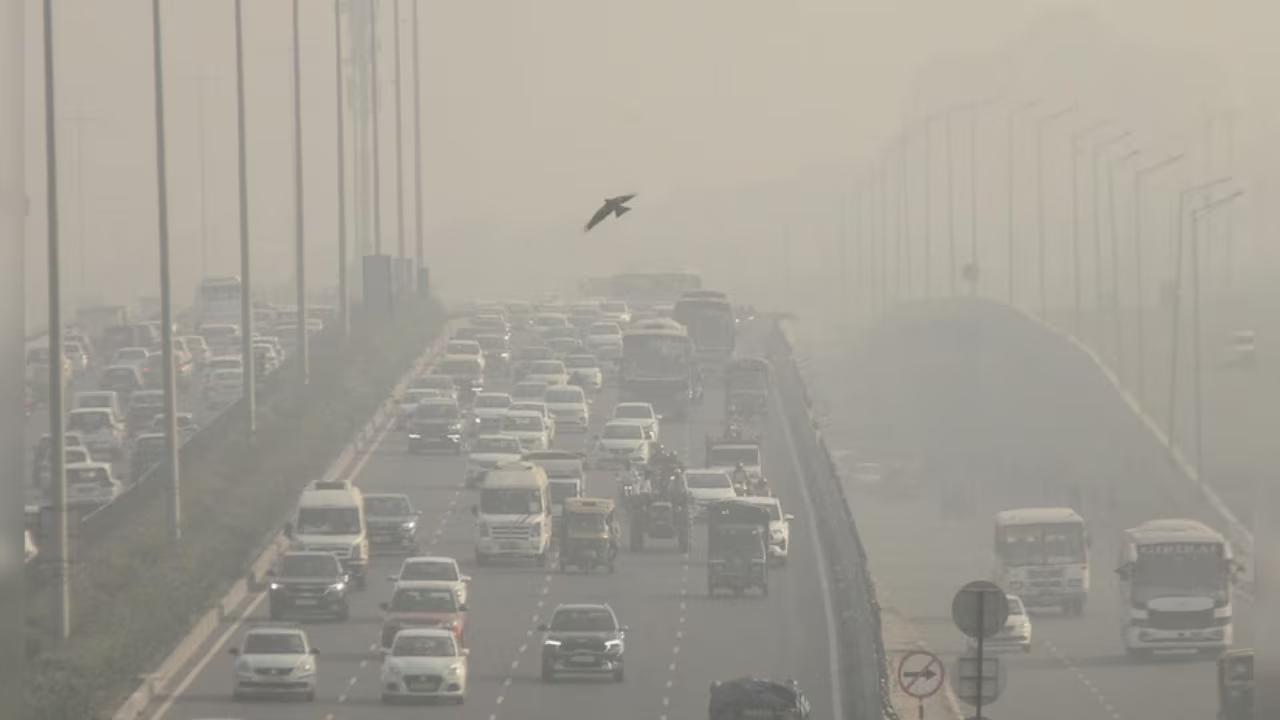

Despite overnight showers in Delhi-NCR, the city’s Air Quality Index (AQI) remained in the ‘Very Poor’ category at 324 on February 1, 2026. Data from the Central Pollution Control Board (CPCB) shows pollution hotspots like Anand Vihar and Wazirpur recording AQI above 360, underscoring persistent smog and health risks.
Delhi’s Air Quality Crisis Persists: Light Rain Offers No Relief, AQI Stays ‘Very Poor’
Residents of Delhi woke up to light rain on Sunday, but the showers failed to clear the toxic air blanketing the capital. According to the CPCB, the overall AQI stood at 324 (‘Very Poor’) at 6 am, with several areas reporting even higher levels.
The India Meteorological Department (IMD) had issued a yellow alert for light rain and thunderstorms, but experts noted that the precipitation was insufficient to disperse fine particulate matter (PM2.5). Pollution hotspots such as Anand Vihar (363), Wazirpur (385), Siri Fort (355), Dwarka Sector 8 (343), and Jawaharlal Nehru Stadium (341) recorded dangerously high AQI levels.
Major Takeaways
-
AQI status: Overall AQI at 324, classified as ‘Very Poor’.
-
Pollution hotspots: Anand Vihar and Wazirpur recorded AQI above 360.
-
Weather impact: Light rain and cold wave failed to reduce pollution significantly.
-
Health risks: Elevated PM2.5 levels pose respiratory hazards.
-
Forecast: IMD predicts warmer, drier February with below-normal rainfall, raising concerns about worsening air quality.
Delhi’s persistent smog highlights the urgent need for stronger pollution control measures, as weather interventions alone remain insufficient to tackle the capital’s air quality crisis.
Sources: India Today, UNI, The Indian Express, News9live