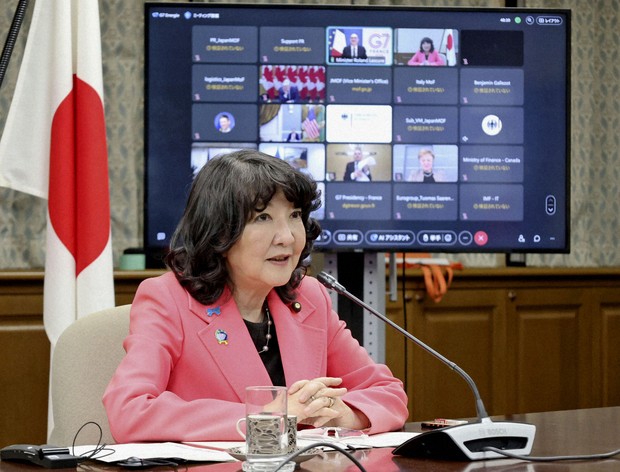





Global finance leaders convened in a G7 virtual meeting to assess the economic impact of Middle East tensions, energy market volatility, and currency stability. Japan’s Finance Minister Katayama briefed participants on Japan’s financial and forex markets while discussions emphasized coordinated monitoring of oil supply and potential emergency reserve releases.
Global financial leaders are intensifying coordination efforts as geopolitical tensions and energy market uncertainties pose potential risks to the global economy. During a recent G7 online meeting, Japan’s Finance Minister Katayama outlined Japan’s current financial market situation, including developments in foreign exchange markets, while global institutions assessed broader economic implications.
The virtual discussion brought together key international financial authorities and representatives from major global institutions, including the International Energy Agency (IEA), the Organisation for Economic Co-operation and Development (OECD), and the International Monetary Fund (IMF). The meeting primarily focused on how ongoing instability in the Middle East could influence global trade flows, inflation, and energy supply chains.
Japan used the platform to provide an update on domestic financial stability and currency movements, reinforcing the importance of close monitoring of forex dynamics amid volatile global conditions. At the same time, energy market security emerged as a central concern for policymakers.
According to Japan’s finance ministry statement following the meeting, leaders acknowledged that geopolitical developments could disrupt energy markets and potentially affect economic growth worldwide. As a result, G7 members agreed to strengthen coordination and remain prepared to take necessary actions if market instability escalates.
Key Highlights From The G7 Financial Discussion
-
Japan’s Finance Minister Katayama briefed G7 members on Japan’s financial market conditions, including developments in foreign exchange markets and broader financial stability measures.
-
Executives from the IEA, OECD, and IMF participated in the meeting, providing global economic insights and energy market assessments.
-
G7 finance ministers discussed the potential impact of the Middle East situation on global economic growth, trade dynamics, and inflationary pressures.
-
Participants agreed to closely monitor global energy markets and remain ready to implement coordinated responses if supply disruptions occur.
-
The International Energy Agency called for a potential joint release of emergency oil reserves to stabilize energy markets if necessary.
-
G7 finance ministers indicated they would push relevant government ministries to prepare for coordinated emergency oil reserve releases should market conditions require intervention.
The discussions highlight growing global coordination among financial and energy authorities as governments prepare contingency measures to safeguard economic stability, control energy price shocks, and mitigate potential disruptions to international trade.
Sources: Reuters, International Energy Agency (IEA), Organisation for Economic Co-operation and Development (OECD), International Monetary Fund (IMF)