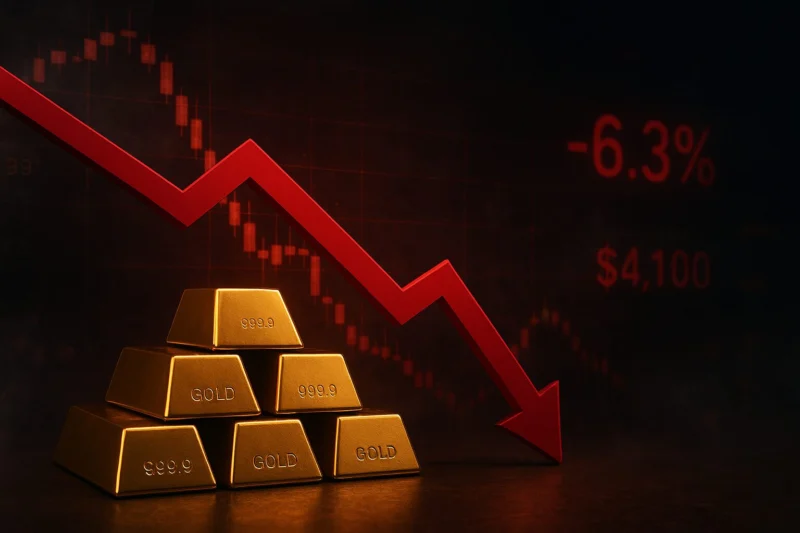

On February 2, 2026, spot gold prices plunged more than 6% to $4,563.36 per ounce, marking one of the sharpest single-day declines in recent months. The sell-off was driven by a stronger U.S. dollar, rising Treasury yields, and widespread profit-taking, triggering volatility across global commodities markets.
Spot gold prices today recorded a steep correction, falling over 6% to $4,563.36 per ounce on February 2, 2026, as investors reassessed risk exposure amid shifting global macroeconomic conditions. The sharp drop represents one of gold’s most significant daily losses in recent months, highlighting renewed volatility in the precious metals space.
Key Highlights
Why did gold prices fall today?
Gold prices declined due to a surging U.S. dollar, rising U.S. Treasury bond yields, and profit-taking following a sustained rally in recent weeks.
Dollar strength pressures gold:
A rebound in the U.S. dollar index made gold more expensive for overseas investors, reducing demand for the dollar-denominated asset.
Bond yields rise:
Higher Treasury yields increased the appeal of interest-bearing assets, drawing funds away from non-yielding instruments like gold.
Profit-taking accelerates sell-off:
Traders locked in gains after gold’s recent run-up, intensifying downward momentum.
Broader market impact:
Other precious metals, including silver and platinum, also moved lower, reflecting weakness across the commodities complex.
Outlook
Analysts caution that gold prices may face near-term pressure if the U.S. dollar and bond yields remain elevated. However, persistent inflation risks, geopolitical uncertainty, and central bank demand could support long-term safe-haven interest. Investors are advised to closely track Federal Reserve policy signals and global inflation trends.
Sources: Reuters Commodities, Bloomberg Metals, Economic Times Markets, Mint Business