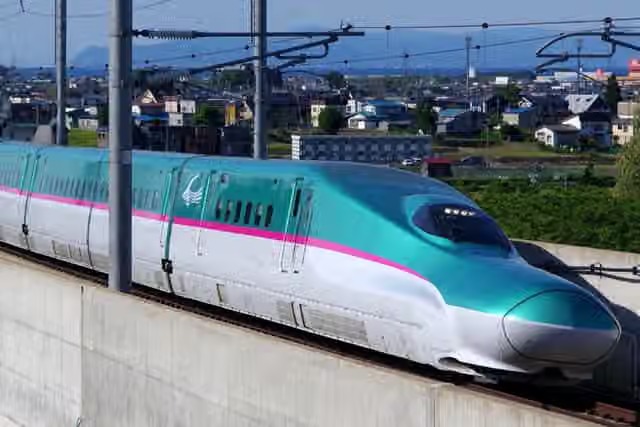

India’s ambitious Mumbai–Ahmedabad bullet train project has seen its estimated cost rise by 83% to Rs 1.98 lakh crore, alongside a four-year delay in completion. The revised timeline reflects challenges in land acquisition, construction hurdles, and inflationary pressures, though officials maintain confidence in the project’s long-term benefits.
India’s first high-speed rail corridor, connecting Mumbai and Ahmedabad, has encountered significant setbacks. Initially projected to be completed by December 2022, the project is now expected to be operational only by 2027. The cost escalation from Rs 1.08 lakh crore to Rs 1.98 lakh crore highlights the impact of delays, rising input costs, and expanded scope of work. Despite these challenges, the government continues to emphasize the transformative potential of the bullet train in reshaping India’s transport infrastructure.
Key highlights from the announcement include
-
The project’s cost has surged by 83%, now estimated at Rs 1.98 lakh crore.
-
Completion has been delayed by four years, with operations expected to begin in 2027.
-
Land acquisition issues, particularly in Maharashtra, contributed to the prolonged timeline.
-
Inflation, higher construction costs, and changes in design have added to the financial burden.
-
The corridor will span 508 km, reducing travel time between Mumbai and Ahmedabad to under three hours.
-
Japan International Cooperation Agency (JICA) is financing a major portion of the project through soft loans.
-
Officials stress that despite delays, the bullet train will revolutionize passenger travel and boost regional economic growth.
-
The project is expected to generate thousands of jobs and stimulate ancillary industries.
The Mumbai–Ahmedabad bullet train represents India’s push toward modernizing its transport infrastructure and aligning with global standards. While the delays and cost escalations have raised concerns, the government maintains that the long-term benefits—speed, efficiency, and economic stimulus—will outweigh short-term challenges. The project remains a flagship initiative under India’s infrastructure development agenda.
Sources: Economic Times, Business Standard, Hindustan Times, Mint