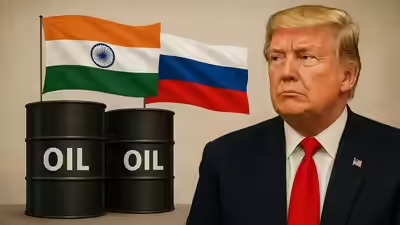

Poland has expressed satisfaction with India’s reduction in Russian oil imports, a move seen as aligning with Western efforts to limit Moscow’s energy revenues. The development comes as U.S. President Donald Trump threatens a 500 percent tariff on Russian oil, raising concerns over global energy markets and trade flows.
Poland has publicly acknowledged India’s decision to scale back Russian oil imports, describing it as a positive step in the broader geopolitical context. The announcement coincides with heightened tensions in global energy markets, as President Trump’s administration considers imposing a 500 percent tariff on Russian oil. Such a measure could significantly disrupt trade flows and impact countries reliant on discounted Russian crude.
Key highlights from the announcement include
-
Poland expressed satisfaction with India’s reduced reliance on Russian oil, viewing it as supportive of Western sanctions.
-
India’s imports of Russian crude have declined in recent months, reflecting diversification efforts in energy sourcing.
-
The U.S. administration under President Trump has threatened a 500 percent tariff on Russian oil, intensifying global market uncertainty.
-
Poland emphasized that India’s move strengthens international efforts to limit Russia’s energy revenues amid the ongoing conflict in Ukraine.
-
Analysts note that India’s diversification strategy includes increasing imports from Middle Eastern suppliers and exploring long-term energy partnerships.
-
The tariff threat has raised concerns about price volatility and supply chain disruptions in global oil markets.
-
India continues to balance its energy security needs with geopolitical pressures, maintaining a pragmatic approach to sourcing.
-
Poland’s statement highlights the importance of coordinated international action in addressing Russia’s energy influence.
The development underscores the complex interplay between geopolitics and energy security. India’s reduction in Russian oil imports, welcomed by Poland, reflects both strategic diversification and responsiveness to global pressures. Meanwhile, Trump’s tariff threat adds a new layer of uncertainty, potentially reshaping global oil trade dynamics in 2026.
Sources: Reuters, Business Standard, Hindustan Times, The Economic Times