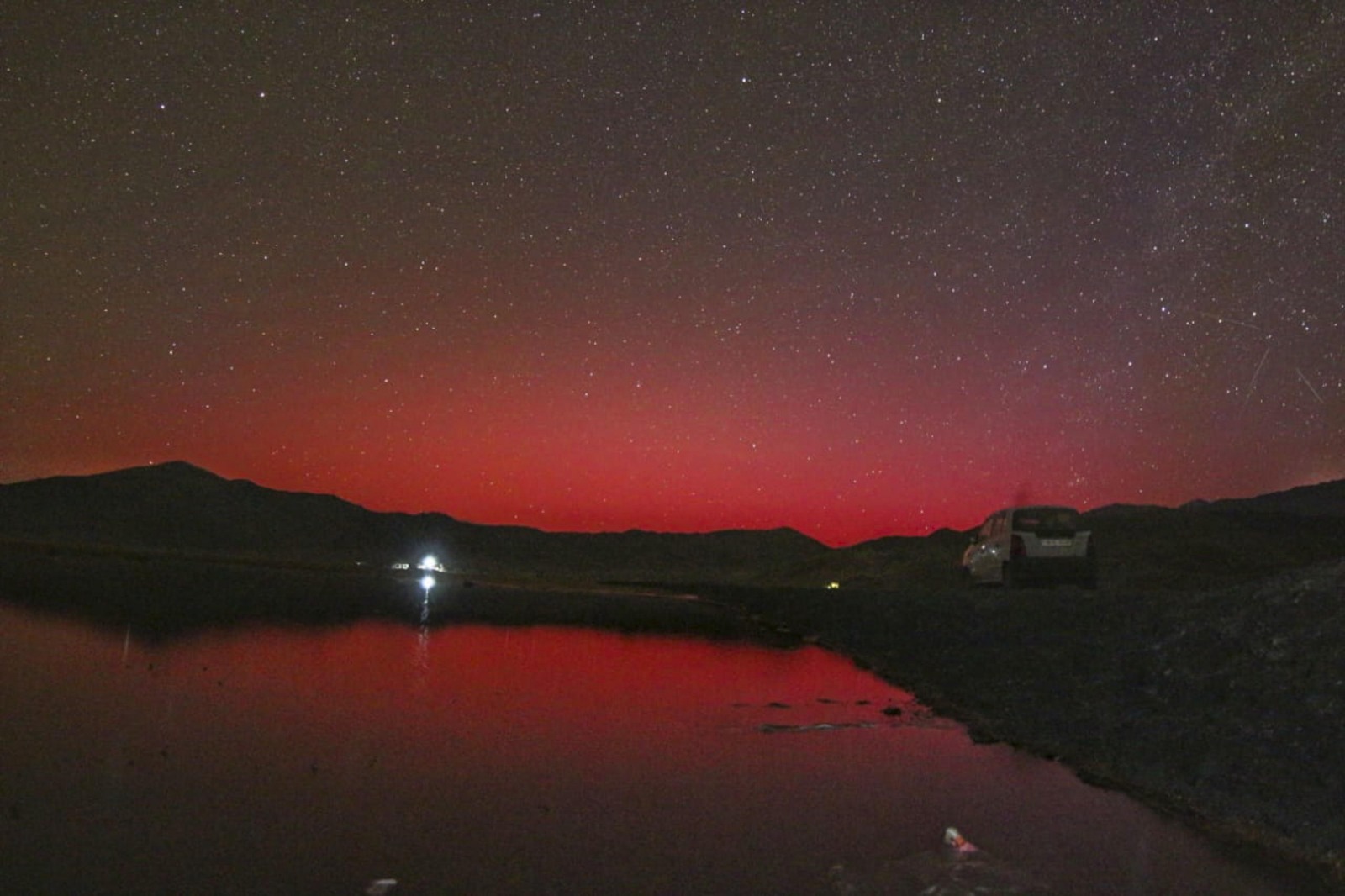

The rare red auroras observed over Hanle in Ladakh are more than a stunning spectacle. Triggered by intense solar storms, these crimson skies highlight vulnerabilities for India’s satellites, GPS systems, and power grids. Scientists warn that such geomagnetic activity could disrupt communications and energy infrastructure if preparedness measures are not strengthened.
On January 19 and 20, the night skies over Hanle in Ladakh glowed an eerie crimson, captivating observers and flooding social media with images. While visually mesmerizing, scientists caution that these auroras are a direct result of heightened solar activity, carrying serious implications for India’s technological and energy systems.
Key Highlights
-
Cause of Red Glow: High-altitude oxygen atoms reacting with solar plasma during geomagnetic storms.
-
Scientific Context: Rare auroral displays triggered by solar flares and coronal mass ejections traveling at nearly 800 km/s.
Risks to India:
-
Potential disruption of satellites and GPS navigation.
-
Threats to power grids and communication networks.
-
Increased vulnerability of space instruments and observatories.
Global Phenomenon: Similar auroras were reported across Europe, underscoring the global impact of solar storms.
Warning for India: Experts emphasize the need for robust space-weather monitoring and protective infrastructure to safeguard national assets.
The red skies over Hanle serve as both a breathtaking natural event and a stark reminder of the risks posed by solar storms to India’s growing reliance on space and energy systems.
Sources: India Today, The Economic Times, News18