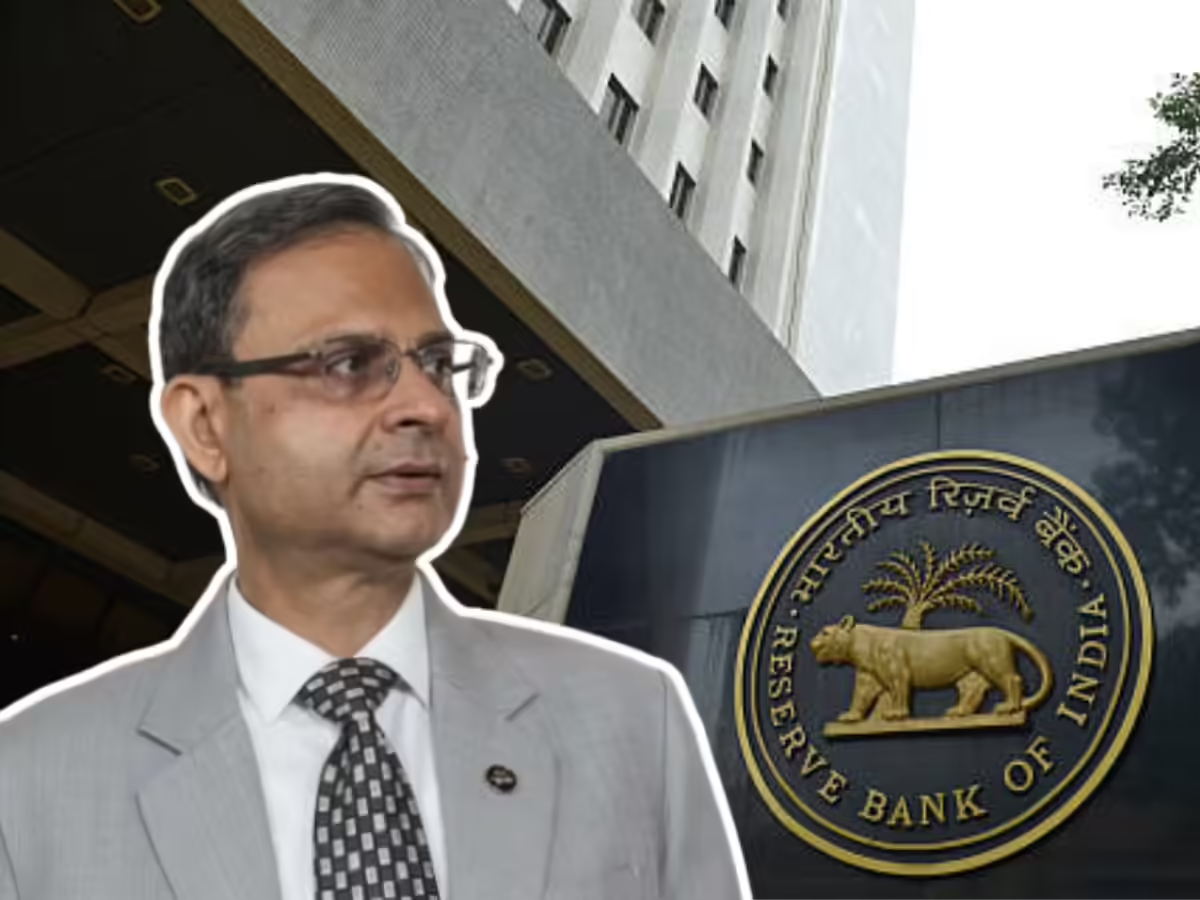
On February 6, 2026, RBI Governor Malhotra emphasized that India’s comfortable current account deficit (CAD), coupled with upcoming trade deals, will strengthen the economy. He welcomed the tax holiday for data centers in the Union Budget, noted that insurance sector liberalization will aid capital flows, and reaffirmed RBI’s commitment to sustaining UPI infrastructure.
India’s economic outlook received a strong endorsement from Reserve Bank of India (RBI) Governor Malhotra, who addressed key policy priorities and structural reforms during a recent briefing. His remarks touched upon trade, capital flows, digital payments, and financial sector liberalization—critical pillars shaping India’s growth trajectory.
Trade Deals and CAD Stability
Malhotra underscored that India’s comfortable current account deficit (CAD) provides resilience against external shocks. He added that new trade agreements will further bolster this position, enhancing export competitiveness and diversifying India’s global trade footprint. This combination of a manageable CAD and strategic trade partnerships is expected to strengthen macroeconomic stability.
Tax Holiday for Data Centers
The Governor expressed satisfaction with the tax holiday for data centers announced in the Union Budget, calling it a forward-looking measure that will accelerate India’s digital economy. With rising demand for cloud services, fintech platforms, and AI-driven applications, incentivizing data centers is seen as a catalyst for both domestic innovation and foreign investment.
Insurance Sector Liberalization and Capital Flows
Malhotra highlighted that the opening up of the insurance sector and large-scale financial sector deals will significantly improve capital inflows. By attracting global investors and strengthening domestic institutions, these reforms are expected to deepen India’s financial markets and provide long-term stability to capital flows.
UPI Payments and Government Oversight
On the subject of Unified Payments Interface (UPI), Malhotra clarified that decisions regarding levying charges on UPI transactions fall within the government’s domain. However, he stressed that the RBI remains committed to ensuring the sustainability and improvement of UPI infrastructure, given its role as the backbone of India’s digital payments ecosystem.
Sustaining UPI Infrastructure
Malhotra emphasized that the RBI will continue to work on enhancing UPI’s scalability, security, and efficiency. With UPI transactions crossing record volumes, sustaining infrastructure is vital to support India’s digital financial inclusion goals. The Governor assured stakeholders that RBI will find ways to balance innovation with long-term sustainability.
Why It Matters
Governor Malhotra’s remarks highlight a multi-pronged strategy: leveraging trade deals to strengthen external stability, incentivizing digital infrastructure for future growth, opening financial markets to attract capital, and ensuring robust digital payment systems. Together, these measures reflect India’s commitment to economic resilience, innovation, and inclusive growth.
Sources: Reserve Bank of India (RBI) Press Briefing, Economic Times, Business Standard, Moneycontrol