
India’s gig economy is at a crossroads as delivery agents demand fairer wages and dignity. Strikes highlight the imbalance between platforms’ efficiency models and worker realities. Higher pay would not weaken platforms but instead boost consumption, stabilize the workforce, and strengthen India’s economy through sustainable growth.
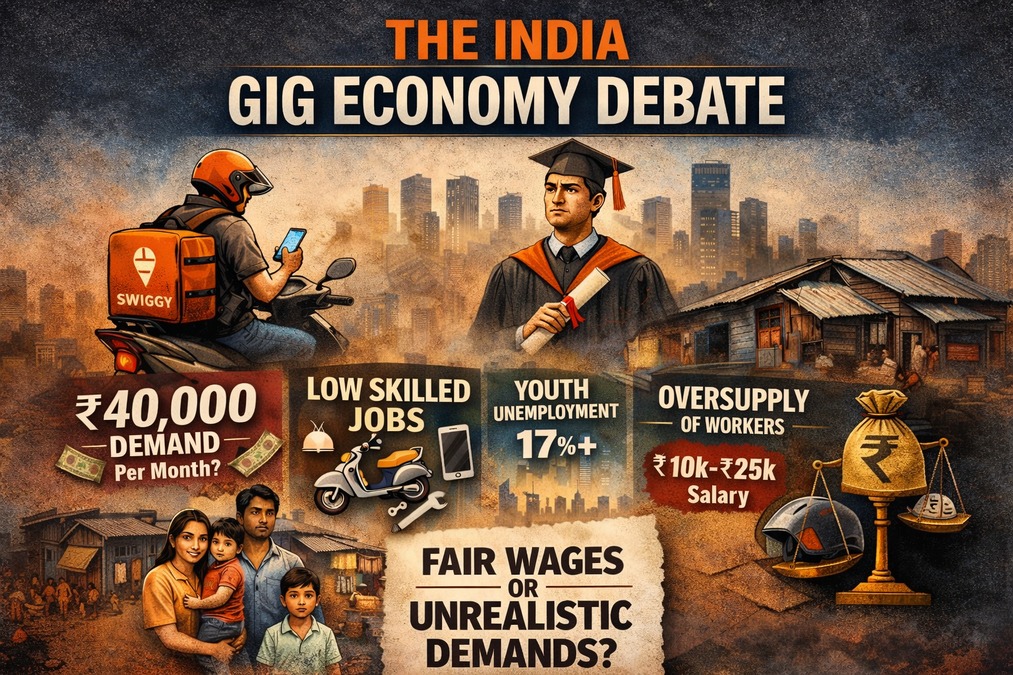
Gig workers across India have reignited the debate on wages, regulation, and dignity in the fast growing delivery sector. Strikes during the holiday season revealed the tension between platforms’ efficiency driven models and workers’ demand for fair compensation. The conversation now extends beyond regulation to the economic benefits of better wages.
Key Highlights
-
Delivery agents staged nationwide strikes on New Year’s Eve, demanding fair pay, minimum wage guarantees, and safer working conditions.
-
Zomato CEO Deepinder Goyal argued that the gig economy does not need more regulation, emphasizing that platforms already provide insurance and predictable wages.
-
Quick commerce’s 10-minute delivery model has come under fire, with unions calling it exploitative and unsustainable for workers.
-
Industry leaders and policymakers remain divided, with some defending platforms as engines of job creation, while others stress the need for structural reforms.
-
Workers report average daily earnings between Rs 600 and Rs 1,300 for long shifts, often reduced by penalties and fuel costs.
-
Experts argue that higher wages would not necessarily hurt platforms. Instead, they could increase worker retention, reduce turnover costs, and enhance consumer spending power.
Broader Context
India’s gig economy has expanded rapidly since 2021, driven by platforms like Zomato, Swiggy, Blinkit, and Zepto. The promise of ultra fast delivery has reshaped urban consumption, but the human cost is increasingly visible. Delivery partners describe their work as stressful, pressured, and often unsafe.
Economic Implications
Better wages for delivery agents could have a multiplier effect on the economy. Increased disposable income among millions of gig workers would translate into higher consumption, benefiting sectors beyond food and retail. Platforms, meanwhile, would gain from a more stable workforce, reducing recruitment and training expenses.
The Debate Ahead
The central question is not whether quick-commerce should exist, but whether it can sustain itself without eroding worker dignity. As India’s policymakers weigh regulation, the focus must shift to ensuring fair compensation. Strikes have shown that ignoring worker concerns risks destabilizing one of the country’s fastest-growing employment engines.
Sources: Business Today, Times Now, CNBC TV18, India Today, Deccan Herald