
The Viksit Bharat – G Ram G Act has been introduced as a landmark initiative to empower India’s villages. Union Minister Shivraj Singh Chouhan emphasized that the law will boost employment, expand basic facilities, and foster self-sufficiency. With community participation at its core, the Act aims to transform rural India into sustainable, self-reliant hubs.
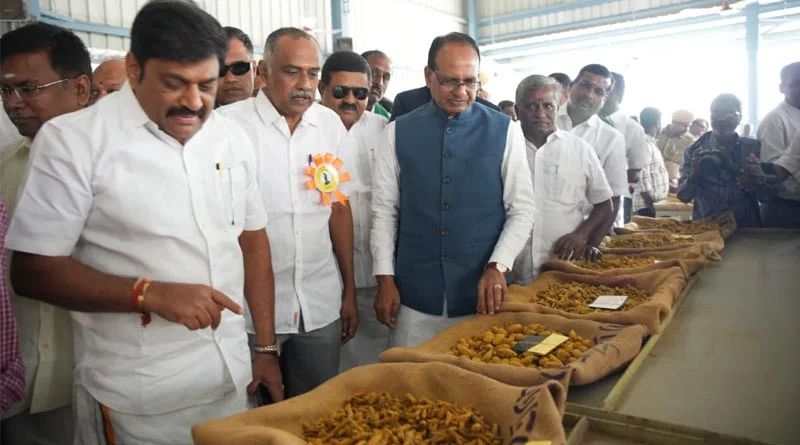
India’s rural development agenda has taken a decisive step forward with the launch of the Viksit Bharat – G Ram G Act. Announced by Union Minister of Agriculture and Rural Development Shivraj Singh Chouhan in Erode, Tamil Nadu, the Act is designed to strengthen the foundation of self-reliant (Atmanirbhar) villages.
The law focuses on employment generation, infrastructure expansion, and local decision-making, ensuring that development is driven by the needs of villagers themselves. Chouhan highlighted that shortcomings in earlier schemes, such as delayed wages and bureaucratic hurdles, will be addressed through this new framework.
By integrating agri-tech solutions, local governance, and community participation, the Act envisions villages that are not only economically independent but also socially resilient.
Notable Updates and Major Takeaways
Employment boost: Focus on job creation through rural industries and agri-tech.
Infrastructure growth: Expansion of basic facilities like healthcare, education, and sanitation.
Local governance: Decisions on village development to be made at the village level.
Community participation: Public involvement seen as key to success.
Agri-tech push: Testing labs and modern farming practices to support rural economies.
Conclusion
The Viksit Bharat – G Ram G Act lays the groundwork for a new era of rural empowerment. By combining technology, governance, and community spirit, it seeks to create villages that are self-reliant, prosperous, and future-ready.
Sources: Global Agriculture, Fortune India, Devdiscourse