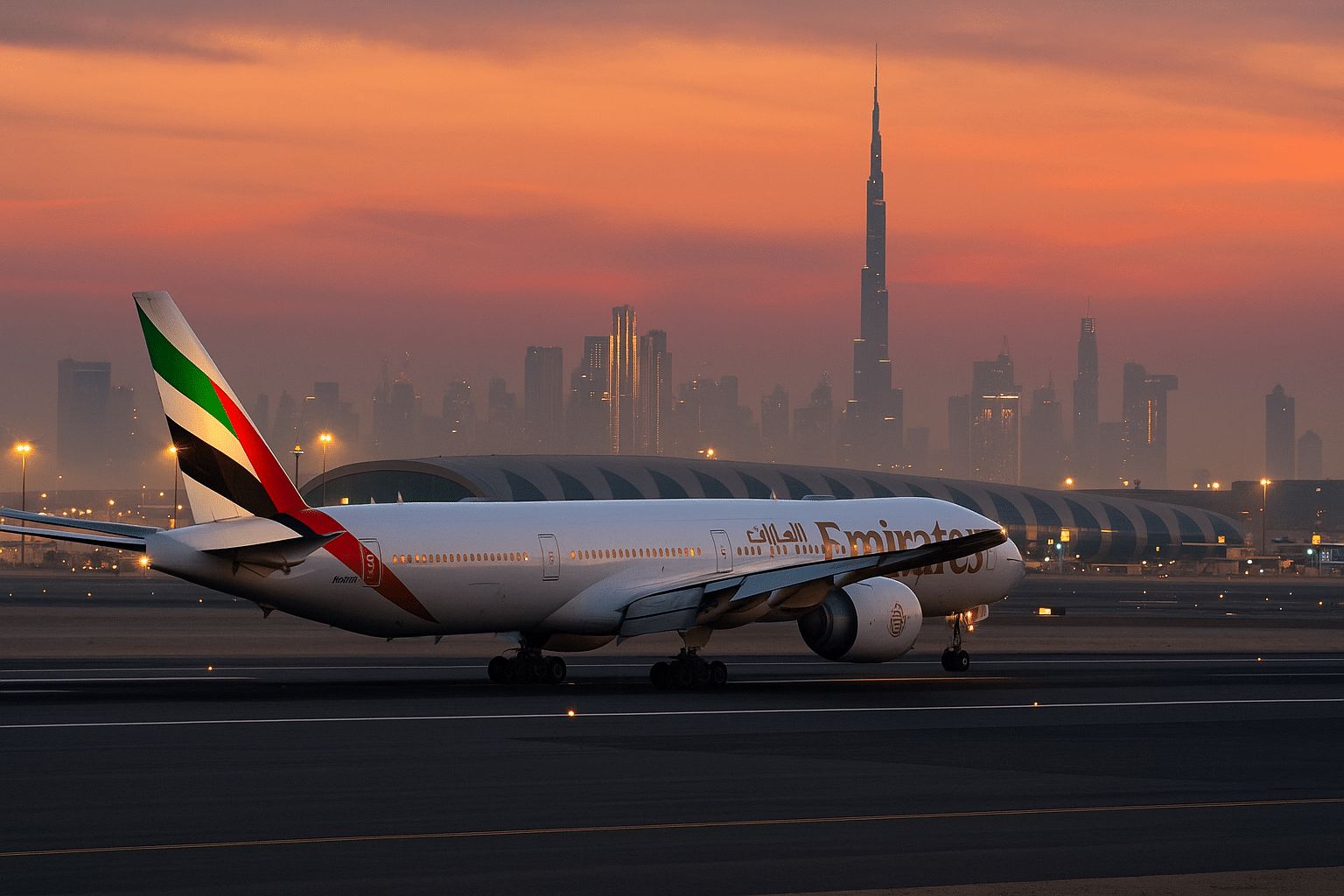
Emirates, founded in 1985 with two leased planes, has grown into a $30B+ global airline serving 150+ destinations. In 2025 it carried 55.6M passengers, set profit records, and launched its A350 fleet. In 2026, Emirates is betting on sustainability, digital innovation, and luxury to shape the future of aviation.
When Emirates launched in 1985 with two leased planes, few imagined it would become the world’s largest international airline. Its early flights to Karachi and Mumbai were modest, but the airline’s founders had a bold vision: make flying a luxury experience, not just a means of transport.
That vision led to pioneering moves: introducing personal in‑flight entertainment screens in the 1990s, creating private suites in First Class, and even offering onboard showers. While rivals competed on cost, Emirates built a brand synonymous with prestige, comfort, and innovation.
Fast forward to 2025: Emirates celebrated its 40th anniversary with record achievements. It carried 55.6 million passengers, operated nearly 180,580 flights, and placed orders for 73 new aircraft. Financially, it reported a half‑year profit of $3.3B, up 17% year‑on‑year, proving that luxury can be profitable at scale.
Now, in 2026, Emirates is entering a new chapter — one defined by sustainability and digital transformation.
Key Highlights
-
Fleet Modernization: Emirates received its first Airbus A350‑900s (65 ordered). These fuel‑efficient aircraft mark a shift toward greener aviation.
-
Profitability: Revenues surged past $30B, with operating costs rising only modestly (4%), showing resilience despite global inflation.
-
Innovation: Emirates is rolling out Starlink WiFi, offering passengers high‑speed connectivity even at 35,000 feet.
-
Sustainability: A multi‑billion‑dollar retrofit program is underway to reduce emissions and improve efficiency across its fleet.
-
Global Reach: With 150+ destinations, Emirates continues to expand into underserved markets, strengthening Dubai’s role as a global hub.
Notable Insights
-
Unique Fact: Emirates’ iconic logo was designed for just $35, yet today it represents one of the most valuable airline brands worldwide.
-
Learning Point: Emirates proves that customer experience can be a growth engine. By betting on luxury when others cut costs, it built loyalty and brand equity.
-
Resilience: Even during crises like COVID‑19, Emirates leaned on its premium positioning to recover faster than many competitors.
-
Future Outlook: Expect Emirates to lead in green aviation, digital personalization, and luxury cabin innovation — blending sustainability with prestige.
Why This Matters
Emirates’ trajectory is more than an airline story — it’s a business case study. From two leased planes to a $30B+ empire, it shows that bold differentiation, relentless innovation, and customer‑first thinking can scale globally. In 2026, its pivot toward sustainability and digital innovation offers lessons for industries far beyond aviation.
Sources: Emirates Group Half‑Year Profit Record 2025–26, AeroTime, Travel and Tour World, Airbus – Emirates Receives First A350‑900