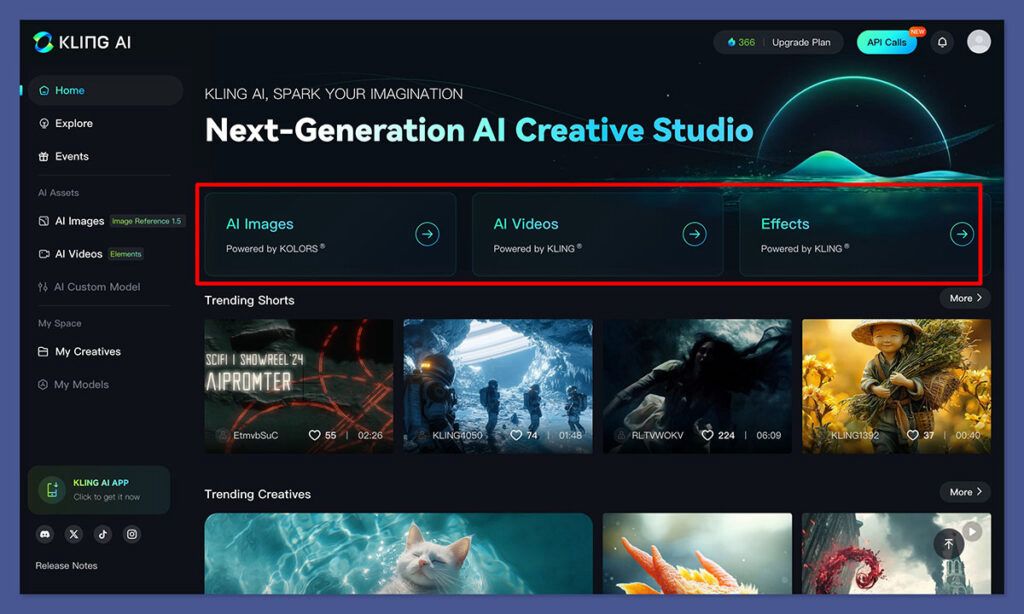
Kling 3.0 marks a major shift in AI filmmaking by introducing structured, scene-based video generation. Available exclusively on Higgsfield, the model enables creators to control pacing, camera movement, and subject continuity across sequences transforming AI video from single shot experiments into editable, production ready visual storytelling.
Artificial intelligence in video creation has long impressed audiences with realism but struggled with structure. Short clips looked stunning, yet lacked continuity, directability, and real production control. That boundary has now shifted.
With the launch of Kling 3.0, available exclusively on Higgsfield, AI video enters a new phase one defined not by visuals alone, but by cinematic structure.
From Clips to Scenes: What Changed
Earlier AI video models were optimized for single-shot generation. Each attempt was isolated. If pacing felt off or motion broke, creators had to start again from scratch.
Kling 3.0 approaches video creation differently. It introduces scene-based generation, allowing users to define multiple scenes within a single sequence. Creators can control:
• Scene duration and pacing
• Camera movement and framing
• Subject consistency across shots
• Locked start or end frames for continuity
This makes AI video behave less like a generator and more like a controllable filmmaking system.
Why Structure Matters in AI Filmmaking
Structure is what separates clips from cinema. Without it, AI video remains impressive but impractical for serious storytelling, advertising, or branded content.
Kling 3.0 addresses this gap by enabling creators to refine motion and narrative flow without resetting the entire sequence. Changes can be applied at the scene level, preserving continuity while allowing iteration—an essential requirement for professional production workflows.
This shift signals AI video moving from novelty to utility.
Higgsfield: Turning AI Output into Editable Footage
What makes this launch particularly significant is where Kling 3.0 lives.
Within Higgsfield, Kling-generated footage is treated as editable production material, not static output. Creators can:
• Layer motion design and text
• Adjust timing and sequencing
• Integrate AI video into broader visual workflows
This bridges a long-standing gap between AI generation and post-production bringing AI video closer to how real-world footage is handled in studios.
Not Just Better Video Usable Video
The leap with Kling 3.0 is not about making videos look prettier. It is about making them repeatable, directable, and usable.
For filmmakers, marketers, and creators, this means:
• Faster iteration cycles
• Greater creative control
• Reduced dependency on reshoots or regeneration
• AI video that can fit into real timelines and deliverables
This evolution positions AI video as a collaborator in the creative process rather than a one-off output machine.
What This Means for the Industry
The availability of Kling 3.0 exclusively on Higgsfield highlights a broader trend in AI: vertical integration. Instead of standalone models, AI tools are increasingly embedded into end-to-end platforms that support ideation, generation, and refinement.
For the filmmaking and content industry, this could accelerate:
• Indie and experimental filmmaking
• Rapid prototyping for commercials and brand films
• Pre-visualization and concept testing
• New creator-led production pipelines
AI video is no longer just about generating images in motion—it is about enabling storytelling systems.
Looking Ahead
As AI video tools mature, structure and control will define adoption. Kling 3.0’s scene-based approach suggests where the industry is heading: toward AI that understands narrative flow, production logic, and creative intent.
With Higgsfield positioning itself as a home for directable AI filmmaking, this launch may be remembered as the point where AI video crossed from experimentation into real-world production.
Sources: Higgsfield, Kling AI , VentureBeat, TechCrunch