The NHAI has suspended two key officials and issued show-cause notices following a viral video of a cave-in on the newly inaugurated Delhi-Dehradun Expressway. The authority blamed drainage failures caused by local obstruction and land disputes, confirming that immediate repairs have been completed and traffic has been restored.
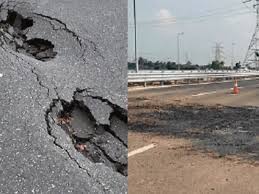
The National Highways Authority of India (NHAI) has initiated strict disciplinary action following a road surface cave-in on the Delhi–Dehradun Economic Corridor. The incident, which occurred early on July 1, 2026, near Kheda Mastan village in Uttar Pradesh's Baghpat district, saw a section of the newly built expressway sink following heavy overnight rainfall. The damage, captured on video and widely circulated on social media, sparked immediate public outcry regarding the quality of the flagship infrastructure project.
NHAI Crackdown on Negligence
In response to the viral footage and subsequent public scrutiny, the NHAI has taken decisive administrative action. According to official statements, the authority has suspended the team leader of the authority engineer (consulting firm) and the project manager of the EPC contractor.
Furthermore, the NHAI has issued formal show-cause notices to the project director, seeking an explanation for the lapse in oversight, and to the authority engineer for alleged negligence in professional duties. The EPC contractor has also been served a notice, with the authority demanding an explanation as to why the firm should not be declared a "non-performer" and barred from future projects under the NHAI’s portfolio.
Drainage Failure and Local Obstruction
While public concern focused on construction quality, the NHAI attributed the cave-in primarily to localized water stagnation caused by incomplete drainage infrastructure. Officials stated that the permanent cross-drainage system at the site could not be commissioned due to sustained resistance from local residents.
According to the NHAI, a balancing culvert designed to channel rainwater across the carriageway has remained non-operational because locals have allegedly been using the culvert opening as an unauthorized vehicular crossing. Additionally, the authority noted that permanent slope protection and chute drain works remain stalled due to an ongoing land-related arbitration dispute, preventing the execution of the original design. As an interim measure, the NHAI has begun constructing a 1.5-kilometer parallel drain and is redesigning the drainage gradient to manage water flow until the permanent system is fully integrated.
Impact on Commuters and Infrastructure Integrity
The 213-km Delhi-Dehradun Economic Corridor, inaugurated by Prime Minister Narendra Modi in April 2026 at a cost of approximately ₹12,000 crore, is a vital artery intended to reduce travel time between the two cities to just 2.5 hours.
The incident has raised questions about the operational safety of such high-speed corridors. The NHAI confirmed that the damaged stretch was identified during routine patrolling on July 1 and was repaired on priority to ensure "safe and uninterrupted movement of traffic." The authority continues to monitor the site, and additional resources have been deployed to reinforce the stretch against further weather-related risks.
Key Facts at a Glance
Incident Date: The cave-in was discovered during routine patrolling in the early hours of July 1, 2026.
Disciplinary Action: The NHAI has suspended the team leader of the authority engineer and the contractor's project manager.
Primary Cause: NHAI cited localized water stagnation resulting from the inability to commission a cross-drainage system.
Project Context: The expressway, inaugurated in April 2026, is a key national infrastructure project linking Delhi and Dehradun.
Interim Measures: Construction of a 1.5-km parallel drain is underway to prevent future water accumulation.
FAQ
1. Why did the Delhi-Dehradun Expressway section cave in?
NHAI attributed the collapse to water stagnation following heavy rain, worsened by the inability to complete permanent drainage works due to local resistance and land-related disputes.
2. Is the expressway currently safe for travel?
Yes, the NHAI confirmed that the affected stretch was repaired immediately, and traffic movement has been restored and remains under continuous monitoring.
3. Who has been held accountable for the incident?
The NHAI has suspended the authority engineer's team leader and the contractor's project manager, while issuing show-cause notices to the project director and the EPC contractor.
4. What is the status of the drainage system?
The permanent drainage system is pending due to an arbitration dispute and local obstruction. The NHAI is currently implementing an interim 1.5-km parallel drain.
Source: NHAI Official PIB Release, Times of India, The Hindu