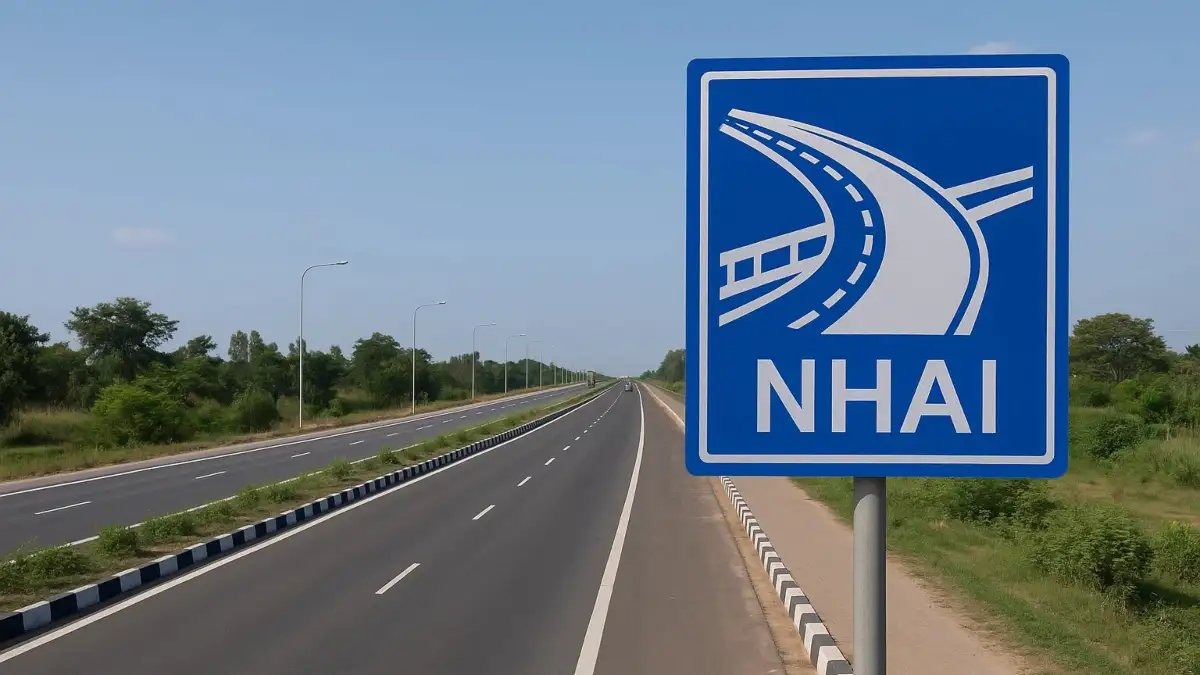
The National Highways Authority of India has secured a historic ₹1,202 crore arbitration award against private developer IRB over the Tumkur–Chitradurga six-laning highway project in Karnataka. The tribunal rejected the developer's financial claims, providing a landmark victory for the protection of public infrastructure contracts.
NEW DELHI — The National Highways Authority of India (NHAI) has been awarded a record-setting ₹1,202 crore by an independent arbitration tribunal in a contract dispute involving a private infrastructure developer. According to formal institutional briefs released today, 29 June 2026, the milestone legal victory stems from contractual defaults linked to the Tumkur–Chitradurga six-laning highway project in Karnataka. The tribunal decisively upheld the authority's counter-claims concerning unpaid annual premiums, revenue shares, and interest penalties, while throwing out the vast majority of financial compensation demands raised by the project's private concessionaire.
Strategic Victory Over Premium Deferment Violations
The dispute originated during the 2010–11 fiscal cycle when NHAI awarded the expansion of the Tumkur–Chitradurga stretch under the Build-Operate-Transfer (BOT) execution model. The concession agreement, structured to run until June 2037, legally obligated the private developer, IRB Chitradurga Tollway, to pay an annual operational premium of ₹140 crore, featuring a mandatory 5 percent annual escalation clause.
Following repeated financial defaults by the private operator, NHAI canceled a previously granted premium deferment facility in August 2019. The concessionaire subsequently initiated arbitration proceedings against the government body, demanding the restoration of the deferment window, ₹95 crore in direct monetary damages, and a 138-day extension to their toll collection lifecycle. NHAI strongly contested these demands, introducing counter-claims for accumulated premium shortfalls up to November 2022 alongside unremitted revenue shares from the adjacent Tumkur Bypass.
High-Profile Judicial Panel Rules in Favor of Public Treasury
The final ruling was delivered by a high-profile three-member arbitral panel composed of prominent legal minds, including former Supreme Court judges Justice G.S. Singhvi and Justice B.S. Chauhan, alongside former National Company Law Appellate Tribunal (NCLAT) member V.P. Singh. The tribunal determined that the private developer failed to maintain its core contractual duties, making the cancellation of the financial deferment facility entirely lawful.
The resulting ₹1,202 crore judgment covers all outstanding premium payments and missed revenue shares calculated up to June 2026. This outcome follows a broader, system-wide campaign by NHAI to aggressively defend public infrastructure funds in legal venues. Over recent months, the authority has successfully pushed back against multi-billion-rupee developer claims, including an August 2025 victory rejecting an ₹8,375 crore claim on the Panipat–Jalandhar BOT project, which instead brought in an ₹820 crore counter-award for the government.
Official Sources Section
Case files, project lifecycle metrics, and contract values are sourced from official litigation statements distributed by the National Highways Authority of India Media Wing. Strategic regulatory parameters and public-private partnership guidelines are cross-referenced with records from the Ministry of Road Transport and Highways.
Quote Section
"According to officials at the Ministry of Road Transport and Highways, this record-breaking arbitration victory establishes an important legal precedent for public-private partnerships across India. The tribunal's decision clarifies that private developers cannot use minor operational disruptions to avoid their premium-sharing obligations, protecting the state's public treasury from unearned financial liabilities."
Why It Matters
The ₹1,202 crore arbitration award safeguards the integrity of public infrastructure financing in India. For daily commuters and regional logistics firms, it ensures that vital transport corridors like the Tumkur–Chitradurga national highway remain under steady regulatory oversight without suffering maintenance backlogs from ongoing developer litigation. For the broader investment community, it demonstrates that India’s infrastructure legal frameworks are mature enough to enforce contract terms fairly, keeping private developers accountable to their financial commitments.
Key Facts at a Glance
Record Victory: NHAI has won a historic ₹1,202 crore arbitration award, the highest sum ever secured by the agency against a concessionaire.
Project Context: The litigation involved the Tumkur–Chitradurga six-laning infrastructure project located in Karnataka.
Claims Rejected: The judicial panel completely rejected the private operator’s ₹95 crore monetary claim and slashed its requested tolling extension.
Judicial Roster: The ruling was finalized by a panel including former Supreme Court Justices G.S. Singhvi and Justice B.S. Chauhan.
FAQ Section
Why did NHAI and the private developer enter arbitration over the Karnataka project?
The dispute began when the private developer defaulted on its annual premium payments, prompting NHAI to withdraw its premium deferment facility in 2019. The developer sued for damages, and NHAI filed counter-claims for outstanding dues.
What is a BOT model in highway construction?
Build-Operate-Transfer (BOT) is a project delivery framework where a private entity receives a concession from the government to finance, design, construct, and operate a facility for a set period, collecting tolls to recover its investment before transferring control back to the state.
How does this historic ruling impact other highway developers in India?
The decision serves as a firm reminder to the infrastructure sector that contract terms are strictly binding. It signals that central agencies will aggressively pursue counter-claims for outstanding public revenues rather than accepting settlement delays.
Source: National Highways Authority of India Legal Dispute Registry; Ministry of Road Transport and Highways Project Status Board; Arbitral Tribunal Orders Archive (Justice G.S. Singhvi Panel).