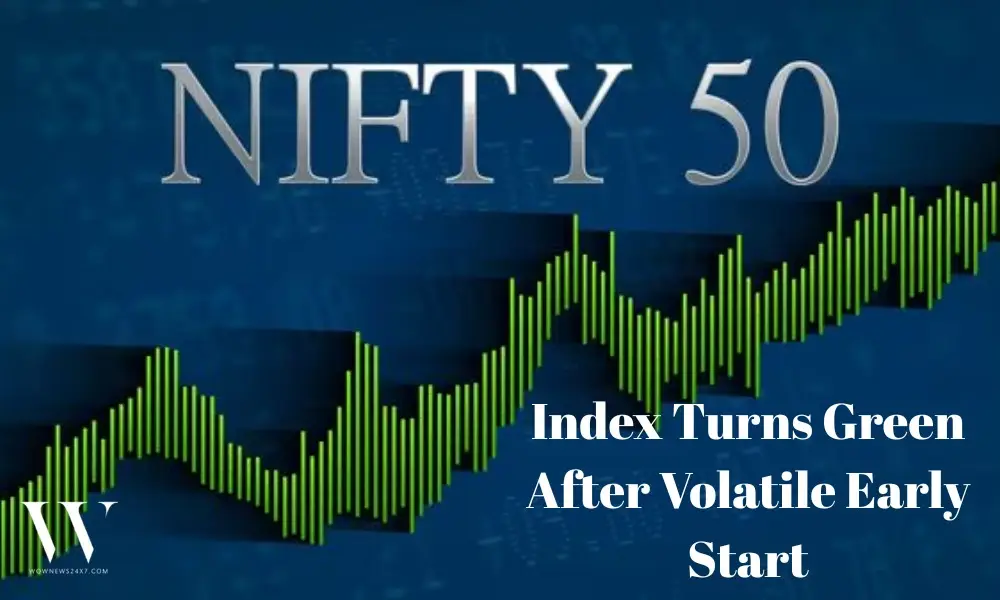
The Nifty 50 index trimmed its opening losses on Thursday, moving from a low of 23,072.05 back up to 23,183.25 by mid-morning. Despite headwinds from a hot 4.2% US inflation print and high oil prices, strong institutional buying in defensive consumer sectors helped stabilize the domestic market.
MUMBAI — India’s primary equity benchmark, the NSE Nifty 50 index, clawed back a notable portion of its opening losses on Thursday, June 11, 2026. The swift intraday recovery highlights robust buying support near critical psychological thresholds.
The National Stock Exchange of India (NSE) logged a sharp initial drop at the opening bell, with the Nifty 50 sliding 0.51% to hit an early session low of 23,072.05 points. The global sell-off followed a steep overnight drop on Wall Street and a localized jump in Brent crude oil prices to $94.38 per barrel. However, strong buying across defensive consumer sectors helped the headline index trim its losses, moving back up to 23,183.25 by mid-morning to trade down just 0.14%.
Shaking Off Aggressive US Inflation and Geopolitical Headwinds
The opening retreat across the Mumbai trading floor was a direct reaction to a combination of international macroeconomic developments. On Wednesday evening, the US Bureau of Labor Statistics reported that US consumer inflation jumped to 4.2% year-on-year for May, marking its highest expansion threshold in three years.
This hotter-than-expected print, combined with direct US military strikes on air defense nodes in Iran, sparked sudden risk aversion across global wealth desks.
The combination of sticky US inflation metrics and threats by Tehran to shut down the strategic Strait of Hormuz sent wave-like disruptions through commodity pipelines.
While the energy price surge initially dragged down oil-sensitive domestic industries, technical analysts noted that institutional money manager groups quickly stepped in to defend the Nifty 50's crucial 23,000 baseline, helping to stabilize broader market sentiment.
FMCG Defensiveness Outperforms Weakness in Commodity Layers
The intraday recovery was driven by a clear division in sectoral performance, with defensive stocks absorbing the brunt of the global market pressure:
Consumer Goods Resiliency: The Nifty FMCG Index emerged as a primary stabilizing force, led by steady institutional accumulations in Hindustan Unilever (HUL), ITC, and Nestle India.
Commodity and Realty Drag: Conversely, sectors dependent on imported raw materials—such as metal fabricators, specialty chemical developers, and real estate enterprises—faced ongoing margin pressure.
Broader Market Profit Booking: The mid-cap and small-cap segments experienced minor profit booking, with the Nifty Midcap 100 index drifting down 0.38% as retail participants adjusted their risk parameters.
Official Sources Section
Intraday transaction updates, specific index values, sectoral variations, and international market data are tracked using live data streams from the National Stock Exchange of India (NSE), trading files from the BSE, and foreign portfolio records maintained by the Securities and Exchange Board of India (SEBI).
Quote Section
Market strategists emphasize that while the index's ability to defend its near-term support is encouraging, directional clarity will depend on global oil trends.
According to technical research teams at domestic brokerage houses:
"The index's capability to bounce back from its early low of 23,072.05 shows strong underlying demand near the 23,000 support zone. We are seeing a healthy rotation into defensive sectors like FMCG, which is helping protect the market from matching the deeper corrections seen overnight on Wall Street."
Commenting on option open interest patterns, derivatives desk analysts added:
"The high concentration of put options at the 23,000 strike price is creating a reliable floor for the current weekly options cycle. However, until the Nifty 50 can break above its 50-day moving average near 23,800, the market will likely continue trading within a consolidated range."
Why It Matters
For mainstream retail investors and retirement fund participants, the market's recovery from its early gap-down shows the increasing resilience of India's domestic financial network against global shocks.
While rising international oil prices near $94 per barrel present a real threat to corporate profit margins and national inflation targets, steady buying from domestic institutional funds continues to help insulate local portfolios from severe global market pullbacks.
Key Facts at a Glance
Losses Trimmed: The Nifty 50 recovered from an early 0.51% opening drop, trimming its mid-morning losses to just 0.14%.
Support Defended: The frontline index established firm technical support at an intraday low of 23,072.05, keeping the key 23,000 psychological baseline intact.
External Triggers: The early market decline was sparked by a jump in US consumer inflation to 4.2% and rising military tensions in the Middle East.
Sector Support: Fast-moving consumer goods (FMCG) blue-chips led the intraday recovery, offsetting losses in energy-sensitive manufacturing and metals sectors.
FAQ Section
Why did the Nifty 50 index open with a significant gap-down today?
The index opened lower due to negative global cues, including a surge in US inflation to 4.2% and escalating military frictions in the Middle East, which pushed Brent crude prices toward $94 per barrel.
What is the technical significance of the 23,000 level for the Nifty 50?
The 23,000 mark serves as a vital psychological and technical support floor. Large volumes of derivative put options are concentrated at this level, meaning institutional traders are actively buying to defend this boundary.
Which specific sectors are helping the stock market recover today?
Defensive sectors, particularly Fast-Moving Consumer Goods (FMCG), are leading the recovery. Investors frequently park capital in these stable consumer stocks during periods of global geopolitical uncertainty.
Source: National Stock Exchange of India (NSE), Securities and Exchange Board of India (SEBI), Bloomberg Financial Ticker Net, Livemint Market Wire.