India's Nifty 50 Index extended its losses on June 8, 2026, dropping 1.04% to 23,123.25 amid a broad multi-sector sell-off. Led downward by heavyweights like Reliance and HDFC Bank, the market saw a weak advance-decline ratio alongside a falling rupee, impacting retail portfolio values.
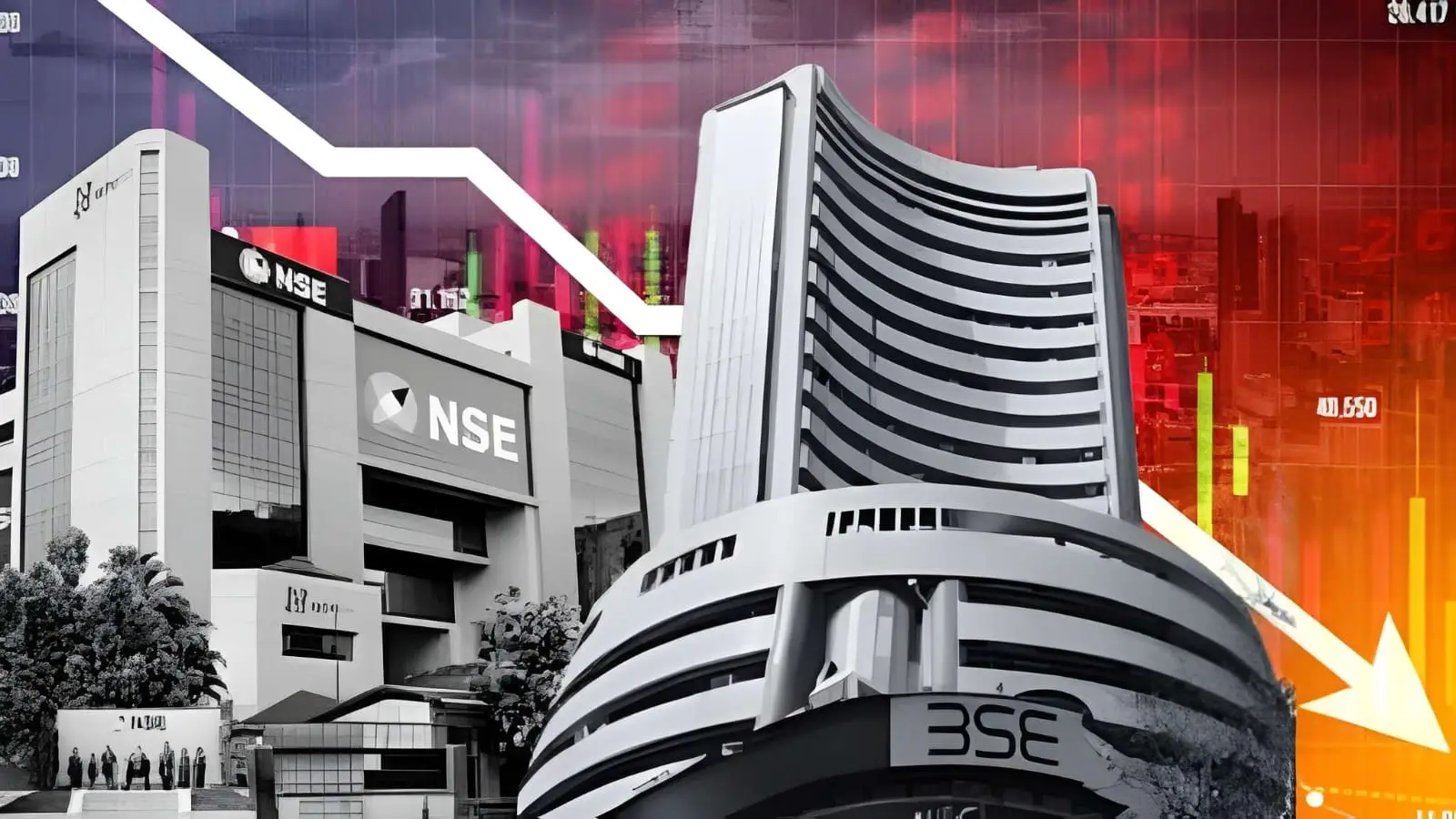
MUMBAI, INDIA — India's benchmark Nifty 50 Index extended its intraday losses on Monday, June 8, 2026, dropping more than 1% as a wave of selling pressure hit domestic equities. Trading data recorded at 03:20 PM IST showed the Nifty 50 trading at 23,123.25, down 243.45 points or 1.04%, after touching an intraday high of 23,267.30. The BSE Sensex witnessed a parallel retreat, tumbling 731.55 points, or 0.99%, to trade at 73,511.80. The unexpected multi-sector sell-off caught market participants by surprise, reversing recent positive momentum and dampening investor sentiment ahead of key corporate and macroeconomic announcements.
Market Breadth Weakens Significantly Amid Sectoral Decline
The downturn was marked by a severe deterioration in market breadth on the National Stock Exchange (NSE). According to real-time market data, only 556 stocks managed to advance, while a staggering 2,379 issues declined, signaling widespread bearish control over the trading floor.
The selling pressure was particularly aggressive in the mid-cap and small-cap spaces, which have recently driven domestic retail interest. The Nifty Mid100 index fell 1.31% to 59,957.00, while the Nifty Small100 index slumped 1.83% to 17,779.60. Sectoral indices also showed distinct structural cracks, with Nifty Realty emerging as one of the hardest-hit segments, dropping 2.46% as developers faced localized profit-taking.
Heavyweight Draggers Pull Down the Nifty 50 Index
An analysis of the structural contributors to the index's decline reveals that major market heavyweights acted as the primary anchors dragging down the Nifty 50 Index. Reliance Industries Limited emerged as the top dragger, wiping away an estimated 44.72 contribution points from the index.
The banking sector also faced intense institutional liquidation. HDFC Bank Limited and ICICI Bank Limited collectively dragged the index down by over 45 points, contributing heavily to a 0.76% decline in the Nifty Bank index, which fell to 54,084.50. Other notable stock draggers included Larsen & Toubro (L&T), Mahindra & Mahindra (M&M), and ETERNAL.
On the positive side, a few defensive and telecom stocks attempted to cushion the fall. Bharti Airtel led the gainers, adding 8.73 positive contribution points, followed by State Bank of India (SBIN), Power Grid Corporation, Max Healthcare, Bharat Electronics Limited (BEL), and Tech Mahindra. However, this support was not enough to counter the broader market liquidations.
Currency Pressures and Geopolitical Ripples
Compounding the equity market's troubles, the Indian Rupee (USDINR) weakened significantly, with the dollar gaining 0.64% to trade at ₹95.7450. A weakening rupee typically triggers capital outflows by foreign institutional investors (FIIs), who cut exposure to emerging-market equities to avoid currency depreciation losses.
Simultaneously, global geopolitical updates added to the nervous trading environment. A market commentary alert issued during the session highlighted statement updates regarding Middle Eastern tensions, noting that former US President Donald Trump stated Israel and Iran must immediately stop "shooting". This reminder of persistent geopolitical friction kept institutional buyers on the sidelines.
Economic Impact on Retail Investors and Traders
For Retail Investors and Shareholders
The sudden 1% drop in large-cap indices, combined with sharper cuts in mid-and-small-cap stocks, has caused a noticeable hit to daily portfolio valuations. Long-term investors are being advised to avoid panic selling, while short-term derivatives traders face higher margin calls due to sudden spikes in intraday volatility.
For Capital Market Participants and Brokers
The high volume of transactions during the afternoon slump has boosted intraday brokerage revenues but highlighted a clear shift from aggressive buying to defensive hedging. Financial institutions are adjusting their short-term risk metrics to prepare for potential follow-up selling in the coming sessions.
Official Sources Section
The equity prices, index performance statistics, currency metrics, and stock contribution data used in this report are based on official trading updates from the National Stock Exchange of India Limited (NSE) and BSE Limited.
Quote Section
Analyzing the technical breakdown observed during the afternoon session, market operations analysts stated:
"According to officials, the Nifty 50 Index broke through key short-term moving averages during the afternoon trade. The heavy concentration of selling in structural stocks like Reliance and HDFC Bank forced algorithmic trading systems to trigger automated stop-losses, accelerating the drop across broader indices."
Reflecting on the sentiment across retail trading desks, brokerage coordinators added:
"Organizers stated that the sharp drop in the advance-decline ratio shows this isn't just a localized correction. Traders are actively reducing their risk profiles due to a weaker rupee and unexpected global geopolitical commentary."
Why It Matters
When benchmark indices like the Nifty 50 drop over 1% in a single session, it reflects a broader change in institutional risk appetite rather than just simple daily market noise. The fact that major companies across energy, banking, and infrastructure are declining together indicates that investors are moving into a defensive stance. This shift could impact upcoming corporate capital raises and alter foreign fund flows into India's capital markets.
Key Facts at a Glance
Index Drop: The Nifty 50 Index fell 1.04% to trade at 23,123.25 by 03:20 PM IST.
Market Breadth: Bearish sentiment dominated, with 2,379 declining stocks against only 556 advancing issues on the NSE.
Primary Draggers: Reliance Industries (-44.72 pts) and HDFC Bank (-28.11 pts) led the index downward.
Currency Strain: The Indian Rupee fell as the USDINR pair rose 0.64% to ₹95.7450.
Mid/Small-Cap Hit: Nifty Small100 slid by 1.83%, showing deeper vulnerability among retail-heavy stocks.
FAQ Section
What caused the Nifty 50 Index to extend its losses today?
The decline was driven by a mix of heavy selling in index heavyweights like Reliance and major banking stocks, alongside a weakening rupee and cautious global geopolitical sentiment.
How did mid-cap and small-cap stocks perform during the session?
Mid-cap and small-cap segments fell sharper than the large-cap benchmarks, with the Nifty Small100 index dropping 1.83% and the Nifty Mid100 index declining 1.31%.
Which stocks tried to support the index during the market sell-off?
Bharti Airtel, State Bank of India (SBIN), and Power Grid were the main positive contributors, though their gains weren't enough to balance out the broader losses.
Source: Live market tracking screens, index registries, and stock breakdown