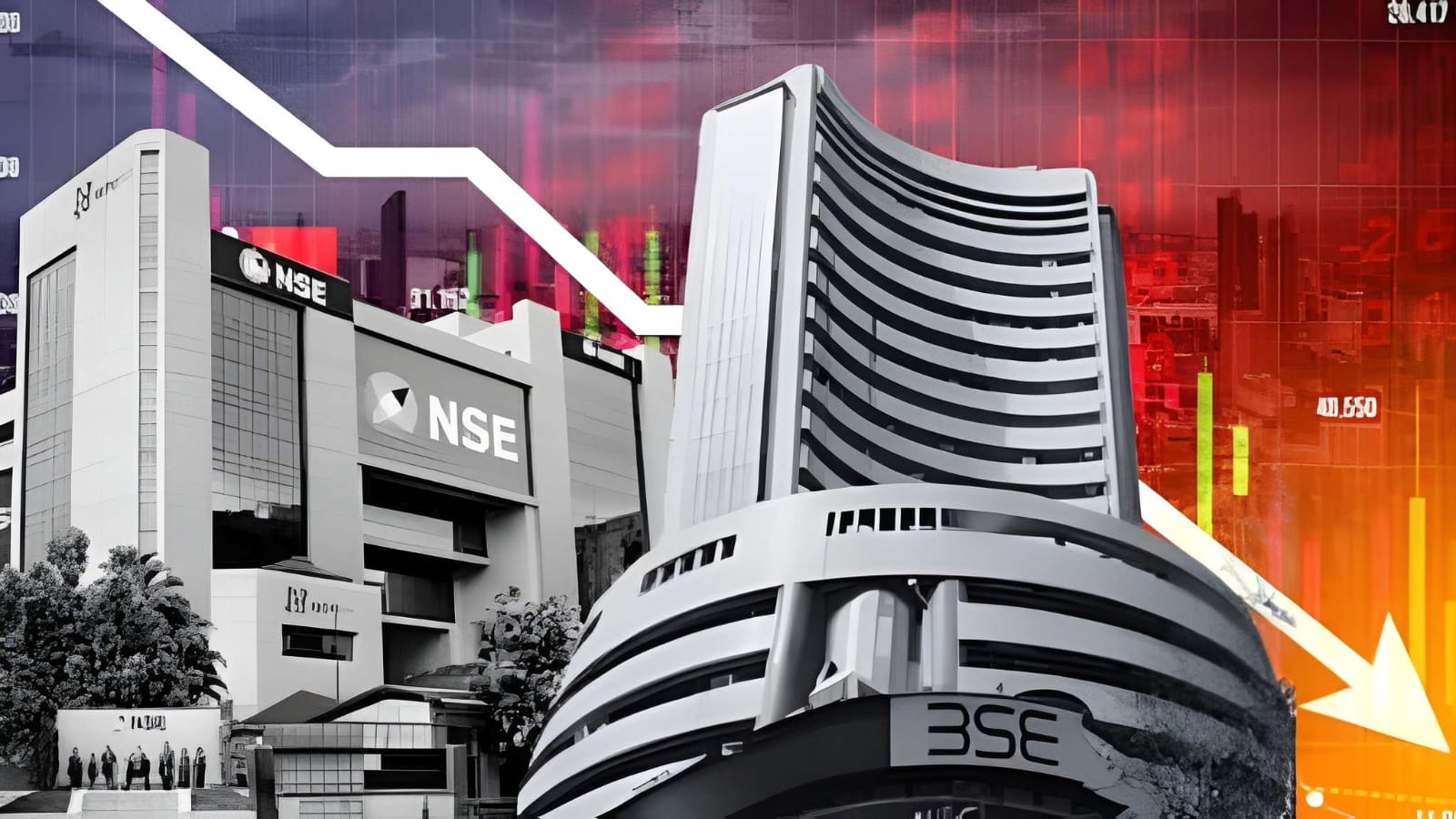
India's benchmark Nifty 50 Index ended 1.05% lower on June 8, 2026, following an aggressive afternoon sell-off driven by banking and energy heavyweights. The sharp decline on the National Stock Exchange coincided with a weakening rupee, signaling a broad shift toward risk reduction among institutional investors.
MUMBAI, INDIA — India's benchmark Nifty 50 Index tumbled sharply on Monday, June 8, 2026, dropping over one percent to break through established short-term support levels. According to official closing data from the National Stock Exchange, the Nifty 50 Index ended 1.05% lower, reversing consecutive sessions of incremental growth. The broad-based market correction, which accelerated rapidly during afternoon trading, was triggered by heavy institutional liquidation in index heavyweights alongside macroeconomic pressures, highlighting heightened investor anxiety regarding global supply chains and domestic fuel cost stability.
Heavyweights Lead National Stock Exchange Liquidation
The drop on the National Stock Exchange was characterized by a distinct lack of buying support among top-tier blue-chip entities. Industry leaders across banking, energy, and infrastructure faced sustained selling pressure throughout the session.
According to intraday tracking data available on market dashboards, institutional investors actively trimmed their long positions in core portfolio assets. Financial heavyweights, including HDFC Bank and ICICI Bank, alongside energy conglomerate Reliance Industries, were among the primary draggers pulling down the Nifty 50 Index. This coordinated sell-off across high-weightage components effectively neutralized modest defensive gains posted by select telecom and public sector undertakings, forcing the broader market indices into deep negative territory.
Macroeconomic Headwinds and Currency Pressures Mount
Market analysts noted that the sudden decline on the National Stock Exchange did not happen in isolation. The domestic equity correction directly coincided with noticeable stress lines across the macro-economy, particularly the sharp intraday depreciation of the local currency against the U.S. dollar.
A weakening currency traditionally alters the investment strategies of foreign institutional investors (FIIs), who frequently engage in automated block-selling to protect their dollar-denominated returns from exchange-rate erosion. Furthermore, recent corporate disclosure indicators showing widening under-recoveries at state-run oil refiners have added to concerns over corporate earnings compression, prompting asset managers to reduce their risk exposure.
Impact on Investors, Consumers, and Financial Markets
For Retail Investors and Mutual Fund Holders
The 1.05% drop in the Nifty 50 Index directly impacts the net asset value (NAV) of equity-linked mutual funds and retail trading portfolios. Investors focused on mid-cap and small-cap segments experienced more severe localized valuation cuts, as these high-beta shares typically amplify the downward movements seen in large-cap benchmarks.
For Capital Market Traders and Institutional Brokers
The surge in high-volume afternoon transactions increased daily market volatility metrics, forcing derivatives traders to manage rapidly changing margin requirements. Market operations desks reported a significant increase in protective put-option buying as institutional participants moved to hedge their structural portfolios against potential follow-up declines.
For Domestic Businesses and Corporate Borrowers
A sustained downward adjustment in primary equity indices can raise the overall cost of capital for domestic firms. Companies planning upcoming equity dilution pipelines or initial public offerings (IPOs) may face delayed timelines as corporate underwriters reassess market timing in light of changing risk appetites.
Official Sources Section
The final closing percentages, index point changes, and sectoral performance tracking metrics presented in this report are based on official market data bulletins and end-of-day registries published by the National Stock Exchange of India Limited (NSE) and BSE Limited.
Quote Section
Analyzing the technical breakdown observed across the electronic trading floor, capital market regulators noted:
"According to officials, the Nifty 50 Index faced strong institutional resistance near its psychological highs, causing automated trading programs to execute sell orders. The increase in volume during the breakdown confirms that asset managers were actively rebalancing their portfolios."
Reflecting on changing investor sentiments across regional exchange floors, brokerage coordinators added:
"Organizers stated that the 1.05% drop reflects broader economic variables, including currency fluctuations and evolving global energy baselines. Trading desks are maintaining a cautious stance as participants wait for upcoming central bank commentary to gauge short-term capital trajectories."
Why It Matters
A single-session drop of over one percent in a benchmark index serves as an important risk indicator for a country's economic health. When the Nifty 50 Index drops significantly, it signals a shift from aggressive wealth accumulation to strategic capital preservation among global institutional asset managers. This adjustment can affect foreign direct investment flows, impact the wealth effect among retail consumers, and influence corporate spending decisions across the broader economy.
Key Facts at a Glance
Index Drop: The benchmark Nifty 50 Index ended 1.05% lower following a sharp afternoon drop.
Leading Draggers: Financial institutions and major energy conglomerates led the liquidation on the National Stock Exchange.
Currency Correlation: The equity downturn occurred alongside a noticeable drop in the local currency against the U.S. dollar.
Investor Sentiment: Widespread declines across mid-and-small-cap stocks highlighted a broad reduction in market risk appetite.
FAQ Section
What was the final closing status of the Nifty 50 Index today?
The benchmark Nifty 50 Index completed the daily trading session exactly 1.05% lower, reversing previous positive momentum due to a widespread afternoon sell-off.
Which market sectors were hit hardest during the retraction?
The selling pressure was most intense across banking heavyweights, major energy conglomerates, and high-beta segments like real estate and mid-cap stocks.
How does a 1.05% drop in the index affect retail mutual fund investors?
A drop of this size causes a direct reduction in the net asset values (NAVs) of equity mutual funds, particularly those heavily exposed to large-cap and multi-cap tracking indexes.
Source: Daily closing market summaries and index tracking feeds published by the National Stock Exchange of India Limited (NSE), Corporate action bulletin board registries maintained by BSE Limited.