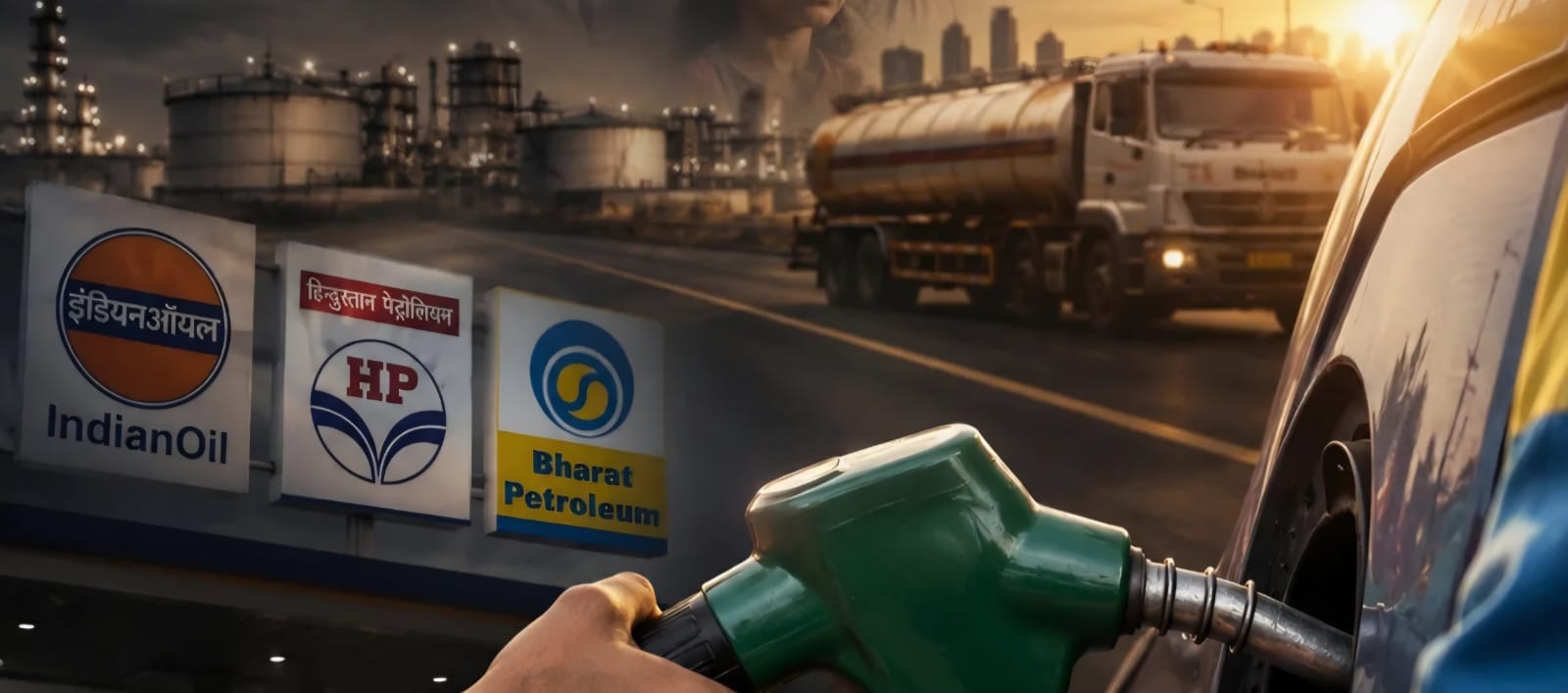
A senior Indian government official confirmed that state refiners are losing ₹6 per liter on gasoline and ₹30 per liter on diesel sales. Driven by a gap between frozen retail prices and rising import costs, these under-recoveries threaten the profit margins of public sector oil marketing companies.
NEW DELHI, INDIA — State-run fuel retailers in India are incurring severe financial under-recoveries on daily retail fuel sales as global crude oil pressures squeeze domestic processing margins. A senior Indian government official confirmed on Monday, June 8, 2026, that public sector oil marketing companies (OMCs) are losing ₹6 per liter on gasoline sales. Simultaneously, matching administrative updates revealed that these same state refiners are losing ₹30 per liter on diesel sales. The development is highly significant today as widening marketing gaps threaten the fiscal stability of downstream firms and pressure state-administered retail pricing frameworks.
Escalating Under-Recoveries Threaten Refiner Profitability
The disclosure of these specific figures highlights a sharp reversal in the operational profitability of India’s state refiners. For several quarters, domestic fuel prices have remained frozen across retail pumps, allowing public sector oil marketing companies to maintain retail price predictability for citizens.
However, with international crude oil baselines rising and the domestic currency facing pressure, the cost of importing raw crude has outpaced fixed pump prices. According to information shared by government officials, this mismatch has left oil marketing companies absorbing the difference, resulting in immediate per-liter losses on every transaction at the pump. While gasoline under-recoveries have been kept to a single-digit margin of ₹6 per liter, the massive under-recovery of ₹30 per liter on diesel poses a severe challenge due to its widespread industrial usage.
Disparity Between Gasoline and Diesel Loss Margins
The large gap between gasoline and diesel under-recoveries stems from the unique structural supply lines and tax formats applied to each fuel type. Diesel serves as the primary fuel driving India's transport network, agricultural sectors, and industrial backup systems.
Because diesel consumption volumes are vastly larger than gasoline volumes, state refiners face a disproportionate financial burden. Forcing public sector firms to absorb a ₹30 per liter loss on diesel limits their short-term cash flows, which could impact their capacity to invest in refining upgrades or clean-energy transitions.
Impact on Consumers, Logistics Businesses, and Investors
For Retail Consumers and Citizens
The current retail price freeze shields ordinary citizens from immediate inflation shocks at the pump. However, the growing financial strain on state refiners increases the likelihood of a future retail price correction, which would raise the daily cost of living and commuting.
For Commercial Freight and Logistics Businesses
Logistics networks and trucking companies currently benefit from subsidized diesel rates, keeping freight costs manageable. If state refiners are eventually permitted to pass the ₹30 per liter under-recovery onto commercial buyers, transport costs will rise sharply, impacting everything from agricultural goods to e-commerce shipments.
For Capital Market Investors and Stockholders
Equity investors in state-owned oil marketing companies face near-term headwinds. News of widening under-recoveries typically depresses public sector refining stock values, as equity desks price in lower corporate earnings, reduced dividend payouts, and increased reliance on government fiscal compensation.
Official Sources Section
The per-liter under-recovery metrics, fuel product breakdowns, and operational refining insights presented in this news report are based on official briefings and data disclosures provided by representatives from the Ministry of Petroleum and Natural Gas and administrative energy monitoring panels.
Quote Section
Detailing the immediate operational pressures building across downstream distribution systems, a senior Indian government official stated:
"State refiners are losing 6 rupees per liter on gasoline sales and 30 rupees per liter on diesel. These under-recoveries reflect the current divergence between volatile international import costs and fixed domestic retail pump prices."
Commenting on the broader fiscal outlook for oil marketing companies, administrative transport coordinators added:
"According to officials, domestic refining operations remain active to ensure steady fuel availability at all consumer stations. The federal administration is closely monitoring these loss metrics to evaluate long-term financial stability across public sector oil networks."
Why It Matters
Fuel pricing policy acts as a major economic anchor in developing economies. While capping pump prices protects citizens from immediate global energy shocks, running up a ₹30 per liter loss on diesel creates a massive financial deficit for state refiners. If these under-recoveries persist, they could drain corporate cash reserves, force state firms to increase local market borrowing, and eventually require federal taxpayer-funded bailouts to protect the country's energy infrastructure.
Key Facts at a Glance
Gasoline Under-Recovery: State refiners are currently losing ₹6 per liter on retail gasoline sales.
Diesel Loss Margin: Public sector oil companies are facing a steep loss of ₹30 per liter on diesel sales.
Pricing Dynamic: The financial losses stem from fixed domestic pump prices colliding with rising global oil import costs.
Economic Risk: Widening under-recoveries pressure downstream earnings and could lead to inflationary fuel price hikes later.
FAQ Section
Why are Indian state refiners losing money on fuel sales?
State refiners are facing losses because domestic retail pump prices have remained capped even as international crude oil import costs and currency changes drove up processing expenses.
What are the exact loss figures reported for gasoline and diesel?
According to a government official, state refiners are losing ₹6 per liter on gasoline and ₹30 per liter on diesel sales.
Will these under-recoveries lead to higher fuel prices for consumers?
While pump prices are currently steady, prolonged per-liter losses increase the likelihood of a future price adjustment to help state refiners recover their costs.
Source: Official press briefing statements and downstream market updates released by the Ministry of Petroleum and Natural Gas, Intraday data releases monitored via the Ministry of Finance.