The Navi Mumbai Municipal Corporation (NMMC) has launched comprehensive cleanliness drives and citizen awareness campaigns for Swachh Survekshan 2025-26. Aiming for the top national spot, the initiative enforces strict waste segregation penalties, expands eco-friendly "Aspirational Toilets," and mobilizes community feedback to maintain its elite "Seven-Star" garbage-free status.
NAVI MUMBAI — The Navi Mumbai Municipal Corporation (NMMC) has officially initiated an intensive network of special cleanliness drives and citizen awareness campaigns across all eight municipal nodes. Launched on Tuesday, the sweeping regulatory and civic mobilization serves as the cornerstone of Navi Mumbai's targeted strategy for the upcoming Swachh Survekshan 2025-26 national rankings. Having recently secured the third position nationwide in the elite "Super Swachh League" for cities with populations exceeding one million, the civic administration is rapidly upgrading its decentralized waste processing infrastructure and intensifying source-segregation compliance to surpass perennial champions Indore and Surat.
Escalating Source Segregation and Civil Enforcement
The newly launched campaign marks a major operational transition for NMMC's solid waste management division. Moving beyond traditional collection mechanics, the municipal corporation is actively enforcing a strict zero-tolerance policy against unsegregated municipal solid waste.
According to guidelines issued by the NMMC Solid Waste Management Department, garbage collection teams have been legally authorized to refuse service to residential housing societies, retail complexes, and commercial entities that fail to separate refuse into wet, dry, and domestic hazardous waste streams.
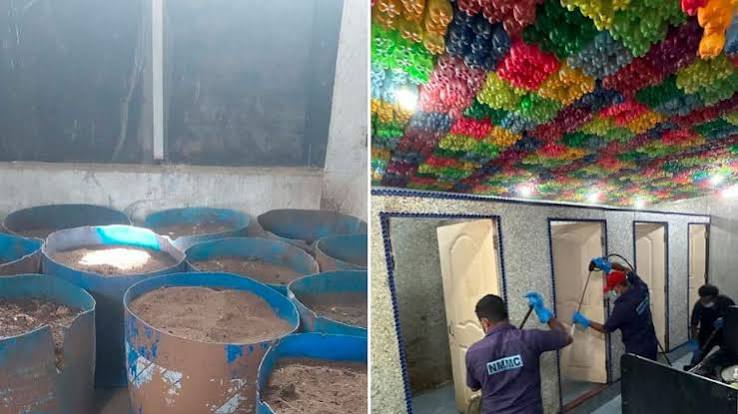
To support this zero-tolerance mandate, the NMMC has deployed specialized monitoring squads across key commercial hubs in Vashi, Nerul, and Belapur. Under active municipal bylaws, residential flats face immediate daily fines of ₹200 for consecutive source-segregation violations, while large commercial waste generators—including hotels, shopping malls, and industrial markets—are being systematically mandated to operate independent, on-site organic waste composting pits.
Infrastructure Upgrades and Advanced Public Sanitation
A major objective of the current Swachh Survekshan 2025-26 push is the expansion of high-tech public sanitation facilities across densely populated transit corridors. The infrastructure drive aims to safeguard Navi Mumbai's prestigious "Water Plus" status and its "Seven-Star" Garbage-Free City rating.
Deploying Aspirational Toilets
The NMMC is scaling up its network of "Aspirational Toilets" in high-footfall areas, following the successful model established at Sector 14 in Koparkhairane. These modern public facilities are structured around the circular economy:
Sustainable Materials: Constructed utilizing metric tons of recycled single-use plastic sheeting, discarded plastic bottles, and repurposed industrial scrap metal.
Inclusive Amenities: Equipped with dedicated, gender-segregated layouts, disabled-friendly access ramps, baby care changing stations, and automated sanitary napkin vending machines.
Effluent Recycling: Integrated with mini-treatment plants that utilize recycled sewage water to power aesthetic public fountains and landscape irrigation.
Micro-Transit Waste Optimization
Recognizing the unique logistical challenges presented by historic urban villages (gaonthans) and narrow settlement lanes, the civic body has introduced a specialized fleet of smaller, low-emission waste trucks and mechanical handcarts. These smaller units ensure that standard twice-a-day road sweeping and door-to-door collection schedules are maintained evenly across peripheral neighborhoods, preventing the emergence of illegal public garbage vulnerable points.
Official Sources Section
The administrative directives, fine structures, and infrastructural allocations defining the campaign were finalized during a general municipal review led by NMMC Commissioner Kailas Shinde. The baseline data and compliance parameters conform to the standardized national evaluation toolkit published by the Ministry of Housing and Urban Affairs (MoHUA), in coordination with the central Swachh Bharat Mission (Urban) regulatory updates.
Official Statements
"Our consistent position in the national top three is a testament to the hard work of our sanitation workers and the cooperation of our residents," stated NMMC Commissioner Kailas Shinde during the launch event at the municipal headquarters. "However, for Swachh Survekshan 2025-26, our objective is to secure the absolute top position. This requires moving from passive compliance to active community ownership, ensuring that 100% source segregation becomes an everyday habit in every household across Navi Mumbai."
"Citizen feedback and direct public participation account for a massive share of the total marks in the national evaluation matrix," observed an official from the NMMC Solid Waste Management division. "Through street plays (Nukkad Nataks), school collection drives, and digital feedback portals, we are ensuring that our citizens are fully informed and actively engaged when central inspectors conduct random validation calls."
Why It Matters
For local residents and taxpayers, the rigorous execution of these cleanliness drives translates directly into tangible public health benefits and real estate value appreciation. By systematically eliminating open garbage dumps and enforcing strict monsoon-season anti-larval spraying, the NMMC significantly reduces the transmission vectors for seasonal vector-borne diseases such as dengue and malaria.
For regional businesses, institutional real estate developers, and international investors, Navi Mumbai’s reputation as a clean, highly organized, and green urban ecosystem serves as a powerful economic differentiator. As the Navi Mumbai International Airport scales up its commercial passenger flights, maintaining a world-class urban aesthetic ensures that the region remains a preferred destination for high-end corporate offices, tech parks, and premium residential investments within the broader Mumbai Metropolitan Region (MMR).
Key Facts at a Glance
Rankings Target: NMMC is executing targeted drives to advance from its national number three ranking to the number one spot in India.
Enforcement Penalties: Daily spot fines of ₹200 are actively applied to residential accounts failing to separate wet and dry waste.
Public Engagement: Citizen feedback constitutes approximately 35% of the total score within the Swachh Survekshan grading matrix.
Sustainable Building: New public restrooms are utilizing up to five metric tons of recycled single-use plastics and electronic waste components.
FAQ Section
What is the primary goal of the NMMC Swachh Survekshan 2025-26 campaign?
The campaign aims to maximize Navi Mumbai’s score in the national cleanliness evaluation by enforcing 100% source segregation, upgrading public toilets, and securing active citizen feedback.
How can Navi Mumbai residents submit their official feedback for the survey?
Residents can log into the central Swachh Bharat Mission citizen portal to submit direct evaluations regarding local waste collection, public toilet accessibility, and overall neighborhood cleanliness.
What happens if a housing society refuses to segregate its daily garbage?
Under active municipal enforcements, NMMC collection vehicles can legally refuse to lift unsegregated waste, and standard statutory fines will be levied against the violating managing committee or individual flat owners.
What are "Aspirational Toilets," and where are they being built?
These are eco-friendly, high-tech public convenience complexes built from recycled plastic and scrap materials. They feature inclusive amenities like disabled-friendly units and are deployed in high-traffic zones like Koparkhairane and major transit stations.
Source: Navi Mumbai Municipal Corporation Portal, Ministry of Housing and Urban Affairs Official Site, Swachh Bharat Mission (Urban) National Dashboard.