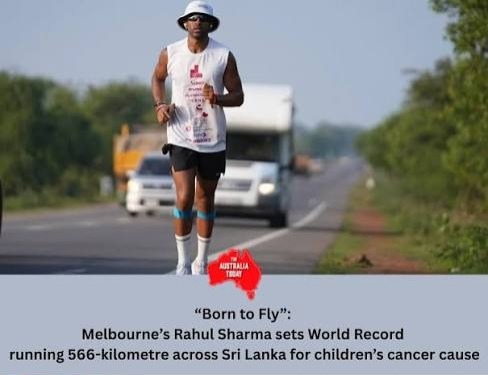
Hong Kong-born ultra-runner Rahul Sharma has released Born to Fly, a documentary detailing his record-breaking 566 km run across Sri Lanka in 6 days and 13 hours. Directed by Ali Khajeian, the film captures the immense physical hardships endured to raise $27,000 for childhood cancer research.
HONG KONG — Former youth international cricketer and ultra-runner Rahul Sharma has officially released Born to Fly, a striking independent documentary capturing his record-breaking trans-nation ultramarathon across Sri Lanka. The 24-year-old athlete, who was born and raised in Hong Kong, completed the monumental 566-kilometer trek from Point Pedro in the north to Dondra Head in the south in a staggering 6 days, 13 hours, and 22 minutes. The film, which recently made its highly anticipated homecoming premiere at Premiere Elements in Hong Kong, documents every grueling stage of the run, which successfully raised more than $27,000 for childhood cancer research.
Severe Environmental Challenges and Technical Disasters
According to production statements and logbooks released by the filmmaking crew, the physical toll of the ultramarathon escalated rapidly during the second day of the campaign. Operating in punishing coastal humidity with ambient road temperatures exceeding 32 degrees Celsius, the intense heat radiating from the asphalt began to liquefy the rubber grip soles of Sharma's running socks, literally fusing the synthetic material onto the skin of his feet. The support crew had to carefully cut the material away to prevent deep dermal infections, forcing the runner to manage extreme blisters for the remaining 400 kilometers.
The baseline logistics of the run were complicated by sudden, unforeseen structural changes. The documentary details the mid-journey abandonment of their primary accommodation support vehicle and last-minute dropouts within the localized support team. Despite surviving on less than three hours of sleep per night and running continuously from 4:00 AM to 7:00 PM daily, Sharma maintained his targeted physical pace. By the penultimate day, severe musculoskeletal fatigue forced him to walk 60 kilometers of an 80-kilometer segment, describing the experience as the most intense physical pain of his life.
Cinematic Collaboration Born at University
The creation of Born to Fly represents a unique independent cinematic achievement, coordinated entirely by a small group of university peers with no prior industry experience. The documentary was directed by Ali Khajeian, a close associate of Sharma, who embedded himself directly within the mobile support unit to capture the raw, unscripted reality of the record attempt.
The film's structural narrative focuses closely on the concepts of endurance, friendship, and humanitarian purpose, encapsulated by the campaign's core developmental motto, "Dream Like a Kid". The production team utilized lightweight, high-definition stabilization rigs to follow Sharma through isolated rural villages, documenting spontaneous interactions with local Sri Lankan communities who regularly offered hydration and emotional encouragement to the pacing team. Public relations manager Ben coordinated the international media tracking and compliance logistics across international borders to ensure the project's global visibility.
Giving Back to Global Cancer Research
Beyond the athletic achievement, the primary objective of both the ultramarathon and the subsequent film screenings remains entirely philanthropic. Every dollar generated through community donations, corporate sponsorships, and red-carpet premiere ticket sales is routed directly to the Children's Cancer Institute Australia, a highly respected research organization dedicated exclusively to discovering a cure for childhood cancer.
Sharma's athletic transition highlights a remarkable personal pivot; he formerly represented Hong Kong internationally as an Under-19 youth cricketer from 2018 to 2019. After a series of recurring sports injuries prematurely halted his cricket career, he relocated to Australia to earn his Bachelor of Exercise and Sport Science and a Master of Clinical Exercise Physiology at Deakin University. Now practicing as a certified sports physiologist in Melbourne, Sharma applied his scientific knowledge of metabolic recovery and pacing architectures to successfully cross the finish line and secure his spot in the World Book of Records.
Official Sources Section
The statistical timelines, route parameters, and verified world records detailed within the documentary are officially validated by corporate receipts from the World Book of Records registry. Financial contributions and distribution frameworks conform to the official financial transparency boards published by the Children's Cancer Institute.
Quote Section
"According to officials from the production team, more than half of the total global donations originated directly from Sharma's home community in Hong Kong, where local schools even organized matching relay events to show solidarity."
Why It Matters
For competitive athletes and charitable organizations, this release proves that independent sports documentaries can serve as powerful tools for global fundraising. By combining raw human endurance with transparent digital storytelling, the project demonstrates how individual athletic platforms can be successfully leveraged to fund life-saving medical research.
Key Facts at a Glance
Total Ultramarathon Distance: 566 kilometers across the entire geographic length of Sri Lanka, from Point Pedro to Dondra Head.
Official Record Time: 6 days, 13 hours, and 22 minutes, officially certified by the World Book of Records.
Philanthropic Impact: Raised over $27,000 to directly support childhood cancer research initiatives.
Core Creative Team: Directed by Ali Khajeian and managed by a three-person team of university students.
FAQ Section
What is the main focus of the documentary film Born to Fly?
The film documents Hong Kong-born runner Rahul Sharma's record-breaking 566 km ultramarathon across Sri Lanka, highlighting the extreme physical challenges he faced and his mission to raise funds for childhood cancer research.
Where did the proceeds from the movie premieres go?
All proceeds from ticket sales, promotional screenings, and direct public donations are sent entirely to the Children's Cancer Institute to fund scientific research aimed at curing childhood cancer.
What serious physical injuries did Sharma experience during the run?
On the second day, intense asphalt temperatures exceeding 32°C caused the rubber on his running socks to melt and stick directly to his skin, requiring the team to cut the material away.
Source: Official athlete portfolios from Deakin University, regulatory press kits from the World Book of Records, and fundraising disclosures from the Children's Cancer Institute.