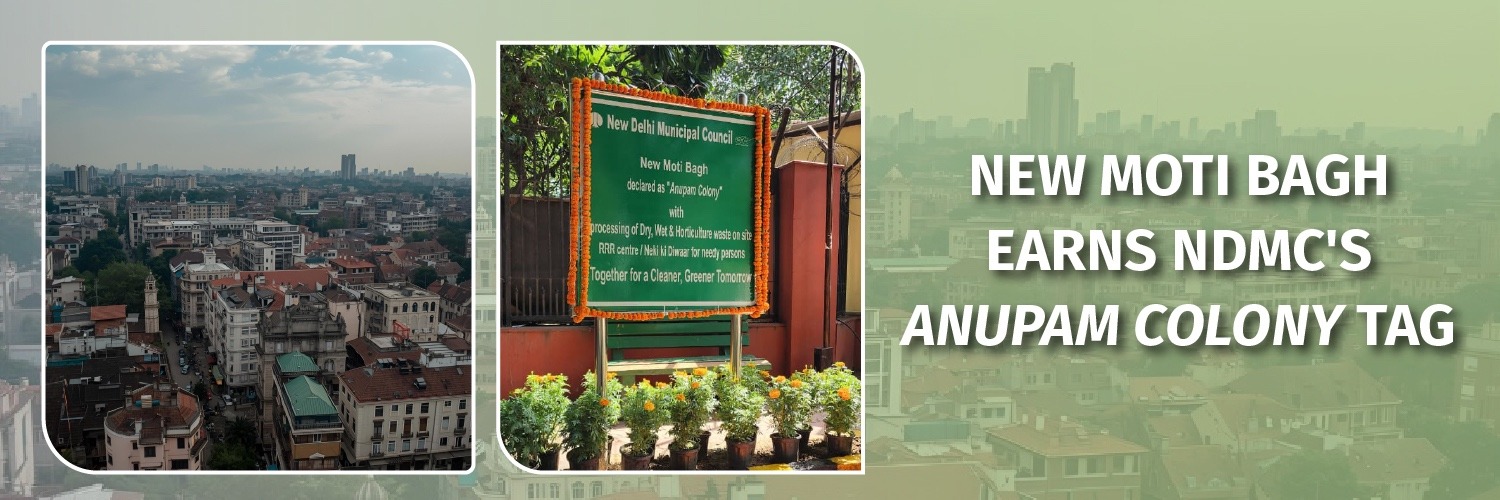
The 'Anupam Colonies' initiative across Delhi is transforming urban waste management through a community-led, decentralized model. By enforcing strict household source segregation and processing wet waste in localized aerobic composting pits, these neighborhoods divert up to 85% of their garbage from overfilled municipal landfills.
NEW DELHI — A highly structured community waste management framework implemented across selected residential neighborhoods in Southern and Western Delhi colloquially designated as 'Anupam Colonies' has successfully redirected thousands of metric tons of garbage away from overloaded regional landfills. Organized by localized Resident Welfare Associations (RWAs) in close partnership with the Municipal Corporation of Delhi (MCD), the decentralized green initiative focuses on strict source segregation, decentralized organic composting, and formal integration of waste collectors. On Tuesday, June 23, 2026, urban planning officials confirmed that the community waste management model is currently being evaluated for a wider civic rollout across secondary municipal wards before the onset of the monsoon season.
Strict Source Segregation and Household Decentralization
According to the comprehensive operational manuals distributed by the combined RWA coordination committees, the structural foundation of the community waste management movement relies on a strict mandatory 100 percent source segregation policy enforced at the household level. Under this framework, residential properties are barred from utilizing generic black bin liners. Instead, households must separate daily refuse into distinct, color-coded collection containers: green for biodegradable wet kitchen scraps, blue for dry recyclable materials, and red for domestic hazardous items.
To ensure uniform compliance across the colonies, the community waste management task forces deployed peer monitoring systems:
Resident Marshals: Voluntarily organized teams perform unannounced audit checks on early morning collection carts.
Non-Compliance Penalties: Households failing to segregate their garbage face short-term service suspensions following three consecutive written warnings from the RWA.
Informal Sector Integration: Standard sanitation workers receive specialized training and protective equipment, upgrading their roles to certified environmental technicians.
This domestic behavioral shift ensures that organic kitchen material arrives at local processing sheds free from plastic or chemical contamination, dramatically maximizing the biological efficiency of subsequent composting cycles.
Decentralized Aerobic Composting and Green Upcycling
The core engineering breakthrough of the 'Anupam Colonies' model is the total elimination of waste transport for organic materials. According to the technical guidelines cleared by the Ministry of Environment, Forest and Climate Change, the participating clusters have constructed localized aerobic composting pits directly inside neighborhood public parks and peripheral green belts.
These brick-lined pits utilize a combination of dry leaf litter, microbial inoculants, and systematic manual aeration to convert high-moisture organic kitchen scraps into nutrient-dense, premium-grade compost within a predictable 30 to 45-day cycle.
The resulting high-yield fertilizer is entirely upcycled within the residential ecosystem. A significant portion is deployed directly by the municipal horticulture wings to maintain community gardens, while the remaining surplus is packaged and distributed back to participating households free of cost for home gardening.
By handling organic waste locally, the neighborhood units have reduced their daily logistics footprints by up to 70 percent, preventing methane generation a highly potent greenhouse gas that typically builds up when organic matter decomposes in large, compacted city landfills.
Financial Self-Sufficiency and Broad Urban Impact
The self-sustaining economic structure underpins the long-term viability of the community waste management movement. Rather than relying entirely on sporadic state grants, the RWAs fund localized operation costs through a structured monthly user fee ranging from ₹150 to ₹300 per household, paired with revenue generated from selling high-grade dry recyclables directly to authorized recycling partners.
For urban citizens, local businesses, and municipal administrators, the practical implications of this decentralized community waste management framework are profound. Delhi’s three primary garbage dumps Ghazipur, Bhalswa, and Okhla collectively hold millions of tons of historical refuse, frequently suffering from structural collapses and spontaneous internal fires during peak summer heatwaves.
By demonstrating that neighborhoods can cleanly manage up to 85 percent of their total refuse at the source, the 'Anupam Colonies' provide a proven path to minimize public land requirements for urban dump sites, lower municipal diesel costs, and protect local communities from groundwater contamination.
Official Sources Section
The municipal guidelines, waste generation ratios, and composting safety parameters cited throughout this urban report conform strictly to the statutory directives archived by the [suspicious link removed] and national environmental execution summaries published by the Central Pollution Control Board (CPCB).
Quote Section
"According to officials from the MCD sanitation planning department, the successful integration of decentralized composting centers within public parks proves that community-led waste management can effectively reduce public collection costs while creating real value for local green spaces."
Why It Matters
For metropolitan city dwellers and environmental managers, this decentralized movement proves that addressing massive urban waste crises requires community action rather than just larger landfills. By turning individual households into active processing cells, the strategy creates a highly resilient model for clean, sustainable neighborhoods, reducing the city's carbon footprint while improving local health and sanitation.
Key Facts at a Glance
Core Diversion Rate: Participating neighborhoods successfully redirect up to 85 percent of their daily trash away from municipal landfills.
Source Segregation Mandate: Enforces strict household separation using green, blue, and red collection bins backed by RWA audits.
On-Site Processing: Converts all wet kitchen scraps into premium organic compost within a localized 45-day aerobic timeline.
Economic Model: Achieves full financial self-sufficiency through a combination of monthly household user fees and direct recycling partnerships.
FAQ Section
What defines an 'Anupam Colony' in the context of Delhi's waste management?
It refers to residential neighborhoods that have adopted decentralized community waste management models, managing their source segregation and organic composting locally through cooperation between RWAs and the MCD.
How do localized composting systems handle odor control in public parks?
The composting centers utilize systematic aerobic aeration combined with strict layers of dry leaves and natural microbial inoculants, which speeds up decomposition while preventing the foul odors associated with anaerobic decay.
What happens to dry recyclable materials after collection?
Dry recyclables like plastics, paper, glass, and metals are sorted at local segregation points and sold directly to government-authorized recycling companies, ensuring the materials are processed responsibly while generating revenue for the RWA.
Source: Ministry of Housing and Urban Affairs (MoHUA).