Amazon India is increasing its direct farm sourcing footprint six-fold by the end of 2026 to power its quick commerce platform, Amazon Now. Connecting over 16,000 farmers directly to its cold chain, the initiative supports an aggressive rollout targeting 1,000 micro-fulfillment centers across 100 cities.
The e-commerce giant accelerates its farm-to-fork logistics backbone to power rapid deliveries and challenge instant-delivery market leaders.
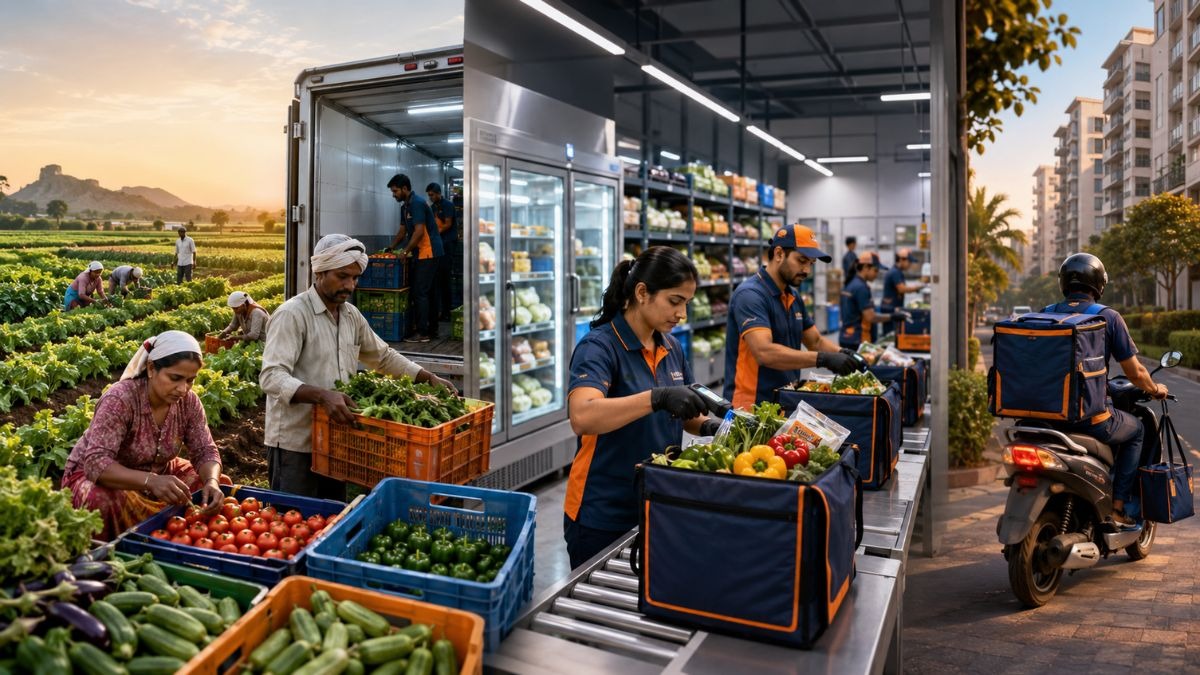
NEW DELHI — In a major operational realignment designed to capture a larger share of India’s highly competitive instant delivery landscape, Amazon India announced a comprehensive plan to scale its direct farm sourcing infrastructure six-fold. The massive agricultural integration, structured under the company's "farm-to-fork" initiative, aims to connect more than 16,000 farmers directly to its expanding quick commerce supply network by the end of 2026. The development comes as the global e-commerce corporation accelerates the domestic rollout of its ultra-fast delivery service, Amazon Now, deploying significant capital to secure absolute freshness and reduce mid-chain inventory transit waste.
Turning the Supply Chain Into a Direct Procurement Network
According to statutory operational outlines detailed by senior logistics leadership, the six-fold expansion will systematically dismantle traditional multi-tiered wholesale middleman layers. By sourcing directly from regional horticulture belts, Amazon is shifting its inventory procurement closer to core consumption hubs.
Company data reveals that nearly 70 percent of the fresh produce currently clearing the platform is grown and harvested within a tight 200-kilometer radius of the target delivery cities. The company aims to push this localized sourcing metric closer to 100 percent as fresh agricultural collection hubs expand.
To support the rapid influx of perishable products, the e-commerce player is scaling its physical midstream footprint:
Collection Hub Expansion: Operating 10 dedicated collection centers in Pune's agriculture corridor, with formal plans to construct 18 additional facilities across Maharashtra.
Instant Compensation Framework: Farmers delivering to Amazon-linked nodes receive full electronic clearance payments within four hours of product grading.
Agronomy Assistance Cells: Deploying specialized corporate agricultural experts to work directly with growers on product grading, handling, and crop yield improvements.
This integrated infrastructure provides smallholder farmers with highly predictable seasonal demand visibility and transparent market pricing, allowing them to schedule harvests precisely around real-time consumption trends.
Technical Integration and Micro-Hub Deployment
The massive agricultural push is directly synchronized with a aggressive real estate rollout across urban centers. Amazon Now has scaled past 300 micro-fulfillment centers (MFCs) nationwide, with engineering divisions constructing an average of two new neighborhood hubs every single day.
The corporate master plan targets expanding this dense network to over 1,000 localized MFCs across 100 Indian cities. These regional hubs, ranging from 3,000 to 10,000 square feet, are deliberately situated within two to three kilometers of the residential blocks they serve.
From an operational standpoint, the rapid delivery system relies entirely on advanced artificial intelligence and machine learning models. Predictive algorithms read real-time localized weather variables, historical purchasing velocity, and community search signals to pre-position specific perishable volumes inside local neighborhood hubs before a customer even taps the buy option.
Both Amazon Fresh and the ultra-fast Amazon Now service share this exact same cold-chain backbone, maximizing fleet utilization and ensuring identical quality thresholds across long-term grocery orders and near-instant home deliveries.
Calibrated Capital Investment for Market Density
The acceleration of the farm-to-fork logistics network is backed by a previously announced operational investment of over ₹2,800 crore ($300 million) dedicated to fortifying Amazon's Indian delivery capabilities. This capital allocation supports the introduction of more than 100 specialized urban fulfillment centers (UFCs). These larger-format urban facilities are designed to store a broader assortment of goods, expanding selection by up to four times across diversified categories including electronics, apparel, and personal care alongside fresh foods.
The strategic spending push intensifies an active infrastructure race against established domestic quick commerce platforms including Blinkit, Zepto, and Instamart. While competitors have historically focused heavily on the speed of last-mile bike couriers, Amazon's senior leadership believes that long-term profitability in the quick delivery space will be determined primarily by midstream supply chain efficiency.
By securing a direct, six-fold expansion in primary farm sourcing, the company reduces transit wastage and optimizes purchase margins, positioning its instant-delivery ecosystem to scale sustainably across tier-2 and tier-3 growth cities.
Official Sources Section
The infrastructure metrics, agricultural targets, and investment numbers cited throughout this report correspond directly to formal corporate announcements released by the executive media wing of Amazon India and public operational statements issued by Karan Chugh, Director of Operations, and Srikant Sree Ram, Director of Amazon Fresh India.
Quote Section
"According to officials outlining the strategic roadmap, the multi-fold expansion of direct farm channels ensures that fresh produce moves from agricultural harvests to city doorsteps within hours, minimizing delivery defects and providing predictable pricing for local growers."
Why It Matters
For everyday consumers, retail shoppers, and agricultural communities, this direct sourcing expansion moves quick commerce from a luxury convenience tool to a highly efficient utility network. By purchasing directly from local growers, the system delivers fresher produce to households within minutes while supporting rural economies through transparent pricing, agronomy training, and guaranteed four-hour payments.
Key Facts at a Glance
Sourcing Target: Amazon India is actively scaling its direct farm sourcing capacity six-fold by the end of 2026.
Agricultural Network: Integrates more than 16,000 local farmers directly into the company's instant-delivery supply chain.
Real Estate Velocity: Constructing neighborhood micro-fulfillment hubs at a rapid pace of roughly two new facilities every day.
Long-Term Scaling Goal: Plans to expand the Amazon Now service to 100 cities backed by a dense network of over 1,000 localized hubs.
FAQ Section
How does Amazon's direct farm sourcing model benefit local Indian farmers?
Farmers receive full payments within four hours of delivery, gain transparent pricing free from middleman fees, and get access to corporate agronomy support to improve crop quality and yield standards.
What is the difference between a micro-fulfillment center and an urban fulfillment center?
Micro-fulfillment centers (3,000–10,000 sq. ft.) are small neighborhood hubs built within 3 kilometers of consumers to enable deliveries in minutes. Urban fulfillment centers are larger facilities designed to hold a wider 4x selection of categories like electronics and apparel closer to cities.
Is Amazon Now expanding outside of major metropolitan cities?
Yes. Supported by a ₹2,800 crore operations investment, the service is actively expanding its footprint beyond core metros into 100 cities, including Kochi, Amritsar, Mangaluru, and Lucknow.
Source: Official operational logs and infrastructure review briefs published via the corporate pressroom of Amazon India Retail and logistics supply chain tracking data archived by the Ministry of Consumer Affairs, Food and Public Distribution.