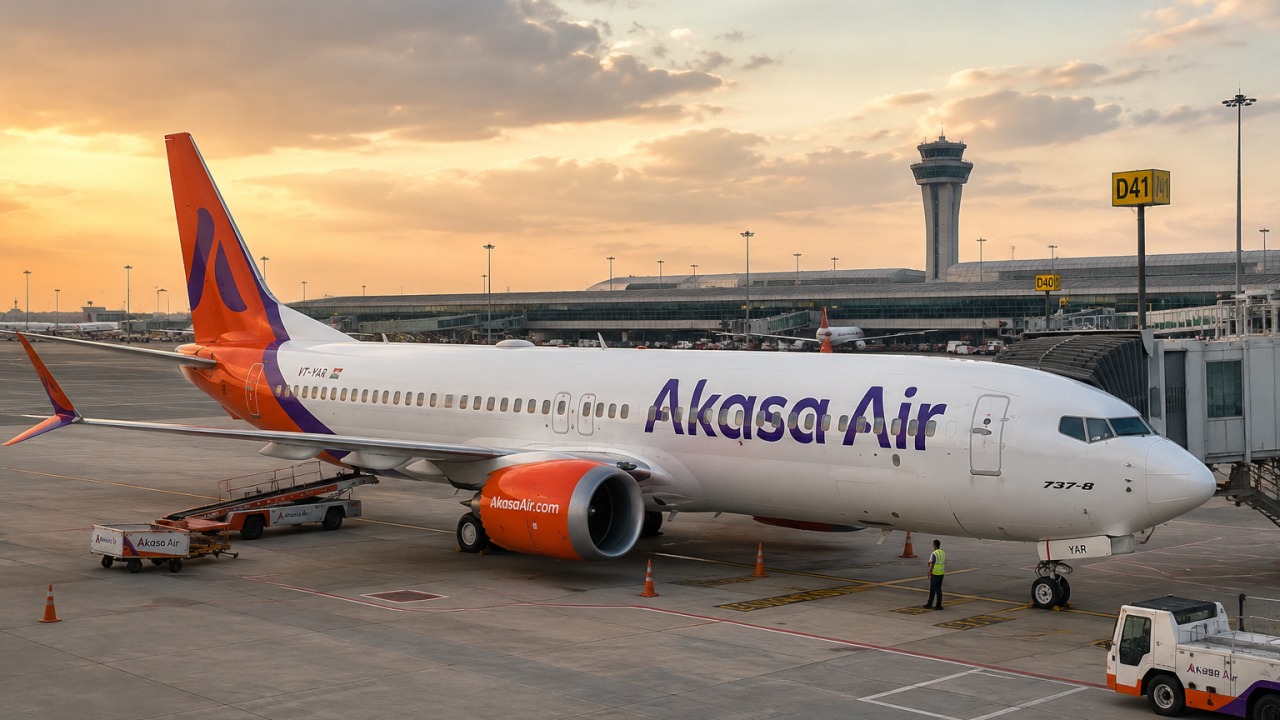
Akasa Air has reported a 4% reduction in unit costs for FY2026 while simultaneously expanding its network capacity by 22% for the summer schedule. With the recent induction of its 39th aircraft and new operations at Noida International Airport, the airline continues to scale its domestic and international presence.
Akasa Air has announced a period of robust operational growth for the 2026 fiscal year, characterized by improved cost efficiency and a significant expansion of its flight network. The airline, which recently inducted its 39th aircraft, confirmed a 4% year-on-year reduction in its Cost per Available Seat Kilometre (CASK), excluding fuel, highlighting its focus on maintaining a lean operational model while scaling capacity.
The airline’s financial and operational results follow a year of substantial growth, with total network capacity for the Summer 2026 schedule increasing by 22% compared to the previous year. This growth is supported by a 37% year-on-year rise in Available Seat Kilometres (ASK), a key industry metric for passenger-carrying capacity.
Scaling Operations and Network Reach
Akasa Air’s expansion strategy is centered on capturing demand in emerging regional markets alongside high-density metro corridors. Following the commencement of operations at the new Noida International Airport on June 16, 2026, the airline has significantly bolstered its presence in the National Capital Region (NCR).
“Our Summer 2026 schedule reflects a thoughtfully calibrated approach to network development, aligning capacity with evolving demand patterns,” the company stated in a recent press release. The airline is currently increasing frequencies on key domestic routes, including the Delhi-Mumbai corridor, and expanding its international footprint with additional flights to Middle Eastern destinations like Jeddah, Abu Dhabi, and Riyadh.
Operational Efficiency Gains
Despite the challenges of rapid fleet expansion—including the induction of eight new Boeing 737 MAX aircraft in the first half of 2026—the airline has maintained a focus on unit economics. The 4% reduction in CASK reflects the benefits of operating a standardized, fuel-efficient fleet and high-density load factors.
The airline’s growth is underpinned by its long-term fleet order of 226 Boeing 737 MAX aircraft, with 187 deliveries scheduled over the next six years. This disciplined delivery pipeline is central to the airline's goal of scaling operations while upholding operational reliability.
Official Sources
According to official filings and press communications, Akasa Air has demonstrated consistent financial improvement. In the previous fiscal year (FY25), the airline reported a 49% revenue growth and an improvement in EBITDAR margins by 50% compared to FY24. The latest data indicates that this trajectory has continued into FY26, with the airline prioritizing cost leadership and load factor optimization.
Why It Matters
For travelers, Akasa Air’s expansion translates into increased flight frequencies and new route options, particularly between emerging economic hubs and major metropolitan centers. For the broader Indian aviation sector, the airline's ability to reduce unit costs while expanding capacity serves as a benchmark for the competitiveness of the low-cost carrier model in one of the world's fastest-growing air travel markets.
Key Facts at a Glance
Cost Efficiency: Achieved a 4% year-on-year reduction in Cost per Available Seat Kilometre (CASK), excluding fuel.
Capacity Growth: Increased Summer 2026 network capacity by 22% and Available Seat Kilometres (ASK) by 37%.
Fleet Status: Inducted the 39th aircraft into its fleet on June 22, 2026, with 187 more deliveries pending over the next six years.
Network Expansion: Recently launched operations at Noida International Airport to strengthen NCR connectivity.
FAQ
What factors contributed to the reduction in CASK?
The reduction is attributed to operational efficiencies gained through a standardized fleet of fuel-efficient Boeing 737 MAX aircraft and disciplined cost management.
How is Akasa Air planning to expand in FY2026?
The airline is adding new frequencies on existing routes, increasing international service to the Middle East, and commencing operations from new hubs like Noida International Airport.
What is the significance of the ASK growth?
A 37% increase in Available Seat Kilometres indicates that the airline is aggressively expanding its seat capacity to meet rising domestic and international demand.
Source: Akasa Air Press Room, Hotelier India, Economic Times TravelWorld.