India and Ukraine Pledge to Revive Pre-War Trade Ties
Kalpana Kanungo - Mumbai Bureau Jun 20, 2026 1,500 Views
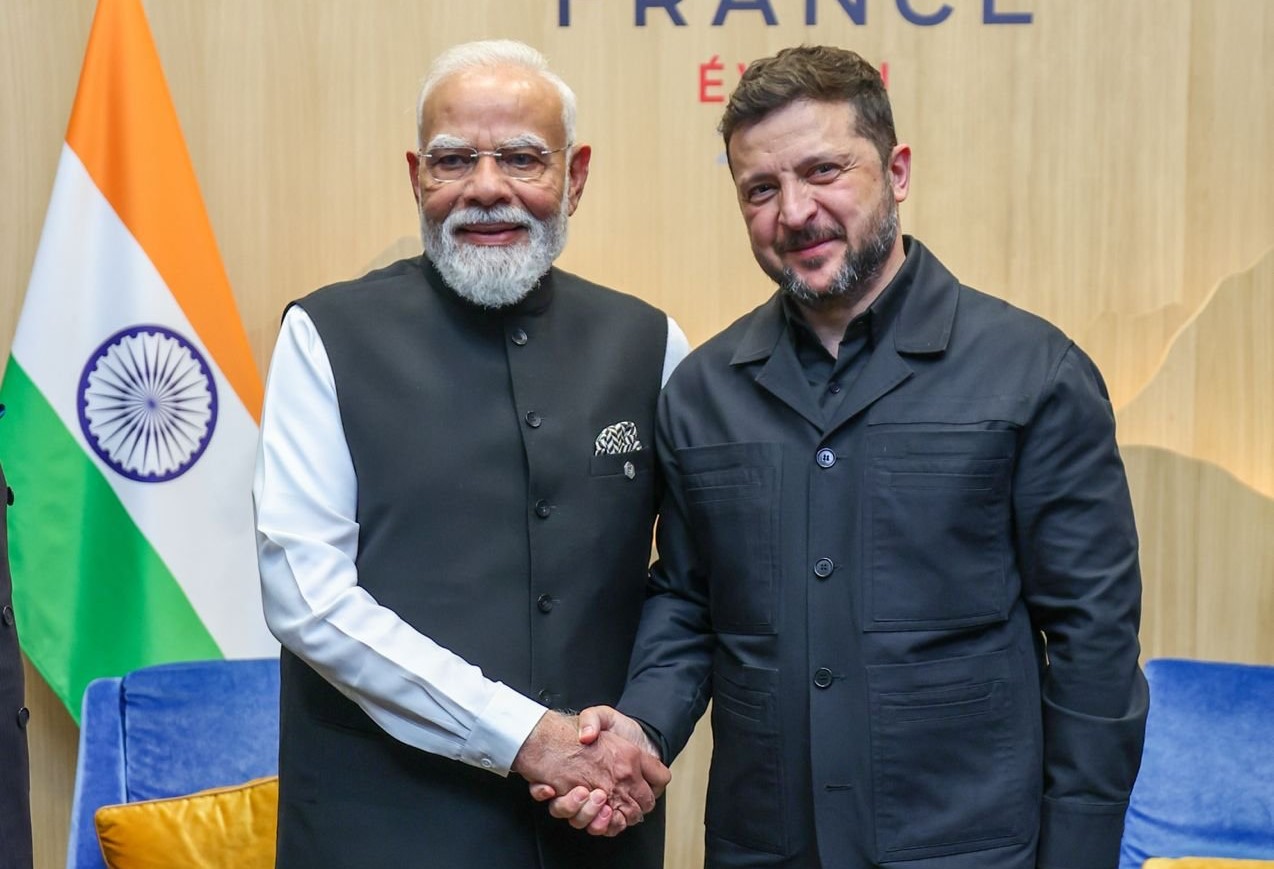
At the G7 Summit in Évian-les-Bains, France, Indian Prime Minister Narendra Modi and Ukrainian President Volodymyr Zelenskyy held high-level talks. The leaders reached a consensus to restore bilateral trade ties to pre-war levels, expand industrial cooperation, and emphasized a resolute push for a diplomatic, humanitarian resolution to the ongoing conflict.
ÉVIAN-LES-BAINS — Indian Prime Minister Narendra Modi and Ukrainian President Volodymyr Zelenskyy have reached a bilateral agreement to restore commerce and restore pre-war trade ties between their nations.Meeting on the sidelines of the Group of Seven (G7) Summit in France, the two heads of state held extensive discussions aimed at reversing the deep economic disruptions caused by the ongoing geopolitical conflict.In addition to restructuring their mutual trade frameworks, both leaders jointly reiterated an urgent push for global stability through humanitarian diplomacy and structured dialogue.
The diplomatic engagement comes at a pivotal moment for international markets, which continue to struggle with volatile supply lines, agricultural blockades, and rising commodity costs. By seeking to restore pre-war trade ties, New Delhi and Kyiv are signaling a strategic shift toward economic rehabilitation and industrial collaboration, even as international peace initiatives are actively negotiated on the world stage.
Restructuring the Bilateral Economic Framework
Prior to the outbreak of hostilities, trade volumes between India and Ukraine were anchored by robust exchanges in heavy machinery, metallurgy, agricultural commodities, and pharmaceutical exports. The conflict severely minimized these maritime and corporate pipelines. According to diplomatic briefers, the new directive instructs ministerial teams from both governments to systematically remove regulatory barriers and re-establish secure logistical corridors.
A major focus of the plan to restore pre-war trade ties centers on agriculture and food security. Ukraine has historically served as a critical supplier of sunflower oil and grain products to the Indian market. Conversely, India's multi-billion dollar pharmaceutical industry remains a primary source of affordable generic medications and vital healthcare supplies for Ukrainian citizens. Re-establishing these traditional supply networks is expected to provide substantial relief to consumer markets in both countries.
Expanding Industrial and Technological Cooperation
Beyond conventional commodity exchanges, the bilateral talks explored futuristic industrial frameworks. President Zelenskyy noted that both nations possess immense potential for joint development projects, specifically highlighting infrastructure rebuilding, information communication technology (ICT), artificial intelligence (AI), and green energy sectors.
The leaders agreed that their respective executive teams would immediately begin working through the operational details of these proposed industrial initiatives. For global investors and infrastructure conglomerates, this forward-looking cooperation opens up significant opportunities to participate in Ukraine's long-term economic reconstruction, backed by Indian engineering and technical expertise.
India Reaffirms Its Stance on Global Peace
Throughout the high-level meeting, Prime Minister Modi maintained India's balanced and independent foreign policy position, emphasizing that a sustainable resolution to regional conflicts cannot be achieved on the battlefield. India has consistently advocated for an immediate cessation of hostilities, positioning itself as a neutral facilitator committed to humanitarian values.
"India will always be on the side of peace, placing the values of humanity over everything else," Modi stated following the conclusion of the talks.The statement reinforces New Delhi's long-standing diplomatic narrative that dialogue, diplomacy, and direct negotiations remain the only viable pathways toward achieving an enduring global equilibrium.
Official Sources Section
The details, policy declarations, and consensus points outlined in this news report are compiled from formal state announcements, including:
Post-summit operational communiqués released by the Office of the President of Ukraine.
Quote Section
"Our talks today were about reviewing different aspects of our cooperation.We both agree that trade ties need to be restored to what they were in the pre-war time.Also reiterated that India will always be on the side of peace, placing the values of humanity over everything else."
— Narendra Modi, Prime Minister of India
Why It Matters
The explicit commitment to restore pre-war trade ties carries vital practical implications across global markets:
For Agricultural Markets: A normalized agricultural pipeline helps stabilize global edible oil prices and ensures predictable food supply chains across Asia and parts of Africa.
For the Pharmaceutical Industry: Indian drug manufacturers can safely scale up the delivery of essential medicines, supporting humanitarian healthcare operations within Ukraine.
For Global Geopolitics: The meeting underscores India’s growing influence as an independent global mediator capable of engaging constructively with all major stakeholders in the international arena.
Key Facts at a Glance
Summit Venue: The bilateral meeting took place during the high-profile G7 Summit hosted in Évian-les-Bains, France.
Core Mandate: Both nations formally agreed to restore pre-war trade ties and actively address supply chain bottlenecks.
Strategic Sectors: Revitalization efforts will primarily target agriculture, pharmaceuticals, heavy machinery, and joint technological projects.
Peace Position: India reiterated its firm humanitarian stance, emphasizing that dialogue and diplomacy are the sole mechanisms to end the conflict.
FAQ Section
Q1: What were the primary goods traded between India and Ukraine before the war? A1: India primarily imported sunflower oil, fertilizers, and metals from Ukraine, while exporting pharmaceuticals, machinery, organic chemicals, and electronic goods.
Q2: How will the two countries bypass current logistical disruptions to restore trade? A2: Officials and intergovernmental commissions are actively working to establish alternative shipping routes, optimize ease of doing business protocols, and implement secure financial settlement mechanisms.
Q3: Does this agreement alter India's diplomatic position regarding the conflict? A3: No. India maintains its consistent, independent policy, which prioritizes humanitarian assistance, calls for an immediate end to violence, and advocates for a peaceful solution through diplomatic engagement.