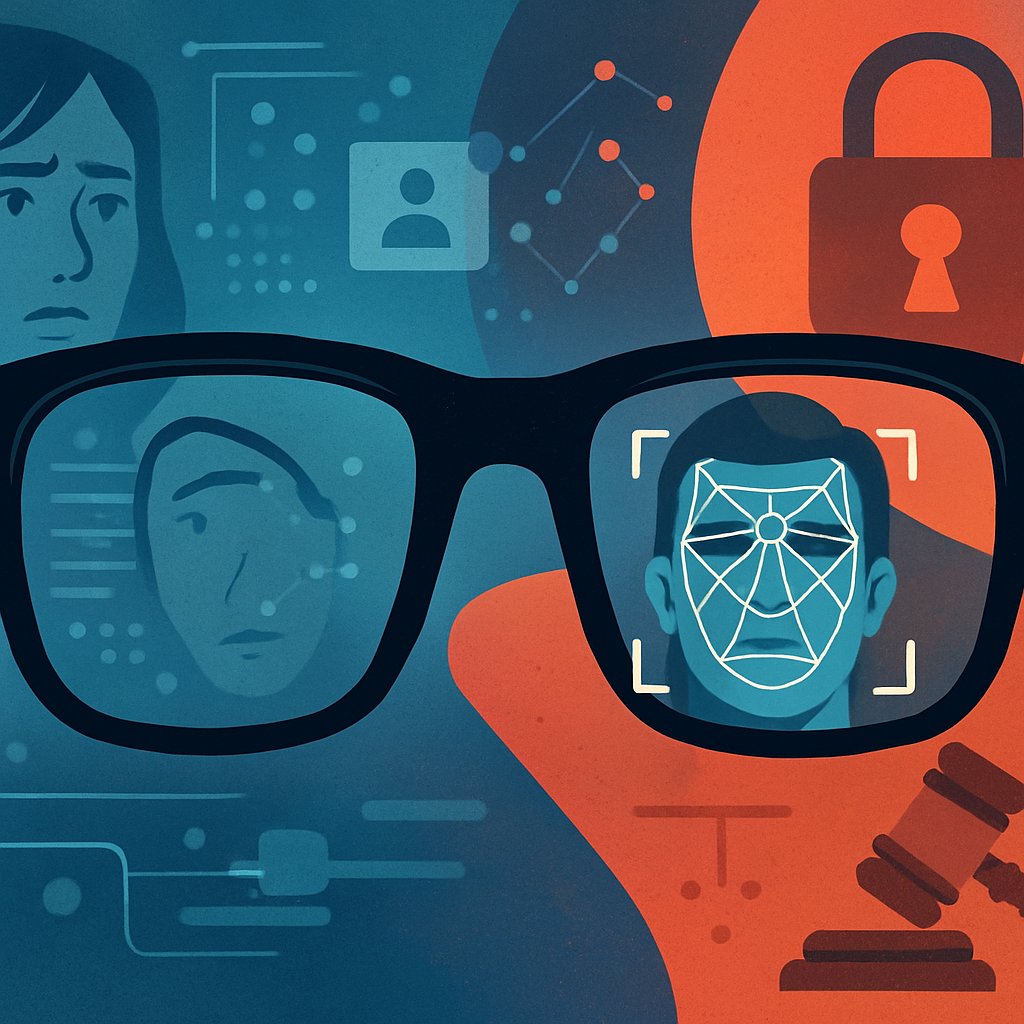
Meta's new Ray-Ban smart glasses pilot programs are facing global regulatory and legal pushback over severe privacy concerns. Investigations in India, Kenya, and the US focus on always-on ambient recording risks to bystanders, the potential deployment of facial recognition software, and claims that third-party contractors reviewed highly sensitive user footage.
MUMBAI — Meta Platforms Inc. is facing coordinated regulatory backlash, legal challenges, and mounting civil liberties concerns over its recent artificial intelligence eyewear initiatives. What began as an assistive pilot program in Gujarat, India—designed to utilize Ray-Ban Meta AI glasses to aid visually impaired citizens—has rapidly turned into a wider privacy dispute. Data protection experts, legal advocates, and state prosecutors have flagged severe vulnerabilities regarding how the wearable device's ambient, first-person cameras capture, store, and process sensitive visual data involving both users and non-consensual bystanders.
The regulatory pushback comes as tech giants accelerate the deployment of wearable, AI-driven computer vision systems. By bringing advanced cloud-based processing pipelines to everyday consumer hardware, the technology has outpaced existing global data frameworks, turning localized tech pilots into high-stakes testing grounds for modern privacy rights.
Ambient Capture Risks and Legislative Deficits
The primary domestic dispute stems from Meta’s proposed pilot with the state government of Gujarat. Designed to give low-vision individuals hands-free AI tools to navigate daily surroundings, digital rights groups warn the technology functions as an unmitigated mass surveillance tool. Legal groups argue that the device's continuous data logging violates India's Digital Personal Data Protection (DPDP) Act, which lacks explicit rules for wearable-based, first-person ambient recording.
"Data captured so a blind user can read a medicine label should never flow into AI model training or advertising," stated Apar Gupta, advocate and co-founder of the Internet Freedom Foundation. Legal experts note that the glasses seamlessly log homes, daily routines, sensitive documents, and passersby, often without explicit knowledge or permission from anyone in the camera's field of view.
While the hardware features a small LED indicator light intended to signal when active recording occurs, critics point out it is easily obscured or ignored in public spaces. Furthermore, the notification mechanism remains entirely inactive when the glasses operate in their "always enabled" multimodal AI state, allowing the system to continuously interpret background visual environments.
Investigations Target Third-Party Data Pipelines
The data privacy controversy extends well beyond the borders of India. In Nairobi, Kenya, the Office of the Data Protection Commissioner (ODPC) launched a formal investigation following disclosures from digital advocacy group The Oversight Lab. The probe focuses on claims that raw, unblurred media collected globally by Meta's smart glasses—including bank information, residential interiors, and deeply intimate private moments—was sent to Kenyan data labeling subcontractors at Sama for manual human annotation and AI training.
Simultaneously, in the United States, Texas Attorney General Ken Paxton initiated an executive investigation into Meta's data-gathering operations. Paxton's office cited reports of human contractors reviewing highly sensitive user footage, as well as the quiet integration of dormant biometric software code.
To defend its data handling protocols, Meta pointed to user consent checkboxes and emphasized its strict privacy baselines. "Photos and videos are private to users. Humans review AI content to improve product performance, for which we get clear user consent," a Meta spokesperson stated. However, corporate representatives have declined to provide answers regarding the specific bystander protections built into the platform.
The Threat of Biometric Facial Recognition
Adding to the escalating regulatory tension, recent security analyses discovered that Meta had quietly embedded prototype code for biometric identification under the internal designation "NameTag." If activated, the feature would allow the smart glasses to scan faces and cross-reference them against central social media servers, identifying individuals in public spaces in real time without their knowledge or consent.
Independent watchdogs verified that Meta subsequently scrubbed the dormant code following public blowback. However, investigations revealed the company has partnered with Rank One Computing—a primary software provider for law enforcement and defense agencies—to secure advanced biometric engine components. Although Meta insists no definitive consumer rollout plans for facial recognition exist, civil liberties organizations argue that enabling such features would completely eliminate personal anonymity in public spaces.
Official Sources Section
The compliance evaluations, legal filings, and organizational disclosures referenced in this coverage are compiled from official communications published by:
Quote Section
"Meta's glasses raise serious concerns, and my office will thoroughly investigate these devices to ensure that no individual is being unlawfully recorded, tracked, or subjected to the unauthorized collection of their data."
— Ken Paxton, Texas Attorney General
Why It Matters
The global scrutiny focused on Meta's AI glasses marks a defining moment for the future of wearable technology. If regulators enforce strict limits on ambient recording and automated facial scanning, tech firms may be forced to scale back their real-time AI features or restrict devices to private environments. For consumers, businesses, and investors, the outcome will dictate whether wearable AI expands into an everyday mass-market commodity or remains constrained by strict, localized digital privacy boundaries.
Key Facts at a Glance
Bystander Risk: Always-on smart cameras can log private documents, homes, and individuals without public consent or notice.
Subcontractor Access: Investigations in Kenya and the US allege that third-party data annotators reviewed unblurred, highly sensitive user footage.
Biometric Testing: Meta recently faced scrutiny after developers uncovered dormant software code designed for real-time facial recognition capabilities.
Regulatory Pushback: Meta's smart glasses are facing active legal investigations or class-action lawsuits in India, Kenya, the UK, and the US.
FAQ Section
Q1: Do Meta's smart glasses notify people when they are recording video? A1: The glasses feature a small built-in LED indicator light that shines when recording video. However, privacy advocates state it is easily covered, and it does not light up during standard "always enabled" AI ambient processing modes.
Q2: What is the main issue with the Meta AI glasses pilot program in India? A2: While intended to help visually impaired individuals navigate, experts warn the pilot violates India's DPDP Act due to the mass collection of background data and bystander images without consent.
Q3: Can Meta AI glasses identify people using facial recognition? A3: No consumer facial recognition feature is active right now. However, Meta has tested internal prototype software for real-time biometric identification, drawing strong criticism from privacy watchdogs.
Source: Internet Freedom Foundation, Office of the Texas Attorney General