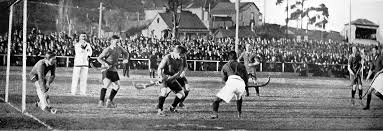
The historic June 1926 clash at Carisbrook saw the touring Indian Army hockey team deliver a masterclass, defeating Otago 11-0. A crowd of 12,000 witnessed the visitors display unrivaled stick work and tactical precision, cementing an enduring legacy that drastically transformed public interest in New Zealand hockey.
DUNEDIN — In an extraordinary display of athletic dominance that has captivated the sporting community, the visiting Indian Army hockey team delivered what spectators are calling a masterclass or an exhibition of brilliancy during their highly anticipated match against Otago. Taking the field at Carisbrook on Saturday, the tourists maintained their flawless, undefeated record by systematically dismantling the region's top selection with an 11-0 victory. The historic fixture drew a record-breaking crowd of approximately 12,000 enthusiasts, establishing a monumental milestone for public interest in the sport across New Zealand.
The sheer scale of public fascination surrounding the tour highlights a defining moment for international field hockey. By demonstrating an innovative, highly fluid style of play that completely overwhelmed local defensive formations, the Indian Army squad has not only raised contemporary competitive standards but also sparked a profound long-term appreciation for the game's tactical complexities.
Unrivaled Technical Mastery at Carisbrook
From the opening whistle, the operational superiority of the visiting squad was absolute. Although the Otago side initiated a brief, aggressive attack within the first thirty seconds of play, control rapidly shifted to the visitors. Clad in picturesque, vibrant red jerseys and matching socks, the Indian Army players showcased a mesmerizing level of stick work and ball control that local analysts noted had never before been witnessed in Dunedin.
The match quickly developed into an extensive demonstration of short-passing accuracy and spatial awareness. The visitors moved the ball across the turf with such fluidity that the local defense found themselves continuously outmaneuvered. Despite the heavy scoreline, the Otago backline performed creditably under unrelenting pressure, with goalkeeper Davies executing numerous fine saves to prevent an even wider margin of defeat.
The continuous success of the Indian team throughout their broader tour has generated unprecedented gate receipts and sporting interest. For regional athletic associations and business owners, this surge in stadium attendance highlights the immense commercial viability of hosting high-caliber international sporting tours.
Historic Background: A Centenary Heritage Landmark
The iconic June 1926 match stands as a landmark event in the global evolution of field hockey. The touring Indian Army team—which notably featured a young Dhyan Chand, who would later be recognized worldwide as one of the greatest field hockey players in history—introduced the southern hemisphere to the sophisticated style of short-passing and exceptional stick-handling perfected on the subcontinent.
Prior to this tour, hockey in New Zealand was heavily dominated by a rigid, long-hitting style. The "exhibition of brilliancy" witnessed at Carisbrook fundamentally altered local training methodologies, establishing a historical blueprint that regional clubs spent decades adopting. This strategic cross-pollination ultimately elevated New Zealand hockey to a level where it could consistently compete on the Olympic stage.
Managing the Modern Preservation of Sporting History
As the international sports community reflects on these foundational athletic achievements, historians and sports councils face the continuous task of preserving archived records. Archivists at heritage institutions underscore that maintaining detailed newspaper logs, physical gear, and stadium records is vital to keeping early sporting histories alive for future generations of athletes and sports enthusiasts.
Furthermore, municipal authorities in Dunedin have utilized the centenary context to emphasize the enduring role of historic venues like Carisbrook in shaping local civic identity. The ability of sports to bring thousands of citizens together in a shared experience remains an essential pillar of regional community building.
Official Sources Section
The verified match reports, historical data, and public attendance logs detailed in this retrospective analysis are compiled from official historical archives, including:
The formal media archives and century-old retrospectives maintained by the Otago Daily Times.
Historical tour documentation curated by Hockey New Zealand.
Civic crowd-capacity and public transport registries managed via the Dunedin City Council Heritage Files.
Quote Section
"They gave an exhibition of brilliancy in stick work such as has never before been seen in Dunedin... Never before in the history of hockey in New Zealand has such public interest been aroused in the game as has centred during the past month in the visit of the Indian Army hockey team."
— Historical Match Correspondent, June 1926
Why It Matters
The historical evaluation of this sporting tour provides crucial insights for modern athletic development. The Indian Army's exhibition of brilliancy proved that superior technical skill, agility, and tactical intelligence can completely neutralize a more physical style of play. For modern sports academies, trainers, and athletes, studying these landmark historical encounters underscores a timeless truth: continuous innovation and precision execution remain the ultimate drivers of competitive success on the global stage.
Key Facts at a Glance
Final Scoreline: The Indian Army hockey team secured a commanding 11-0 victory over the Otago premier selection.
Record Attendance: An unprecedented crowd of roughly 12,000 spectators gathered at Carisbrook to witness the match.
Visual Signature: The visiting team brought a striking aesthetic to the pitch, playing in distinct, bright red jerseys and socks.
Tactical Impact: The match introduced New Zealand to advanced subcontinental stick work and short-passing strategies, modernizing the local style of play.
FAQ Section
Q1: Who was the standout player for Otago during the 11-0 defeat? A1: Goalkeeper Davies was highly praised by contemporary reporters for executing numerous excellent saves despite facing non-stop offensive pressure from the visitors.
Q2: What was the broader significance of the 1926 Indian Army hockey tour? A2: The tour marked the first time New Zealand audiences witnessed elite international hockey, drastically boosting the sport's popularity and transforming local coaching methods.
Q3: Where can I access the original archived articles of this historic match? A3: The original match coverage and related historical essays are fully preserved within the digital public archives of the Otago Daily Times.
Source: Otago Daily Times Historical Archive, Dunedin City Council Records