Trinamool Congress leader Abhishek Banerjee has submitted 20 formal petitions to Lok Sabha Speaker Om Birla seeking the immediate disqualification of 20 rebel TMC MPs. The breakaway faction plans to merge with the NCPI, but the TMC leadership argues the move violates constitutional anti-defection laws regarding organizational party mergers.
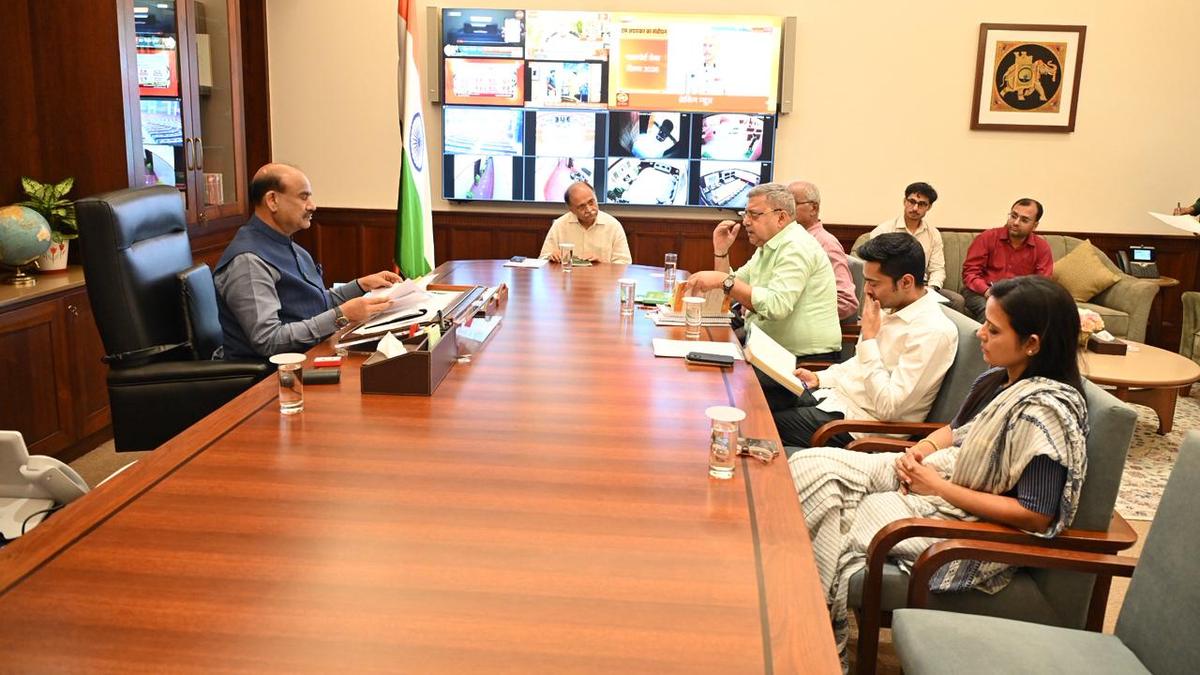
NEW DELHI — Trinamool Congress (TMC) Parliamentary Party leader and national general secretary Abhishek Banerjee formally moved to secure the disqualification of 20 rebel Lok Sabha members on Friday, June 19, 2026. Meeting with Lok Sabha Speaker Om Birla in New Delhi, Banerjee submitted 20 separate disqualification petitions under the Tenth Schedule of the Constitution of India. The high-stakes political development follows an internal rebellion within the West Bengal-based party, where the dissident faction announced its intention to break away and merge with the little-known Nationalist Citizens Party of India (NCPI). The TMC leadership insists that the move constitutes an illegal defection, carrying profound implications for the balance of power in the Lower House of Parliament.
High-Stakes Meeting with Lok Sabha Speaker
The formal confrontation unfolded after Speaker Om Birla invited Abhishek Banerjee to state the party’s official position. The 20 dissident lawmakers had previously approached the Speaker's office to request formal recognition as a separate legislative bloc, paving the way for their alignment with the NCPI.
Banerjee arrived at Parliament in a strict show of institutional strength, flanked by senior TMC parliamentarians including Sougata Roy, Kalyan Banerjee, Mahua Moitra, and Rajya Sabha member Derek O'Brien. The delegation handed over individual legal petitions for each of the 20 rebel members, backed by multiple Supreme Court precedents regarding political defections.
Legal Arguments and Constitutional Mergers
The core of the Trinamool Congress’s legal challenge rests on the interpretation of the Tenth Schedule, commonly known as the Anti-Defection Law. According to the provisions, lawmakers who voluntarily give up membership of the political party on whose ticket they were elected face automatic disqualification unless a valid merger takes place.
Addressing reporters outside Parliament, Banerjee emphasized that a valid merger cannot be executed solely by a legislative wing.
"The Tenth Schedule clearly states that voluntarily giving up membership of one's political party is a ground for disqualification. Even if 28 or 29 MPs of a parliamentary party leave together, it does not amount to a merger under the Constitution. The provision relating to mergers applies to the original political party and not merely to its legislative wing. A valid merger can only take place when at least two-thirds of the members of the original political party decide to merge with another political party."
The TMC won 29 seats in the 2024 general elections. With one seat currently vacant due to the passing of an MP, the 20 rebels represent a clear two-thirds majority of the active legislative wing, but not the broader organizational party structure, which remains loyal to West Bengal Chief Minister Mamata Banerjee.
Allegations of Political Coercion and Inducements
The political fracture within the TMC intensified following setbacks in recent state-level assembly elections. Factional leaders, reportedly led by senior figures including Kakoli Ghosh Dastidar, have expressed intentions to support the Bharatiya Janata Party (BJP)-led National Democratic Alliance (NDA) in the Lower House.
Banerjee sharply criticized the defecting lawmakers, alleging that external pressure from central investigative agencies and financial incentives drove the sudden split. He challenged the rebels to test their mandates independently.
"If they have even a little integrity, they should vacate their seats," Banerjee stated. "They claim they have a problem with the Trinamool Congress, so then why not vacate the seats? If you have political integrity, let there be an election, they can contest on the BJP ticket or NCPI ticket and let the public decide."
Official Sources Section
The ongoing proceedings are governed by institutional filings and constitutional mandates. According to the Lok Sabha Secretariat, Speaker Om Birla has acknowledged receipt of the 20 individual petitions. The Speaker’s office stated that the rebel lawmakers will be formally summoned for individual administrative hearings to present their defense before a final constitutional ruling is issued. The legal arguments submitted by the TMC rely extensively on landmark rulings by the Supreme Court of India, which stipulate that presiding officers should ideally decide disqualification petitions within a reasonable three-month window.
Quote Section
"According to officials from the Trinamool Congress delegation, all relevant legal precedents have been placed before the chair. Organizers stated that the party expects the anti-defection framework to be upheld objectively to maintain democratic mandates."
Why It Matters
The outcome of this disqualification battle holds immense practical implications for Indian governance, market stability, and voters:
Parliamentary Arithmetic: If the 20 MPs are disqualified, the total strength of the Lok Sabha drops, shifting the majority threshold and strengthening the legislative position of the ruling NDA coalition if the rebels eventually back them.
Voter Mandate: For citizens, the mass defection risks altering the political representation they voted for during the general elections, raising questions about accountability.
Legislative Precedent: A definitive ruling by the Speaker will set a vital modern precedent regarding whether a "two-thirds legislative split" can bypass the organizational political party under the Tenth Schedule.
Key Facts at a Glance
20 Petitions Filed: TMC Leader Abhishek Banerjee submitted 20 separate disqualification requests against breakaway Lok Sabha MPs.
NCPI Merger Claim: The rebel faction seeks recognition as a distinct bloc intending to merge with the Nationalist Citizens Party of India (NCPI).
Constitutional Dispute: TMC asserts a valid merger requires two-thirds of the original political party, not just the legislative party.
Speaker's Procedure: Lok Sabha Speaker Om Birla will initiate individual hearings for all 20 accused lawmakers before making a final determination.
Frequently Asked Questions (FAQ)
What is the primary reason behind Abhishek Banerjee seeking disqualification of the 20 rebel TMC MPs?
Abhishek Banerjee is seeking the disqualification because the 20 MPs broke away from the Trinamool Congress to align with another political entity (NCPI). The TMC argues this constitutes an unauthorized defection that violates the anti-defection law under the Tenth Schedule of the Constitution.
Can a two-thirds majority of MPs legally merge with another party?
While the rebel MPs claim their two-thirds legislative strength validates a merger, the TMC's legal position is that the law requires two-thirds of the entire organizational political party to agree to a merger, not just the elected members inside Parliament.
What are the immediate next steps in this legal process?
Lok Sabha Speaker Om Birla will review the 20 individual petitions filed by the TMC. The Speaker's office will then issue formal notices to the 20 rebel MPs, calling them in for official hearings to present their defense before delivering a final judgment.
Source: Official statements via The Lok Sabha Secretariat, official press briefing documentation from the All India Trinamool Congress, and public legal filings submitted to the Supreme Court of India.