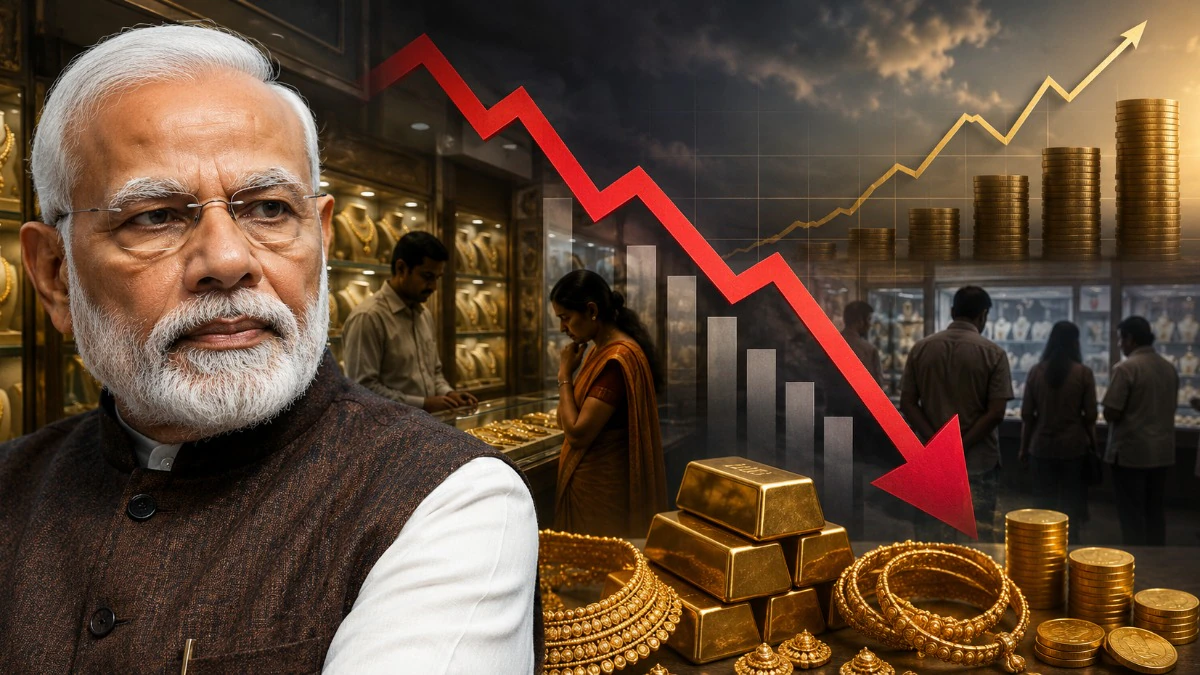
India’s physical gold demand has cooled significantly following the central government's decision to increase import duties from 6 percent to 15 percent. Driven by a 13.2 percent increase in domestic prices and seasonal factors, retail jewelry buying dropped sharply, though investment inflows into gold ETFs remain resilient.
MUMBAI — Physical gold demand across India has cooled substantially throughout late May and early June 2026, driven by a sharp escalation in domestic retail prices, a sweeping import duty hike, and sudden market volatility. According to the June 2026 India Gold Market Update published by the World Gold Council (WGC), domestic gold prices spiked by roughly 13.2 percent over the first half of the year. This structural price increase follows the central government's unexpected administrative decision to raise the basic import duty on gold from 6 percent to 15 percent. The steep increase in landed cost has prompted price-sensitive household consumers to pause seasonal jewelry purchases, transforming market dynamics across the world's second-largest consumer of the precious metal.
Tariff Modifications Disrupt Bullion Market Pricing Structures
The dramatic adjustment in the national tariff architecture has caused significant pricing distortions across localized bullion centers. Immediately after the Ministry of Finance enforced the 15 percent import duty rate on May 13, the domestic physical market experienced extreme supply-demand imbalances.
Official landed bullion prices mechanically surged to reflect the 9 percent absolute increase in baseline customs tariffs. However, spot physical prices on regional exchanges adjusted at a much slower pace. This delayed reaction created an unprecedented layout where domestic gold temporarily traded at a massive discount of nearly $150 per ounce relative to official international landed costs. Bullion dealers and large-scale manufacturing jewellers quickly turned to offloading legacy inventories imported under the older, lower tariff structures, which initially boosted immediate market supply even as retail footfalls dropped.
Retail Jewelry Demand Moderates Amid Price Volatility
While gold investment avenues like domestic Gold Exchange-Traded Funds (ETFs) logged their 12th consecutive month of positive net capital inflows, traditional physical retail consumption has faced serious headwinds.
Corporate retail chains across Mumbai, New Delhi, and Bengaluru reported a steep drop in consumer inquiries. Industry estimates reveal that physical gold demand plunged by nearly 70 percent to just 7.5 tonnes during the immediate fortnight following the duty adjustment, down from 25 tonnes in the same period last year.
Aside from high retail prices, seasonal cultural factors also limited market momentum. The appearance of Adhik Maas—a unique thirteenth month in the Hindu lunar calendar traditionally considered an inauspicious phase for purchasing precious metals—greatly reduced retail purchases. Listed jewelry manufacturing entities saw their public share prices slide by between 2 percent and 17 percent as institutional investors adjusted their quarterly earnings expectations downward to account for weaker discretionary consumer spending.
Official Sources Section
The statistics governing this market contraction are drawn from detailed industry reporting. According to official historical trade monitoring data released by the World Gold Council, the 2026 import tariff hike represents one of the largest single statutory adjustments on record. Quarterly trade summaries compiled by the Ministry of Commerce and Industry show that while official import volumes often adjust with a lag, steep tariff increases historically widen the price gap between official banking channels and unofficial gray-market supply lines.
Quote Section
"According to officials analyzing physical trade volumes across major jewelry hubs, the market is undergoing a necessary consolidation phase as buyers adjust to the new price realities. Industry experts stated that while consumer demand will likely return ahead of the autumn festive season, the near-term procurement pace will remain highly selective."
Why It Matters
The cooling of Indian physical gold demand leaves broad footprints across several sectors of the sub-continental economy:
For Retail Consumers: Working families and wedding planners are facing much higher out-of-pocket costs for bridal jewelry, forcing many to downsize their planned purchases or exchange old jewelry instead of buying new pieces.
For Corporate Jewellers: Thin retail margins are under pressure, forcing companies to re-evaluate their inventory strategies and rely heavily on promotional schemes to clear stock.
For National Macroeconomics: By making gold more expensive, the central government aims to intentionally compress overall import volumes, a policy move designed to support the domestic currency and improve the national current account deficit.
Key Facts at a Glance
Tariff Hike Imposed: The central government hiked the baseline gold import duty sharply from 6 percent to 15 percent.
70% Short-Term Slump: Immediate physical demand dropped to an estimated 7.5 tonnes in the weeks directly following the policy change.
13.2% Price Escalation: Domestic gold prices jumped by over 13 percent since the start of 2026, driven by taxes and currency fluctuations.
ETF Inflows Hold Firm: Despite dropping retail jewelry volumes, paper gold products and domestic ETFs recorded their 12th consecutive month of positive growth.
Projected Annual Decline: The WGC expects total Indian bar, coin, and jewelry demand to decline by 50 to 60 tonnes over the course of 2026.
Frequently Asked Questions (FAQ)
Why did the Indian government increase the import duty on gold to 15 percent?
The government increased the basic import duty to help manage the country's trade balances. High levels of gold imports require substantial foreign exchange outflows, so increasing the tax helps curb excess imports and protects the national current account deficit.
How has the duty hike affected physical gold prices inside India?
The duty hike immediately raised the domestic landed cost of gold. Combined with international price trends and slight variations in the value of the Indian rupee, domestic gold prices have advanced by approximately 13.2 percent since the beginning of 2026.
Is gold investment also declining alongside jewelry demand?
No, there is a clear divide in the market. While physical jewelry consumption has dropped due to high store prices, institutional and retail investment in gold ETFs remains strong, marking a full year of continuous monthly capital inflows.
Source: Comprehensive market updates compiled by the World Gold Council, legal tariff notifications distributed by the Ministry of Finance, and foreign trade logs maintained by the Ministry of Commerce and Industry, Government of India.