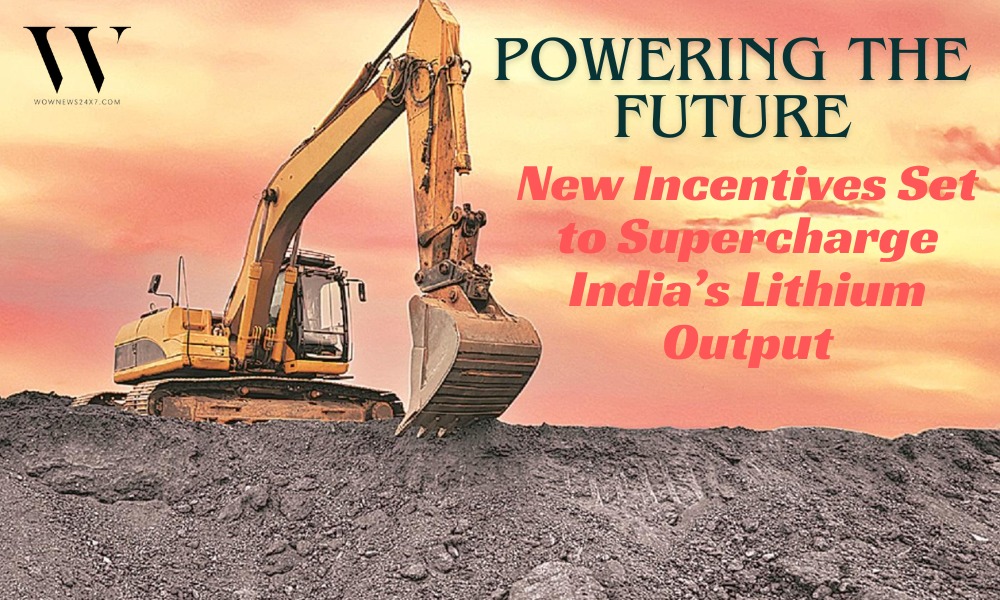
The Indian Ministry of Mines is set to launch a ₹3,000 crore incentive scheme in the coming months to bolster domestic lithium and nickel processing. Aimed at strengthening the EV supply chain and reducing import dependence, the policy sets high-capacity production targets for companies to qualify for fiscal support.
The Indian government is preparing to unveil an incentive scheme worth approximately ₹3,000 crore to bolster domestic processing capacities for lithium and nickel. This strategic initiative, expected to be launched within the next three months, is designed to reduce India's heavy reliance on imported battery materials and support the national target of 30% electric car penetration by 2030.
The policy, spearheaded by the Ministry of Mines, represents a significant escalation in India's efforts to establish a resilient domestic supply chain for the electric vehicle (EV) sector. According to government sources, the incentive framework is currently being finalized to encourage private sector investment in large-scale processing facilities.
Strategic Shift Toward Mineral Security
The upcoming incentive scheme for battery minerals is a core component of the broader National Critical Mineral Mission (NCMM). By providing fiscal support, the government intends to bridge the gap between raw mineral acquisition and the final assembly of battery packs.
To ensure the viability and scale of the new infrastructure, the ministry has outlined strict eligibility criteria. Companies seeking to qualify for these incentives must establish processing plants with significant annual capacities:
Lithium processing plants will require a minimum annual capacity of 30,000 metric tonnes.
Nickel processing facilities must reach a minimum annual output of 50,000 metric tonnes.
Strengthening the EV Value Chain
The push for domestic refining is a direct response to the surge in demand for lithium-ion batteries. Industry projections indicate that India's annual battery demand is expected to rise from 20 gigawatt-hours (GWh) in 2022 to 220 GWh by 2030. Currently, the nation remains heavily dependent on imports, with lithium-ion battery imports reaching approximately $4.7 billion in the 2025-26 fiscal year.
Earlier this year, the Mines Secretary signaled that the government had identified two critical minerals essential for the EV value chain. The focus on lithium and nickel aligns with global trends where these materials are prioritized for their role in high-performance battery chemistry.
Official Context and Ongoing Efforts
The Ministry of Mines has been systematically expanding its footprint across the critical mineral value chain. Earlier in June 2026, the government also rolled out a separate ₹1,500 crore incentive scheme specifically for mineral recycling, targeting the recovery of materials from end-of-life batteries and e-waste.
While the ministry has not yet issued a formal public notification for the processing incentive scheme, officials have previously emphasized the necessity of a localized supply chain to mitigate global market volatility and supply chain disruptions.
Why It Matters
For manufacturers, the introduction of fiscal incentives is expected to lower the cost of production for battery-grade materials. This could potentially drive down the overall cost of electric vehicles in India, making them more competitive for mass-market consumers. Furthermore, the establishment of dedicated processing parks—a goal cited within the National Critical Mineral Mission—will provide the necessary infrastructure to integrate these plants into existing industrial clusters.
Key Facts at a Glance
Budgetary Outlay: Approximately ₹3,000 crore ($313 million) has been earmarked for the lithium and nickel processing incentives.
Targeted Minerals: The scheme focuses exclusively on lithium and nickel to serve the growing EV battery sector.
Timeline: The government expects to officially roll out the policy within the next three months.
Capacity Thresholds: Qualifying lithium plants must hit 30,000 MT/year, while nickel plants require 50,000 MT/year.
Strategic Goal: Part of a broader effort to boost electric car penetration to 30% and two-wheeler penetration to 80% by 2030.
FAQ
Why is India focusing on lithium and nickel processing?
Lithium and nickel are the primary materials required for modern EV batteries. Domestic processing reduces import dependency and builds self-reliance in the energy transition.
How is this different from the battery recycling scheme?
The recycling scheme (launched in June 2026 with ₹1,500 crore) focuses on recovering materials from waste, whereas this upcoming scheme focuses on processing raw mineral ore into battery-grade materials.
Who is eligible for these incentives?
While formal guidelines are pending, companies capable of meeting large-scale capacity requirements (30,000+ tonnes for lithium, 50,000+ tonnes for nickel) will be the primary beneficiaries.
When will the scheme be finalized?
According to recent reports, the policy is currently under finalization by the Ministry of Mines and is anticipated to be unveiled within the next three months.
Source: Ministry of Mines (NCMM), Business Standard, The Economic Times, Reuters.