India's Ministry of Mines is finalizing a ₹3,000-crore incentive scheme to support local lithium and nickel processing. The policy establishes strict minimum capacity requirements to encourage large-scale domestic refining, aiming to reduce the country’s $4.7 billion battery component import bill and secure its 2030 EV targets.
NEW DELHI — India is in the final stages of rolling out a major, multi-billion-rupee fiscal incentive scheme specifically designed to accelerate the domestic processing and refining of essential battery minerals. Deployed under the strategic framework of the National Critical Mineral Mission (NCMM), the upcoming policy package carries an estimated budget outlay of approximately ₹3,000 crore ($313 million). Today, June 23, 2026, senior administration officials confirmed that the Ministry of Mines is finishing up the selection criteria and technical parameters for the plan, marking a major step toward building a self-sustaining electric vehicle (EV) battery ecosystem within the country over the next two to three years.
Targeting Lithium and Nickel Processing Bottlenecks
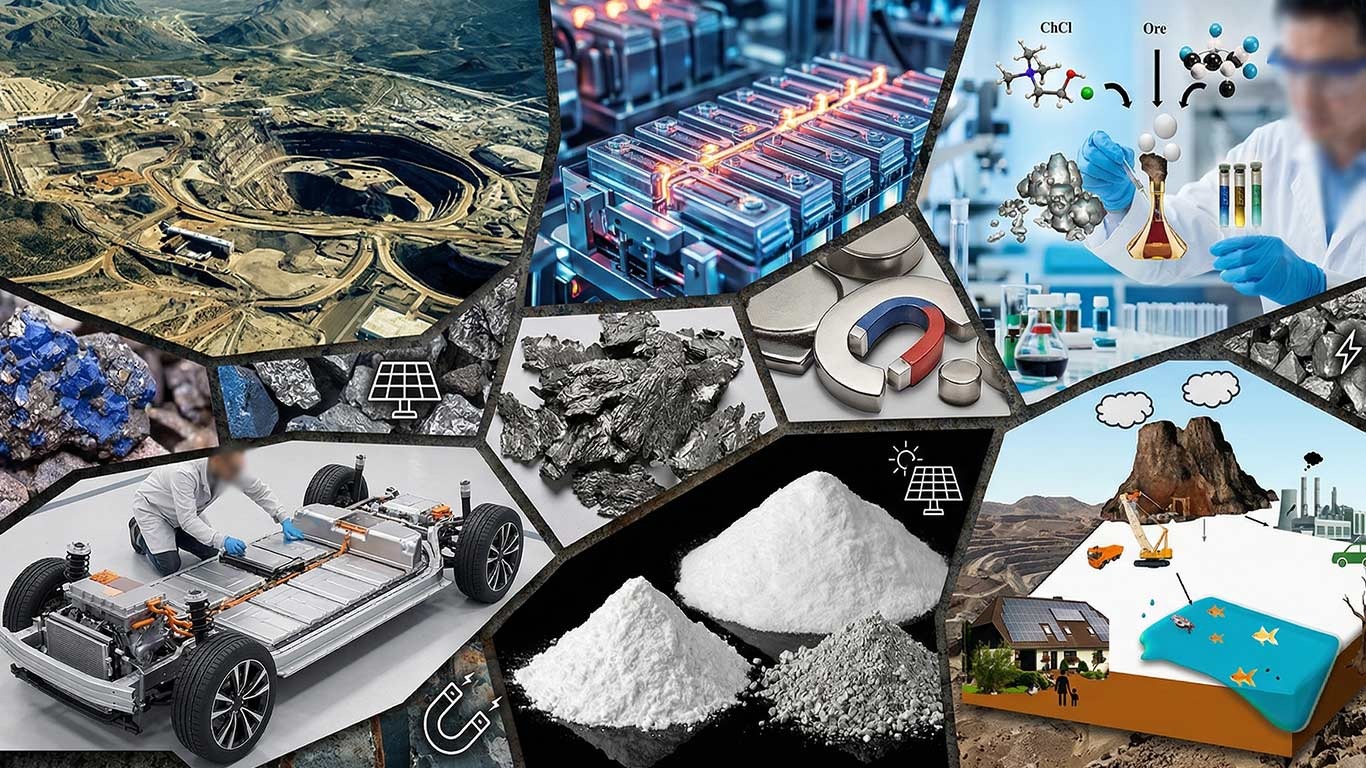
According to initial policy drafts and insights shared by the Ministry of Mines, the upcoming processing framework targets two primary critical minerals linked directly to the domestic EV supply chain: lithium and nickel. While India has rapidly increased its early-stage exploration projects and domestic mineral block auctions, the country currently lacks the advanced hydrometallurgical and chemical refining facilities required to upgrade raw mineral ores or unrefined concentrates into battery-grade chemical compounds.
To address this processing shortfall, the ₹3,000 crore scheme imposes strict minimum capacity requirements to filter for serious industrial players capable of achieving global economies of scale:
Lithium Refining Units: Applicants must develop facilities with a minimum operational output capacity of 30,000 metric tonnes per annum.
Nickel Processing Plants: Eligible projects must demonstrate a baseline manufacturing capacity of at least 50,000 metric tonnes per year.
Technological Mandates: The financial subsidies will prioritize projects that incorporate advanced, eco-friendly chemical separation technologies that minimize hazardous industrial waste streams.
By implementing these high entry thresholds, the government aims to encourage global technology partnerships, attract matching institutional investments, and prevent the fragmentation of local processing capacity.
Driving Decarbonization and Lowering EV Battery Costs
The strategic timing of this processing scheme matches directly with India’s aggressive green transport penetration goals for the end of the decade. The central government’s long-term master plan mandates raising electric car market penetration to 30 percent, alongside an 80 percent adoption target for electric two-wheelers, by the year 2030.
Currently, domestic automakers face tight supply constraints, with EV adoption rates hovering around 6 percent for passenger cars and 9 percent for scooters and motorcycles. Achieving mass-market conversion requires localizing the most expensive component of an electric vehicle the lithium-ion battery pack.
As illustrated by official custom data compiled by trade desks, India's annual lithium-ion battery import bill has skyrocketed from $1.2 billion in FY19 to a record $4.7 billion in the fiscal year ending March 2026. This expanding import bill highlights a major financial vulnerability for domestic manufacturing.
By shifting midstream chemical processing away from foreign monopolies and establishing state-backed critical mineral processing parks locally, the new policy framework is expected to lower battery manufacturing input expenses by up to 20 percent. This cost contraction will pass directly to retail automotive consumers, driving mass market adoption.
Complementing the Sovereign Recycling Network
The incoming ₹3,000 crore primary processing scheme is designed to work in tandem with the recently launched ₹1,500 crore Critical Mineral Recycling Incentive Scheme introduced during the Battery Summit 2026. While the processing scheme handles raw, mined materials extracted from local blocks or acquired from overseas assets like Argentina, the recycling network focuses strictly on urban mining.
The recycling initiative utilizes capital expenditure subsidies to incentivize the extraction of lithium, cobalt, and nickel directly from end-of-life electronics and spent EV battery scrap. Together, these dual policy initiatives create a highly resilient, circular supply chain capable of sustaining India's projected 220 gigawatt-hours (GWh) annual battery demand by 2030.
For institutional market investors, global mining conglomerates, and domestic electronics firms, this coordinated push establishes clear regulatory stability. This policy clarity allows corporate treasuries to commit long-term capital to domestic refining, positioning India as a prominent hub for advanced clean energy hardware manufacturing across South Asia.
Official Sources Section
The fiscal layouts, capacity metrics, and mineral selections detailed throughout this report conform directly to the policy outline updates from the National Critical Mineral Mission (NCMM), operational tracking archives from the Ministry of Mines, and official import-export database ledgers maintained by the Ministry of Commerce and Industry.
Quote Section
"According to officials familiar with the regulatory drafts, the processing scheme represents the missing midstream link in India's battery roadmap, ensuring that mined ores are converted into battery-ready materials locally rather than being exported for refining."
Why It Matters
For global technology developers, automakers, and clean-energy investors, this scheme marks a transition from simple mineral sourcing to comprehensive supply chain independence. Establishing large-scale, domestic lithium and nickel refining operations lowers raw material supply risks, insulates domestic businesses from global trade disputes, and accelerates retail price parity for everyday electric vehicle consumers.
Key Facts at a Glance
Proposed Budget Outlay: The upcoming chemical processing incentive scheme is backed by a targeted ₹3,000 crore fund.
Core Minerals Covered: Focuses on domestic refining capacity for lithium and nickel.
Minimum Capacity Floors: Requires a minimum annual output of 30,000 tons for lithium and 50,000 tons for nickel plants.
Macro Import Pressure: Addresses an expanding import bills that reached a record $4.7 billion for battery components in FY26.
FAQ Section
Why is the government focusing specifically on the processing stage of battery minerals?
While India has stepped up early-stage mining exploration, it lacks the advanced chemical refineries needed to convert raw ore into battery-grade materials, leaving manufacturers reliant on foreign processors.
What are the capacity requirements for companies to qualify for these incentives?
To be eligible for the subsidies, a company's lithium processing facility must reach an annual capacity of at least 30,000 metric tons, while nickel processing units must hit a baseline of 50,000 metric tons.
How does this processing scheme connect with India's battery recycling initiatives?
The processing scheme focuses on refining raw, newly mined materials, while the parallel ₹1,500 crore recycling initiative focuses on recovering lithium and nickel from scrap batteries and e-waste, creating a complete circular economy.
Source: Official regulatory notifications published via the e-gazette library of the Ministry of Mines and economic baseline circulars distributed by the Press Information Bureau (PIB).