U.S. Vice President JD Vance stated that initial high-level talks with Iran in Switzerland have established a strong foundation for a final peace treaty to end the West Asia war. Backed by a 60-day roadmap, the U.S. has temporarily lifted oil sanctions, and both sides have agreed to keep the vital Strait of Hormuz open.
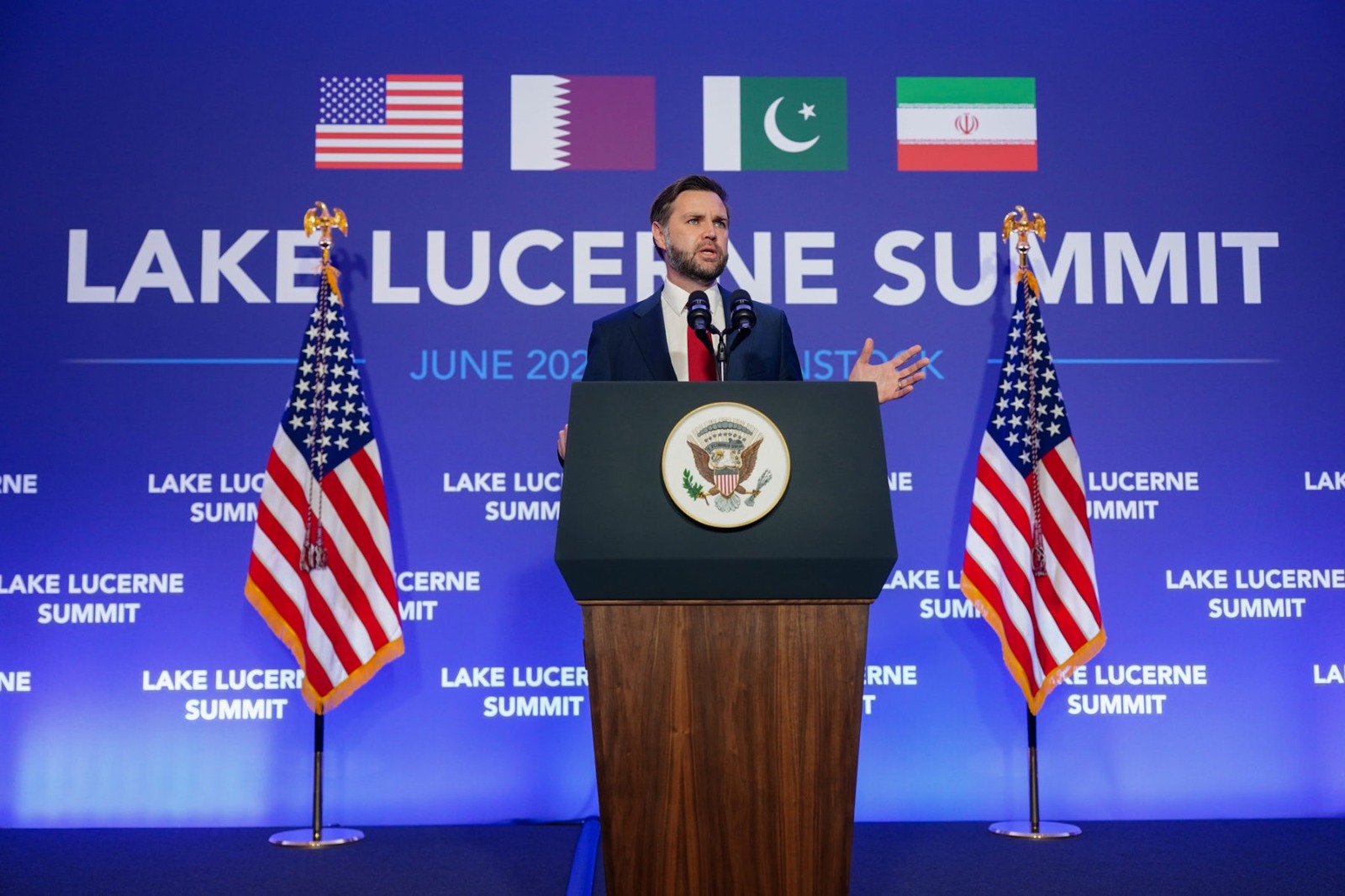
BURGENSTOCK — U.S. Vice President JD Vance announced that high-level diplomatic negotiations with senior Iranian officials have successfully established a "good foundation for a successful final deal" to permanently end the ongoing West Asia war. Speaking on Monday, June 22, 2026, from the Bürgenstock luxury resort in Switzerland, Vance confirmed that the United States and Iran have agreed to a structured framework to resolve the conflict. Backed by mediators from Pakistan and Qatar, the two nations have committed to a 60-day roadmap toward a final peace agreement. The developments mark a major diplomatic pivot since the outbreak of full-scale hostitilies in late February.
Strategic Roadmaps and Maritime Security Mechanisms
According to a joint statement issued by Pakistani and Qatari mediators, the first round of the Lake Lucerne Summit concluded after 18 hours of intensive, continuous consultations. While Vance acknowledged that the initial talks had rocky moments, negotiators succeeded in laying down primary structural protocols. "The final deal is the house," Vance told reporters. "We set the foundation. We haven't built the house, but we've laid a successful foundation to get to a good place for the American people."
A primary breakthrough involved securing the absolute stability of global energy supply lines. U.S. and Iranian representatives verified the establishment of specific "mechanisms" to ensure that the critical Strait of Hormuz remains entirely open to international shipping. The waterway had been closed by Tehran early in the conflict, triggering severe global economic shocks. President Donald Trump subsequently confirmed from Washington that the channel is now "totally open" to merchant transit, though he warned that the U.S. would consider imposing maritime tolls after the 60-day interim window if a permanent deal is not finalized.
Regional De-escalation and Disputed Nuclear Terms
The diplomatic framework addresses active military operations outside of Iran's borders. Mediators announced the formation of a joint "de-confliction cell" involving Lebanon to immediately halt regional combat operations. The ceasefire between Israel and Iran-backed Hezbollah forces in southern Lebanon appeared to be holding securely. Lebanese security officials reported that adherence to the truce was almost total, allowing the Israeli military to begin lifting safety restrictions across multiple border communities.
However, sharp narrative contradictions emerged regarding the state of Iran's nuclear program. Vance declared that Tehran had agreed to invite International Atomic Energy Agency (IAEA) inspectors back into the country, calling it "a major milestone" toward denuclearization.
Iranian Foreign Ministry spokesman Esmaeil Baqaei quickly disputed the U.S. assertion, stating to the state-run IRNA news agency that Tehran did not negotiate on its nuclear program nor accept any new commitments during the session. Baqaei clarified that while the U.S. delegation presented its positions, only a brief, non-detailed discussion took place regarding the nuclear issue.
Economic Sanctions Relief and Market Reaction
The immediate practical impact of the Switzerland summit was felt across global commodities markets. Following the initial breakthrough, the U.S. Department of the Treasury issued a temporary 60-day general license authorising the production, sale, and delivery of Iranian-origin crude oil and petroleum products through August 21, 2026. Treasury Secretary Scott Bessent cited the "ongoing productive talks" as the core catalyst for the sweeping regulatory waiver.
International crude oil prices fell immediately following the sanctions waiver news, relieving global energy consumers. In tandem with the oil license, Vance suggested the U.S. could authorize unfreezing specific Iranian financial assets exclusively to fund purchases of American agricultural exports, including soy, corn, and wheat.
Despite the diplomatic progress, domestic fiscal positioning indicates continued caution; Pentagon officials are actively seeking an $80 billion supplementary funding buffer from a divided Congress to cover past and contingent military operational costs linked to the theater.
Official Sources Section
The timelines, diplomatic resolutions, and maritime frameworks outlined in this article are sourced directly from official joint communiqués issued by the Ministry of Foreign Affairs of Pakistan and the Qatari mediation delegation. Strategic policy disclosures conform to press releases from the U.S. Department of the Treasury, the White House press office, and state media statements distributed by the Islamic Republic News Agency (IRNA).
Quote Section
"According to officials embedded within the Swiss summit delegation, lower-level technical teams will remain in place at the Bürgenstock resort throughout the week to formalize specific enforcement protocols while principal leaders return to their respective capitals."
Why It Matters
For global businesses, maritime shipping companies, and international energy markets, the 60-day roadmap temporarily eliminates major global supply chain risks. Reopening the Strait of Hormuz to toll-free commercial transit and allowing Iranian oil back into Western markets immediately stabilizes international fuel costs and suppresses global inflationary pressures.
Key Facts at a Glance
Negotiation Milestone: U.S. and Iranian delegations agreed on a 60-day roadmap to finalize a permanent peace treaty.
Maritime Access Unlocked: The Strait of Hormuz has been declared open to global shipping under localized communication cells.
Economic Relief Granted: The U.S. Treasury issued a general license lifting sanctions on Iranian crude oil exports through August 21, 2026.
Border Safety Protocol: A dedicated de-confliction cell has been established to stabilize the cessation of hostitilities in southern Lebanon.
FAQ Section
What did Vice President JD Vance mean by stating the "foundation" has been laid?
Vance meant that the two sides have agreed on the baseline mechanics, timelines, and communication cells required to negotiate a final deal, though specific fine print details on nuclear inspection and long-term tolls remain unresolved.
How long will the temporary U.S. sanctions relief on Iranian oil last?
According to the official general license published by the U.S. Treasury Department, the temporary waiver is strictly bounded and will expire at 12:01 AM Eastern Daylight Time on August 21, 2026.
Why are there conflicting statements regarding UN nuclear inspectors?
While the U.S. delegation claims Iran agreed to invite IAEA inspectors back as a milestone, Iran's Foreign Ministry maintains that no new nuclear commitments were formally accepted during the initial 18-hour session.
Source: Official regulatory briefing logs archived by the U.S. Department of the Treasury and international war summary transcripts compiled by the Ministry of Foreign Affairs of Pakistan.