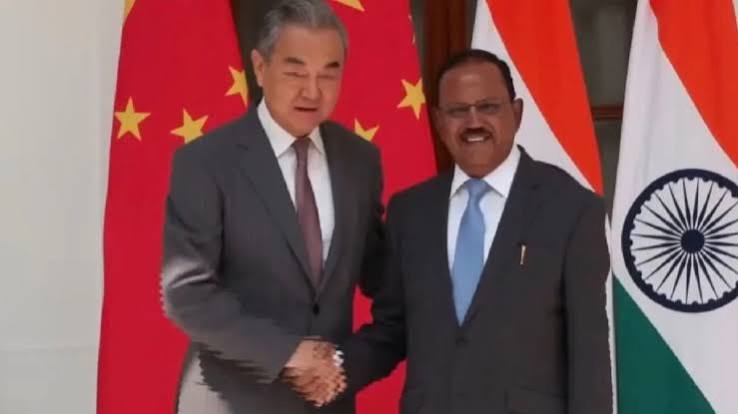
National Security Advisor Ajit Doval has arrived in Beijing for the 25th round of Special Representatives boundary talks with Chinese Foreign Minister Wang Yi. The high-level dialogue aims to stabilize border management and pave the way for a potential visit by President Xi Jinping to India for the upcoming BRICS Summit.
NEW DELHI / BEIJING — National Security Advisor (NSA) Ajit Doval traveled to Beijing on Monday, August 24, 2026, to co-chair high-level diplomatic discussions.
Mr. Doval is scheduled to meet with Chinese Foreign Minister and Politburo member Wang Yi for the 25th round of Special Representatives (SR) talks on the India-China boundary question. The diplomatic engagement comes at a crucial juncture, serving as foundational preparation ahead of Chinese President Xi Jinping’s anticipated visit to India for the upcoming BRICS Summit in New Delhi.
Strategic Dialogue and Border Management
The high-stakes meetings focus heavily on reviewing stability along the 3,488-kilometer Line of Actual Control (LAC) and addressing lingering flashpoints. Officials from both nations are evaluating framework mechanisms to advance "early harvest" agreements on boundary delimitation, building on recent diplomatic momentum following discussions under the Working Mechanism for Consultation and Coordination (WMCC).
According to official announcements, foreign policy disclosures, and diplomatic updates:
Core Agenda: The 25th round of Special Representatives talks led by NSA Ajit Doval and Wang Yi.
Summit Context: Paving the way for President Xi Jinping's prospective visit to India for the September 12–13 BRICS Summit.
Bilateral Review: Stocktaking of broader trade, regional stability, and military disengagement protocols across Eastern Ladakh and sectoral friction points.
Institutional Frameworks: Utilizing the SR mechanism established in 2003 to maintain structured dialogue despite complex territorial differences.
Official Sources Section
Ministry of External Affairs (MEA), Government of India: Official diplomatic statements, border management briefings, and ministerial visit schedules.
Embassy of India in Beijing: Diplomatic communication logs and bilateral summit coordination updates.
Ministry of Foreign Affairs of the People's Republic of China: Official statements regarding bilateral dialogues, boundary mechanisms, and high-level visits.
Quote Section
According to statements released by External Affairs Minister S. Jaishankar regarding bilateral preconditions:
"Peace and tranquillity in the border areas is a prerequisite for good relations, and the state of the border, to a very large measure, naturally would determine the state of the relations."
Why It Matters
For regional stability, international investors, and diplomatic observers, the resumption of high-level Special Representative talks signals a concerted effort to normalize state relations following years of border friction. Establishing enduring peace along the frontier remains critical for broader economic cooperation and successful multilateral engagements.
Key Facts at a Glance
Indian Envoy: National Security Advisor Ajit Doval.
Chinese Counterpart: Foreign Minister Wang Yi.
Event: 25th Round of Special Representatives Boundary Talks.
Significance: Precedes President Xi Jinping's anticipated attendance at the September BRICS Summit in New Delhi.
FAQ Section
What is the primary objective of NSA Ajit Doval's visit to Beijing?
Mr. Doval is co-chairing the 25th round of Special Representatives talks on the India-China boundary question with Wang Yi.
Why are these boundary talks significant right now?
The discussions serve as critical diplomatic groundwork ahead of Chinese President Xi Jinping's expected visit to India for the BRICS Summit.
When was the Special Representatives mechanism established?
The bilateral mechanism was created in 2003 to address and manage the complex 3,488-kilometer boundary dispute.
Where can stakeholders monitor official updates on the dialogue?
Official summaries and press briefings are published through the Ministry of External Affairs Portal.
Source: Ministry of External Affairs, The Hindu, Economic Times