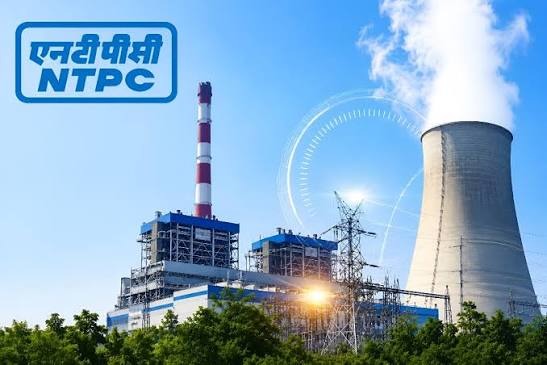
NTPC Limited has expanded its installed capacity to 90,668 MW following the successful trial operation of the 800 MW Unit-2 at the Patratu Super Thermal Power Project in Jharkhand. Developed by its subsidiary PVUNL, the plant is set to play a pivotal role in meeting the region's long-term power demands.
State-run power giant NTPC Limited has reached a landmark 90-gigawatt (GW) threshold in its total installed capacity, bolstered by the successful trial operation of Unit-2 at the Patratu Super Thermal Power Project (STPP). The 800 MW unit, developed by Patratu Vidyut Utpadan Nigam Limited (PVUNL)—a joint venture between NTPC and the Jharkhand Bijli Vitran Nigam Limited (JBVNL)—is a cornerstone of the company’s thermal power expansion strategy.
The addition of this unit, which follows the successful commercial commissioning of Unit-1 in November 2025, strengthens NTPC’s operational footprint in eastern India. As the company continues to diversify its energy portfolio, the Patratu STPP stands as a critical asset intended to meet the rising industrial and domestic power demand in Jharkhand and the surrounding region.
Expansion of the Patratu Super Thermal Power Project
The Patratu STPP Phase-I consists of three units of 800 MW each, totaling 2,400 MW. The project is being executed under an Engineering, Procurement, and Construction (EPC) contract awarded to Bharat Heavy Electricals Limited (BHEL), with a project value of approximately ₹18,668 crore.
Following the successful synchronization of Unit-2 with the national grid on March 17, 2026, and the subsequent completion of mandatory trial operations, the unit is now integrated into the NTPC Group’s generation portfolio. This milestone brings the group’s total installed capacity to 90,668 MW, reinforcing its status as India’s largest power producer. According to current project timelines, the third and final unit of Phase-I is anticipated to reach the trial run stage by February 2027.
Strategic Importance for India's Energy Grid
The Patratu project is designed to provide stable, baseload thermal power, which remains vital for grid stability as India integrates more intermittent renewable energy sources. Under the terms of the joint venture, approximately 85% of the power generated from the Patratu STPP is allocated to the state of Jharkhand, directly supporting the state's economic and infrastructure development goals.
To ensure long-term fuel security for the plant, coal is sourced from the Banhardih coal block in the Latehar district. The project is not only an exercise in capacity addition but also a transition toward modern, efficient thermal technology, replacing older, less efficient units previously associated with the Patratu site.
Quote Section
"According to officials at NTPC Limited, the successful integration of Unit-2 marks a significant step toward achieving the company’s ambitious growth targets and underscores its commitment to providing reliable, affordable energy to support India’s long-term infrastructure and industrial requirements."
Why It Matters
For businesses and households in Jharkhand, the steady supply of power from the Patratu STPP is essential for industrial growth and reliable grid access. For investors, the consistent commissioning of these 800 MW units validates NTPC’s project execution capabilities in a challenging infrastructure landscape. As the company moves toward its 149 GW target by 2032, the Patratu project serves as a clear benchmark for its thermal generation capacity scaling.
Key Facts at a Glance
New Capacity: 800 MW added from Unit-2 of the Patratu STPP.
Total Group Capacity: The NTPC Group has now surpassed 90,668 MW.
Project Stakeholders: PVUNL (a JV between NTPC Ltd [74%] and JBVNL [26%]).
Phase-I Scope: 3 units of 800 MW each, totaling 2,400 MW.
Power Allocation: 85% of generated electricity is dedicated to Jharkhand.
FAQ
What is the status of the Patratu STPP Phase-I?
Phase-I includes three 800 MW units. Unit-1 is already commercially operational; Unit-2 has completed trial runs; and Unit-3 is expected to begin trial runs by February 2027.
Why is this project significant for NTPC?
This project helps NTPC reach its target of 149 GW capacity by 2032 while simultaneously modernizing thermal power infrastructure in eastern India.
Who is the primary contractor for this project?
The engineering, procurement, and construction (EPC) contract for the Patratu STPP is being executed by Bharat Heavy Electricals Limited (BHEL).
Source: NTPC Limited, BSE India, PVUNL