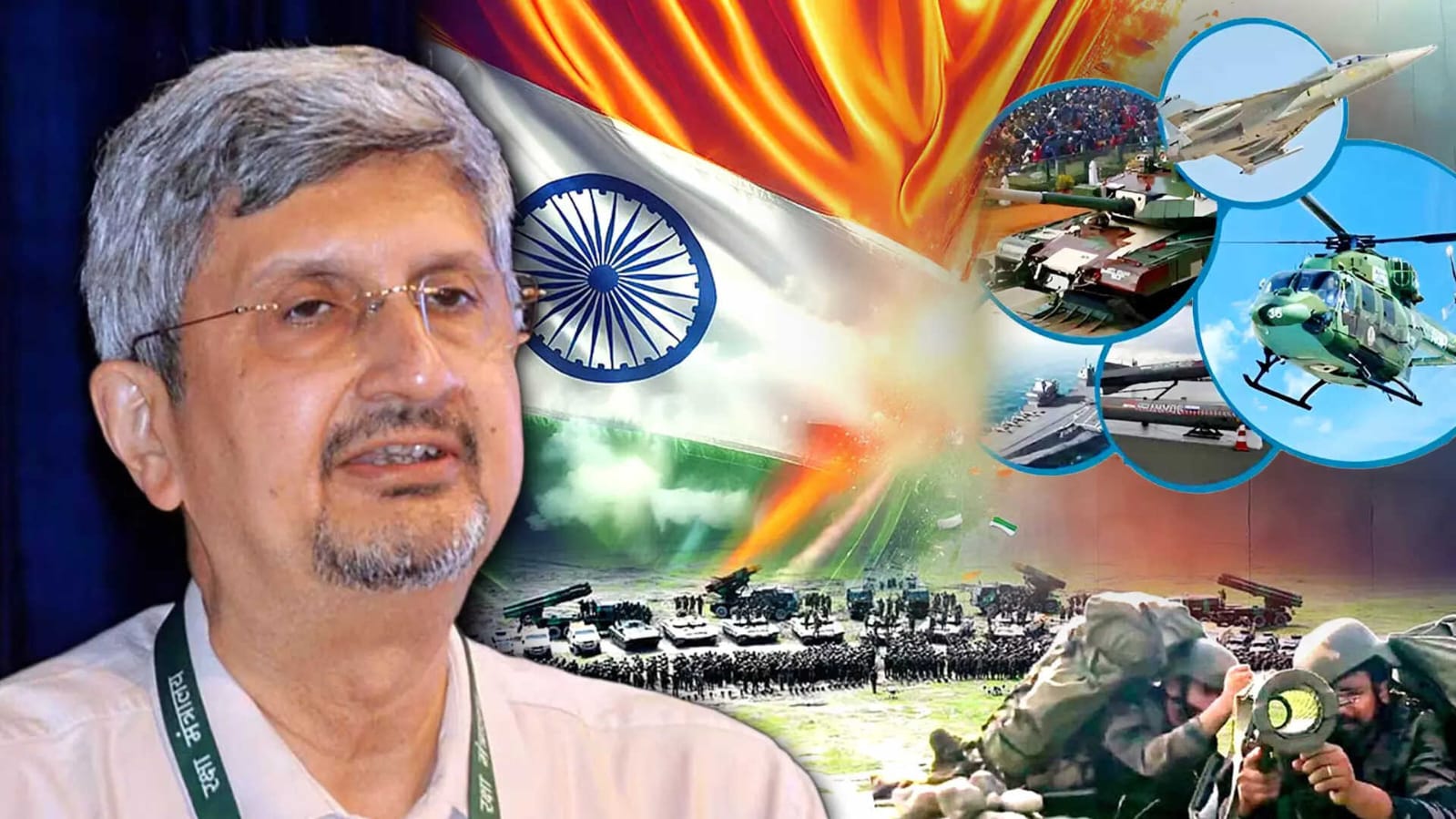
DRDO Chairman Samir V. Kamat has warned that space will decide the outcome of future wars and urged India to launch a whole‑of‑nation push to close its space‑defence gap. He highlighted rising threats in space‑based surveillance, navigation, and missile detection, stressing the need for deeper civil‑military fusion, higher R&D, and sovereign technologies to secure India’s strategic edge.
India’s Defence Research and Development Organisation (DRDO) Chairman Samir V. Kamat has warned that space will decide the outcome of future wars and called for a “whole‑of‑nation” effort to rapidly close India’s capability gap with global rivals. Speaking at the 4th Indian DefSpace Symposium in New Delhi, Kamat stressed that catching up will be a “Herculean challenge” without massive investment, tighter civil‑military integration, and deeper collaboration across government, industry, and academia in defence and space domains.
Growing importance of space in warfare
Kamat highlighted that warfare is no longer confined to land, air, and sea; it now spans cyber, information, and space as critical operational domains. Those nations that dominate in these integrated domains will gain decisive strategic advantage in future conflicts, he said, underscoring that space‑based capabilities—from surveillance and navigation to early‑warning and missile detection—will increasingly shape battle outcomes.
He noted that India’s space‑based assets are central not only for day‑to‑day communications and positioning but also for secure military networks, intelligence, and surveillance, making their protection and resilience a national security imperative.
India’s current capability gap
According to Kamat, India is still far behind leading powers whose space programmes are advancing at an alarming pace, especially in areas such as space situational awareness, secure navigation, and early missile‑launch detection. He flagged that DRDO alone cannot bridge this gap and that India must ramp up research and development spending, foster innovation, and de‑risk cutting‑edge technologies for defence use.
The chairman also pointed to ongoing work on space‑based surveillance, imaging radar, and restricted‑service NAVIC for military operations, but emphasised that these efforts need to be accelerated and better integrated across the armed forces.
Whole‑of‑nation push needed
Kamat called for a “whole‑of‑nation” approach, urging ministries, public and private sector players, startups, MSMEs, and academia to co‑design and co‑deliver space‑enabled defence capabilities. He argued that India must build sovereign, import‑resistant capabilities in critical technologies so that its space‑based assets remain operational even in contested, high‑threat environments.
Civil‑military fusion, particularly in areas like imaging radar and satellite‑based data processing, will be key to ensuring dual‑use technologies can rapidly migrate from civilian to defence applications.
Key highlights
- Space is now a decisive domain for future wars, not just a support tool
- India needs a coordinated push across government, industry, and academia to close its space‑defence gap
- DRDO is focusing on space situational awareness, secure NAVIC services, and missile‑launch detection
- Civil‑military fusion and indigenous R&D will be central to sovereign space‑based capabilities
Sources: ANI, The Economic Times, LatestLY, external defence‑space analysis platforms