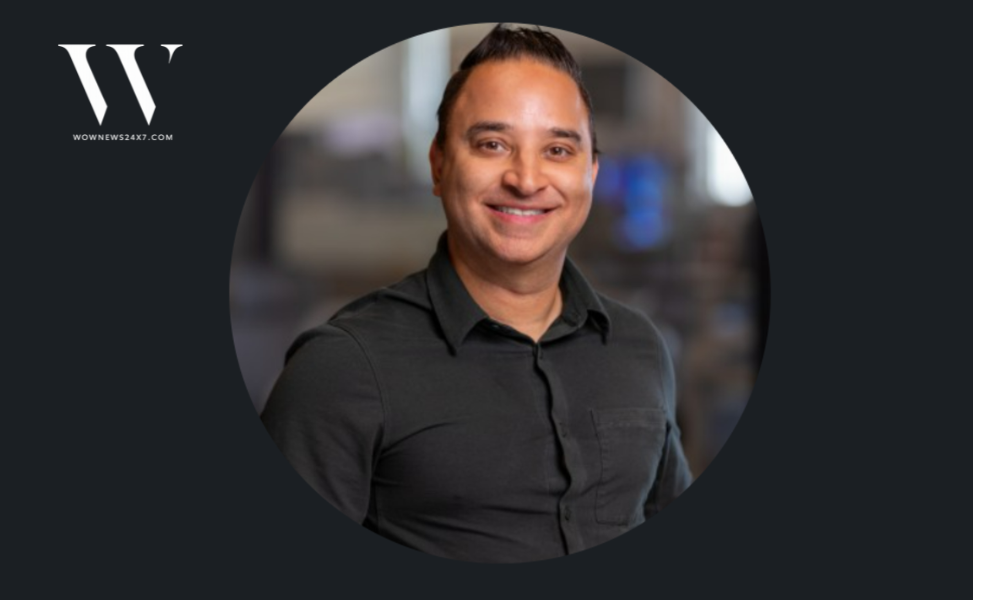
Genesis AI has appointed Indian-American technology specialist Pally Kumar as its new Head of Operations. Bringing 20 years of hardware infrastructure experience from Tesla, Amazon, and Lyft, Kumar will oversee the manufacturing and data scaling required to bring the company's GENE-26.5 humanoid robotics platform into global industrial markets.
SAN FRANCISCO: Genesis AI, a global full-stack robotics enterprise, has officially appointed Indian-American technology leader Pally Kumar as its new Head of Operations. The major executive transition, confirmed via company announcements on Tuesday, June 2, 2026, marks a significant corporate expansion as the firm prepares to transition its general-purpose physical AI systems into industrial-scale production.
According to institutional press releases distributed from the company’s regional operations base in San Francisco, California, Kumar will directly oversee the scaling, supply chain development, and manufacturing initiatives for the firm's advanced hardware and data collection engines. With a distinct 20-year career spent building the physical deployment frameworks behind automated systems at major corporations, Kumar’s appointment is designed to transform the company's technical prototypes into globally viable commercial assets. This executive addition occurs as international venture capital markets aggressively shift focus from purely digital software agents toward real-world, embodied robotic intelligence.
Two Decades of Hardware Deployment Across Big Tech Platforms
The appointment of Pally Kumar brings deep operational expertise to Genesis AI during a crucial growth phase. Kumar’s professional history covers fundamental shifts in autonomous engineering, manufacturing, and technical program leadership at some of the world's most valuable tech firms.
Prior to accepting his executive seat at Genesis AI, Kumar served as the Director of Manufacturing at the robotics firm Cobot. His industrial reputation was built on structural tenures that include four years at Tesla, where he optimized the automated assembly setups for the Model S, Model 3, and Model X passenger lines, alongside managing early-stage Autopilot hardware integration.
Furthermore, his four-year tenure at Amazon’s high-tech hardware division, Lab126, proved instrumental in the scaling of consumers' home robotics architectures, notably the Astro, Ring, and Blink product lines. This was further complemented by an intensive tenure as a technical program management lead at Lyft’s specialized Level 5 autonomy group.
Aligning Robotic Brain Capabilities with Industrial Scaling
The operational challenge currently facing Genesis AI involves building the physical supply chains capable of keeping pace with rapid software breakthroughs. The company recently debuted its state-of-the-art robotic brain model, the GENE-26.5, which mimics intricate human skills and spatial reasoning.
To maximize the real-world utility of the GENE-26.5 platform, Kumar’s operations desk is tasked with launching a new manufacturing pipeline. This includes mass-producing a dexterous robotic hand featuring a 1:1 human mirror capability, alongside tactile-sensing data collection gloves used to train neural networks via live human demonstration.
Executive Insights on the Physical AI Ecosystem
Industry data reveals that the primary challenge for advanced robotics firms remains the gap between controlled laboratory testing and chaotic, real-world deployment.
"According to officials familiar with the long-term operational roadmap, the executive team expansion includes adding senior legal and logistics talent alongside the new leadership position," a corporate spokesperson noted. "Organizers stated that the technical breakthroughs achieved in neural modeling are real, but the companies that ultimately win the robotics race are those that build an unshakeable operational backbone behind their hardware."
Reflecting on his new mandate via public career updates, Kumar emphasized that data collection models and physical factory lines must scale in perfect alignment, ensuring that when autonomous systems step into corporate spaces, they perform reliably under industrial-grade conditions.
Broader Impact on Global Robotics Supply Chains and Labor Markets
The inclusion of an infrastructure specialist like Kumar signifies a maturation point for the broader automation industry, generating far-reaching implications for commercial sectors.
Major Strategic Implications:
Accelerated Time-to-Market: Standardizing hardware manufacturing allows Genesis AI to shift from limited beta testing to active commercial leasing programs ahead of traditional timelines.
Resilient Tech Components: Kumar's experience at Amazon Lab126 will help secure rare earth elements and microprocessors, insulating production lines from global logistics bottlenecks.
Upgraded Data Integrity: Integrating tactile-sensing gloves into continuous data streams gives AI models more precise human-interaction inputs, accelerating software training cycles.
Official Sources Section
The executive appointments, professional histories, and product technical specifications outlined in this report are compiled directly from public corporate updates issued by Genesis AI, verification registries from the University at Buffalo alumni network, and official biographical briefs cataloged by the Federal Trade Commission (FTC) tracking corporate leadership changes.
Why It Matters
For tech investors and labor market analysts, this leadership transition proves that the artificial intelligence landscape is entering its physical phase. As high-level executives leave standard automotive and consumer electronics positions to join robotics companies, it shows a growing confidence in general-purpose automation. This development means that human-level robotic assistants are moving out of science fiction and closer to becoming real fixtures on factory floors and in logistics centers.
Key Facts at a Glance
Executive Shift: Indian-American tech leader Pally Kumar has been named Head of Operations at Genesis AI.
Big Tech Lineage: Kumar brings 20 years of experience designing hardware infrastructures at Tesla, Amazon Lab126, and Lyft Level 5.
Core Assignment: His primary mandate involves scaling data collection networks and factory manufacturing for the new GENE-26.5 robotic brain.
Dual Team Expansion: Kumar joins the expanding executive board alongside Damien Kieran, who takes over as the Head of Legal.
Frequently Asked Questions
What does the term "Physical AI" mean in the context of this promotion?
Physical AI refers to artificial intelligence software that is embedded directly into physical machines like humanoid robots or autonomous vehicles allowing them to interact with, learn from, and safely navigate real-world environments.
What specific products did Pally Kumar help build before this role?
Over the past two decades, Kumar helped manage the manufacturing and hardware programs for Tesla’s Model S, 3, and X vehicles, Amazon's Astro, Ring, and Blink consumer home systems, and Lyft's Level 5 self-driving division.
How will this operational appointment impact the commercial availability of robots?
By applying mass-production methodologies learned at Tesla and Amazon, the appointment aims to lower production costs and speed up delivery timelines, making advanced general-purpose robots available to commercial warehouses and businesses much sooner.
Source: Genesis AI Press Room, University at Buffalo Engineering Alumni Directory, Federal Trade Commission Corporate Filing Archives