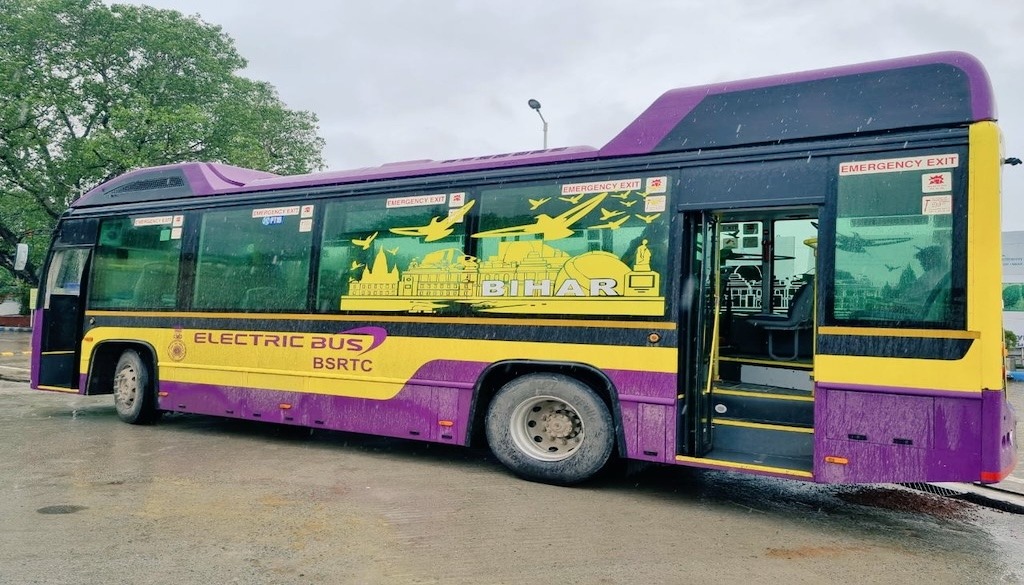
The Bihar State Road Transport Corporation (BSRTC) will introduce 150 air-conditioned electric buses in Patna by July 2026 under the PM e-Bus Sewa Scheme. The rollout includes 50 dedicated pink buses featuring enhanced ITMS security components to ensure safe, reliable, and eco-friendly public commuting for women.
PATNA — The urban transit network of Bihar's capital is poised for a major environmental and structural upgrade, with 150 air-conditioned electric buses scheduled to enter commercial operations by July 2026. Administered under the central government’s flagship PM e-Bus Sewa Scheme, this deployment introduces a vital sustainable commuting alternative. Crucially, the incoming fleet features 50 dedicated pink buses reserved exclusively for women, addressing key urban safety and green mobility priorities simultaneously.
The formal rollout commenced with the signing of a long-term concession agreement between the Bihar State Road Transport Corporation (BSRTC) and private green mobility operator GreenCell Mobility in Patna. The eco-friendly initiative is designed to transition the city away from fossil-fuel dependencies while modernizing safety frameworks for everyday office commuters, students, and seasonal travelers.
Technical Specifications and Fleet Distribution Metrics
According to formal project blueprints released by the state transport department, the 150 electric vehicles allocated to Patna are part of a larger 400-bus master allotment for the state of Bihar. The total regional distribution splits evenly between compact nine-meter buses and higher-capacity 12-meter models to maximize route efficiency across differing street configurations.
While the capital city remains the primary focal hub with 150 vehicles, the remaining 250 units will be distributed equally across five secondary urban centers: Gaya, Bhagalpur, Muzaffarpur, Darbhanga, and Purnia, which will receive 50 buses each. Mechanically, the incoming buses boast an operational single-charge range of up to 180 kilometers.
To support the transition, BSRTC has fast-tracked the construction of specialized high-voltage charging stations near prominent local terminals, including active builds at Phulwarisharif and the Inter-State Bus Terminal (ISBT).
Specialized Safety Protections for Female Commuters
The expansion of the "pink bus" sub-fleet marks a notable step forward for inclusive municipal transport planning. Distinguished by their unique color coding, these 50 women-only vehicles serve as functional safety shields across active urban corridors.
| Fleet Variant | Vehicle Count | Target Base Color | Primary On-Board Features |
| Saffron E-Buses | 100 Units | Saffron | Fully Air-Conditioned, Audio Systems |
| Pink E-Buses | 50 Units | Pink | Panic Buttons, CCTV, Sanitary Dispensers |
To maximize commuter peace of mind, the pink units are outfitted with an integrated safety array managed via an Intelligent Traffic Management System (ITMS). On-board assets include high-definition CCTV surveillance, global positioning system (GPS) tracking, active panic buttons linked to a central municipal command station, and automated sanitary pad dispensers.
Furthermore, the transport department is advancing gender-inclusive local employment by providing heavy vehicle driving training to an initial cohort of 100 female operators to serve as frontline transit staff.
Official Sources Section
The operational route maps, vehicle dimensions, and investment targets cited throughout this dispatch conform to public declarations from the Bihar Transport Department and BSRTC administrator desk. Structural project guidelines and funding parameters are aligned with statutory protocols managed under the Central Ministry of Housing and Urban Affairs' PM e-Bus Sewa national network.
Quote Section
"According to Transport Department Secretary Raj Kumar, the deployment of 400 AC electric buses across the state under the PM e-Bus Sewa scheme will provide a fresh impetus to urban public transport, offering safe, comfortable, and modern travel while significantly lowering urban pollution."
Why It Matters
The rapid integration of electric transit alternatives delivers direct practical benefits to both city budgets and public health. For local residents, shifting high-density routes toward battery-powered models helps lower respiratory health risks by phasing out aging diesel and compressed natural gas (CNG) emissions from congested streets. For female professionals and students, the cost-effective service paired with real-time tracking via the specialized "Chalo" application reduces transit delays, helping boost women's participation in the local workforce.
Key Facts at a Glance
Core Target Timeline: A fleet of 150 electric AC buses will deploy across Patna routes by July 2026.
Safety Integration: The allocation includes 50 dedicated pink buses equipped with real-time CCTV, GPS tracking, and panic buttons.
Statewide Scope: Bihar's total scheme deployment encompasses 400 electric vehicles distributed across six major municipal hubs.
Route Configuration: The new vehicles will service 14 key transit lines, with the highest concentration of 30 buses assigned to the Kargil Chowk–Danapur Station corridor.
Frequently Asked Questions
Which routes will the new electric buses serve in Patna?
The buses will ply 14 major routes connecting key internal areas and neighboring districts, including major lines between Kargil Chowk to Danapur Station, AIIMS, Patna Sahib Station, Bihta IIT, and Muzaffarpur.
Can men travel on the newly launched pink buses?
No. The pink buses are a specialized transit option reserved exclusively for female commuters, students, and working professionals to guarantee safe and hassle-free city travel.
How can commuters track the timing and live location of these e-buses?
Passengers can view real-time vehicle positions, active ticket prices, and exact arrival schedules digitally by using the official "Chalo" mobile application linked to the BSRTC network.
Source: