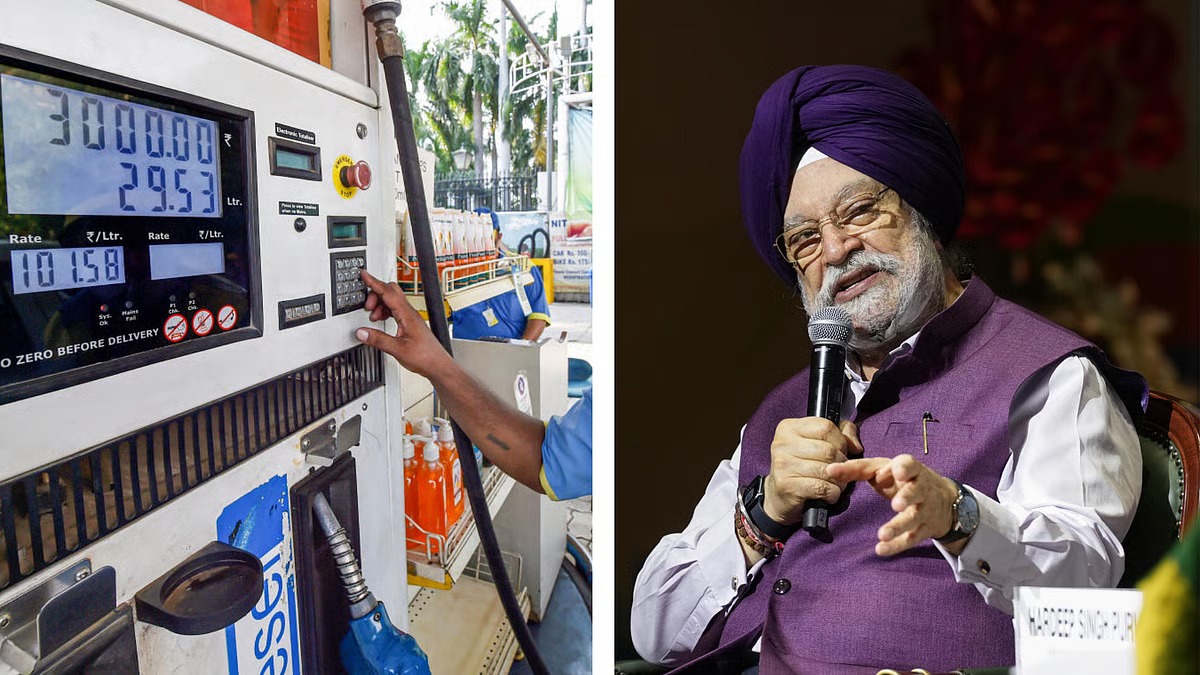
Union Minister Hardeep Singh Puri has clarified the factors influencing petrol and diesel prices, citing global market volatility and energy security as primary drivers. While consumers look for cost relief, the government emphasizes a balanced approach focused on long-term price stability through energy diversification and domestic biofuel production initiatives.
Minister Hardeep Singh Puri addresses potential fuel price revisions, citing global market volatility and the need for long-term price stability.
NEW DELHI — Union Minister for Petroleum and Natural Gas, Hardeep Singh Puri, has provided clarity on the current state of domestic fuel pricing amid persistent public speculation regarding potential drops in petrol and diesel prices. Speaking at a press briefing on Monday, July 6, 2026, the Minister emphasized that while the government monitors international oil markets closely, fuel pricing decisions are influenced by a complex interplay of global supply chain dynamics and geopolitical stability.
The Minister's statement comes as consumers and businesses across India continue to seek relief from fluctuating fuel costs. Addressing the government's approach to the petrol and diesel prices framework, Puri noted that Oil Marketing Companies (OMCs) maintain a degree of autonomy in adjusting retail rates based on their financial health and the volatility of crude oil imports.
Understanding the Factors Behind Pricing
The pricing of petrol and diesel prices in India is fundamentally tethered to the Indian Basket of crude oil, which is heavily impacted by production decisions made by OPEC+ and broader global energy demand. Minister Puri explained that the primary objective for the government remains ensuring energy security and insulating the domestic market from extreme international price swings.
"According to officials, the government is currently evaluating the stability of global energy markets before considering any structural shifts in retail pricing," the Ministry stated in a follow-up release. The Minister added that maintaining steady petrol and diesel prices is essential for controlling inflation and supporting the transport and logistics sectors, which are vital to the national economy.
Economic Impact and Consumer Sentiment
For consumers, the anticipation of a reduction in petrol and diesel prices is tied directly to the cost of living. Fluctuations in fuel costs directly affect the price of essential commodities, as logistics and transportation costs are passed on to the end-user. Small businesses and fleet operators have been particularly vocal about the need for predictability in fuel expenses to plan their operations effectively.
Analysts suggest that while crude oil prices have shown some signs of moderation, the OMCs remain cautious. These companies had previously absorbed significant losses during periods of high global prices and are now prioritizing the stabilization of their own balance sheets to fund investments in refinery capacity and the transition toward green hydrogen and biofuels.
The Shift Toward Energy Diversification
In his address, Minister Puri also highlighted that the long-term solution to volatile petrol and diesel prices lies in energy diversification. The government's push for the "Ethanol Blended Petrol" (EBP) program and the expansion of the EV infrastructure are designed to reduce India's reliance on imported crude oil.
By increasing the share of domestically produced biofuels, the administration aims to decouple domestic retail fuel costs from the erratic nature of the global petroleum market. This strategic shift is intended to provide a more sustainable, and ultimately more affordable, energy landscape for citizens and businesses alike.
Official Sources
Information regarding fuel pricing policy is based on recent briefings by the Ministry of Petroleum and Natural Gas. Data on international crude oil trends and domestic marketing policies can be found via the Petroleum Planning & Analysis Cell (PPAC).
Quote Section
"According to officials, the government continues to work with stakeholders to ensure that retail fuel prices remain fair while acknowledging the necessity of protecting the national economy from global price shocks."
Why It Matters
The ongoing discourse surrounding petrol and diesel prices is a critical indicator of national economic health. Transparent communication regarding these pricing dynamics helps manage market expectations, reduces uncertainty for logistics-heavy industries, and provides consumers with an understanding of the global factors that dictate the cost of their daily travel and commerce.
Key Facts at a Glance
Pricing Mechanism: Retail fuel prices are influenced by the Indian Basket of crude oil, international refining margins, and domestic taxes.
Government Stance: Minister Puri underscored that stability in pricing is vital to mitigating broader inflation.
Strategic Goal: Long-term reduction in fuel dependency is being pursued through the Ethanol Blended Petrol (EBP) program and green energy initiatives.
OMC Autonomy: Oil Marketing Companies manage daily price adjustments while balancing import costs and infrastructure investments.
Frequently Asked Questions
1. Why don't petrol and diesel prices decrease immediately when crude oil prices drop globally?
OMCs operate on a dynamic pricing model that averages out the cost of crude imports and refining margins to prevent extreme daily price shocks for consumers.
2. What role does the government play in fuel pricing?
While OMCs adjust daily retail prices, the government monitors the overall economic impact and coordinates on tax structures to help stabilize prices for the end consumer.
3. How is the Ethanol Blended Petrol program helping?
Increasing the ethanol blend in petrol reduces the volume of crude oil India needs to import, which in turn helps in managing the trade deficit and provides a buffer against global oil price volatility.
Source: Ministry of Petroleum and Natural Gas, Petroleum Planning & Analysis Cell (PPAC).