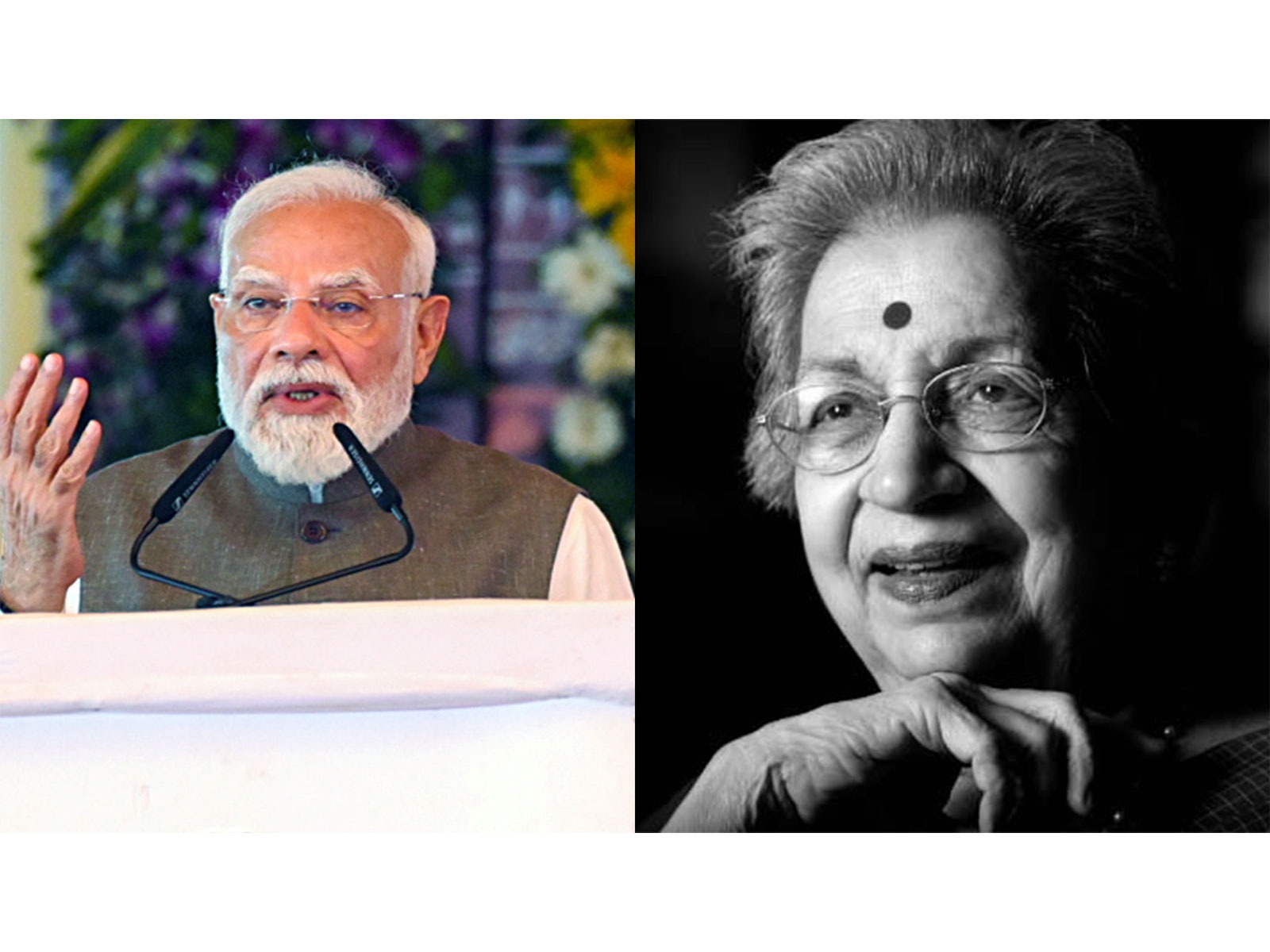
Legendary Indian theatre architect and parallel cinema actor Vijaya Mehta passed away in Mumbai at 91. Prime Minister Narendra Modi led national tributes alongside artists Shabana Azmi and Anupam Kher. Co-founder of the iconic Rangayan group, Mehta's six-decade career transformed regional experimental drama and modern Indian cinematic storytelling.
MUMBAI — Prime Minister Narendra Modi led the nation on Wednesday in mourning the passing of veteran theatre director, actor, and producer Vijaya Mehta, who died at her Mumbai residence on Tuesday night at the age of 91. The loss of the iconic cultural figure, fondly known throughout the artistic community as "Bai," has triggered an outpouring of grief from national leaders, prominent cinema actors, and playwrights who credit her with fundamentally shaping the trajectory of modern Indian experimental performance.
Prime Minister Leads National Tribulation for Cultural Icon
In an official public bulletin shared across state broadcast networks, Prime Minister Narendra Modi described Mehta as one of the defining personalities of post-independence Indian culture.
The Prime Minister emphasized that her lifelong commitment to artistic experimentation turned her into a guiding light for theater collectives across linguistic boundaries, elevating regional Marathi drama to international acclaim through cross-cultural exchanges. Government records indicate that flags at several premier state cultural academies will fly at half-mast to honor her extensive contributions to the performing arts.
A Six-Decade Legacy of Experimental Masterpieces
Born Vijaya Jaywant in Baroda in 1934, Mehta formalised her technical training under legendary mentors Ebrahim Alkazi and Adi Marzban before establishing herself in the 1960s. Her historical impact spans across three distinct artistic pillars:
The Rangayan Movement: Co-founded the influential Mumbai-based experimental collective Rangayan alongside celebrated playwright Vijay Tendulkar and veteran performers Shriram Lagoo and Arvind Deshpande.
Avant-Garde Adaptations: Introduced European epic theatre to regional audiences, directing landmark Marathi adaptations of Bertolt Brecht’s The Caucasian Chalk Circle (Ajab Nyay Vartulacha) and Eugène Ionesco's The Chairs.
Parallel Cinema Excellence: Directed highly acclaimed parallel cinema features such as Rao Saheb (1986) and Pestonjee (1988), and delivered an unforgettable performance in Govind Nihalani's satirical masterpiece Party (1984).
Her extensive body of work earned her the prestigious Sangeet Natak Akademi Award for Direction in 1975, the National Film Award for Best Supporting Actress in 1986, and the Sangeet Natak Akademi Tagore Ratna in 2012.
Shabana Azmi, Anupam Kher Express Deep Bereavement
Prominent members of the Indian film and theater fraternity have expressed their grief, highlighting her role as a strict yet transformative mentor who trained generations of actors, including Nana Patekar, Vikram Gokhale, and Neena Kulkarni.
Acclaimed actor Shabana Azmi noted that Mehta's precise directorial method brought unmatched structural discipline to the Indian stage. Similarly, veteran actor Anupam Kher shared historical reflections on how her guidance helped bridge the gap between classical text interpretations and modern, realistic screen acting. Theatre veteran Bharati Achrekar further noted that "Bai" completely transformed the role of women in technical theatre production, breaking institutional barriers as a leading female director during an era dominated by male showrunners.
Official Sources Section
Biographical and protocol details regarding the statesman's tribute are corroborated by official press releases issued through the Prime Minister's Office (PMO). Technical timelines and historical production registries are verified by archive databases held at the Sangeet Natak Akademi, India's national academy for music, dance, and drama.
Quote Section
In an official statement published by the government information bureau, Prime Minister Narendra Modi stated:
"Deeply saddened by the passing of Smt. Vijaya Mehta Ji. She will be remembered as one of the towering personalities of culture and cinema. A pioneer of modern Marathi theatre, she was known for her creativity and commitment to artistic excellence. Her work inspired generations of actors, directors and theatre lovers."
Why It Matters
For citizens and lovers of the arts, the passing of Vijaya Mehta marks the conclusion of a golden era in India's regional theatre renaissance. Her structural blueprints continue to dictate how experimental drama groups operate today, ensuring that low-budget, high-concept community storytelling remains viable against commercialized mass entertainment.
Key Facts at a Glance
Final Departure: Legendary director and actor Vijaya Mehta passed away at her residence in Mumbai at the age of 91.
Pioneering Milestone: She co-founded the Rangayan theatre group, which spearheaded the 1960s experimental movement in Maharashtra.
State Honors: Over her six-decade career, she received the Padma Shri, the National Film Award, and the Sangeet Natak Akademi Tagore Ratna.
Global Influence: Championed Indo-German theatrical collaborations alongside renowned international directors like Fritz Bennewitz.
Frequently Asked Questions (FAQ)
What were Vijaya Mehta’s most famous cinematic contributions?
Mehta is widely celebrated for directing the parallel cinema classics Pestonjee and Rao Saheb, as well as her award-winning acting performance in the film Party.
How did she influence modern Marathi theater?
She introduced Western avant-garde playwriting styles to the local stage and established structured, long-term actor training workshops that shaped major industry talents.
What official state honors did she receive during her career?
Her artistic career was recognized with the Padma Shri, multiple National Film Awards, and the Sangeet Natak Akademi Award for exceptional stage direction.
Sources: