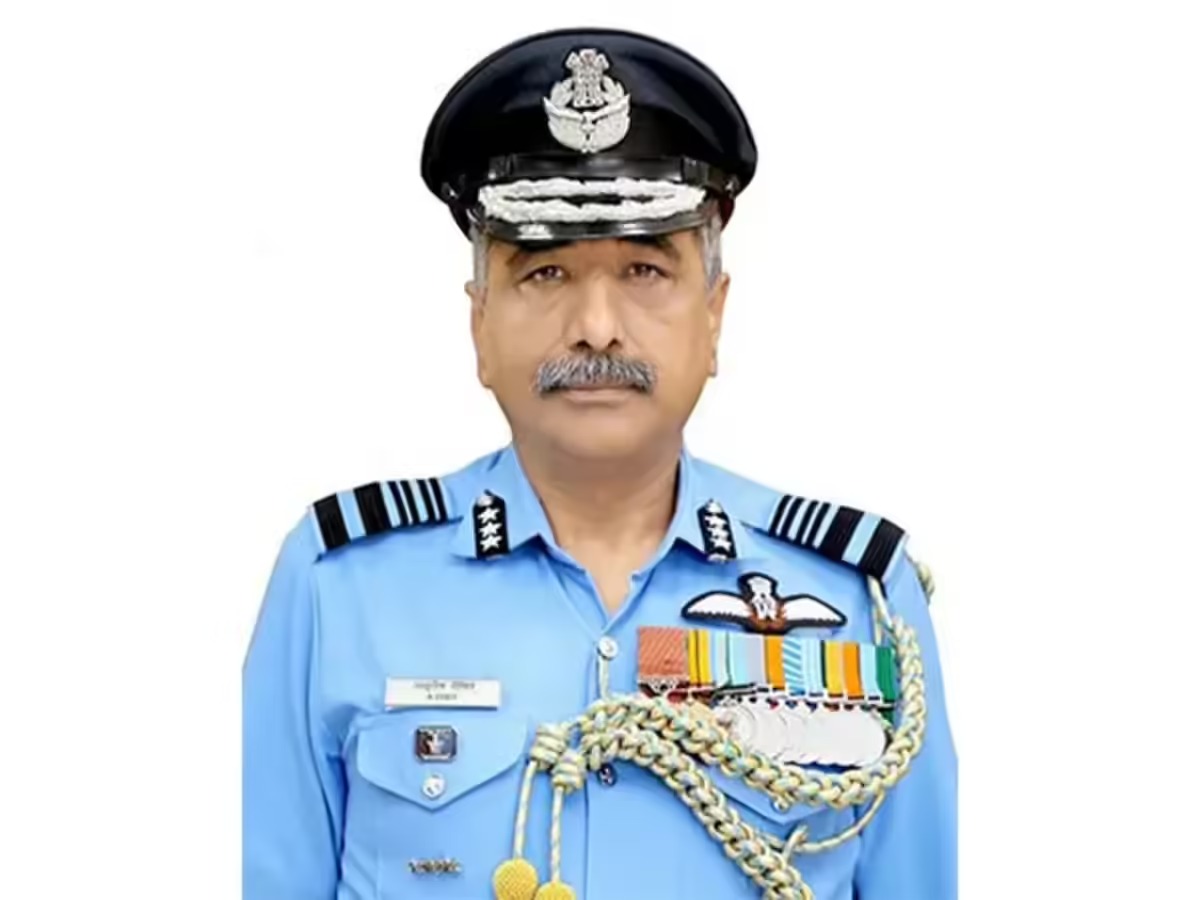
Air Marshal Ashutosh Dixit officially assumed command as the 51st Vice Chief of the Indian Air Force on July 1, 2026. Succeeding Air Marshal Nagesh Kapoor, the veteran fighter pilot and former CISC chief brings extensive test-flying experience and a proven track record in tri-service modernization to the position.
NEW DELHI — In a major transition within the top echelons of India’s military leadership, Air Marshal Ashutosh Dixit officially assumed charge as the 51st Vice Chief of the Air Staff (VCAS) of the Indian Air Force (IAF) today, July 1, 2026. He succeeds Air Marshal Nagesh Kapoor, who superannuated from service on June 30 after a distinguished career spanning nearly four decades. Air Marshal Dixit, a decorated fighter pilot and experimental test pilot, transitions to the role directly from his appointment as the Chief of Integrated Defence Staff to the Chairman, Chiefs of Staff Committee (CISC), where he spearheaded pivotal structural changes in national security architecture.
Strategic Shift in Air Force Command
The appointment of Air Marshal Dixit comes at a crucial juncture as the Indian Armed Forces accelerate plans for network-centric warfare and structural integration. Prior to taking over as Vice Chief, his tenure as CISC from May 1, 2025, to June 30, 2026, was marked by substantial transformations in tri-service operational synergy.
According to notifications from the Ministry of Defence, his leadership at the Headquarters Integrated Defence Staff (HQ IDS) directly influenced the release of 20 joint doctrines and primers aimed at institutionalizing joint-service operations.
Furthermore, Air Marshal Dixit played a definitive role in orchestrating the high-level Combined and Joint Commanders’ Conferences in 2025 and 2026, alongside the conceptualization of the RanSamwad strategic dialogues. Crucially, his office formulated the Defence Forces Vision 2047 roadmap—a long-term blueprint targeted at transforming the Indian military into a technology-driven, indigenized, and fully integrated fighting force.
Operational Experience and Modernization Focus
Commissioned into the fighter stream of the IAF on December 6, 1986, Air Marshal Dixit is an alumnus of the National Defence Academy (NDA) Khadakwasla, the Defence Services Staff College in Bangladesh, and the National Defence College in New Delhi. Over a career spanning nearly 40 years, he has logged over 3,300 flying hours across more than 20 aircraft variants, establishing expertise as a Qualified Flying Instructor and an Experimental Test Pilot. His extensive flight log includes frontline platforms such as the Mirage-2000, MiG-21, Jaguar, Tejas Light Combat Aircraft (LCA), and Hawk trainers.
During his earlier tenure as the Deputy Chief of the Air Staff, Air Marshal Dixit was central to advancing the government's mandate for Aatmanirbharta (self-reliance) in defense manufacturing. He was directly responsible for driving forward primary indigenous aviation acquisitions, including the development phases of the LCA Tejas Mark-1A, Mark-2, and the Advanced Medium Combat Aircraft (AMCA) fifth-generation fighter program.
The Precursor to Integrated Theatre Commands
A key pillar of Air Marshal Dixit’s recent legacy is his leadership during Operation Sindoor, a major joint-services operational milestone. In official security forums, he characterized Operation Sindoor as a structural "glimpse" and a definitive precursor to India's upcoming Integrated Theatre Commands. The operation tested the synchronization of the Indian Army, Navy, and Air Force under a singular operational umbrella, focusing heavily on modern targeting philosophy.
"Modern warfare requires a clear targeting sequence—focusing sequentially on the eyes, brains, and muscle of the adversary," Air Marshal Dixit noted during a national security summit, highlighting that success relies on a seamless theater operations room backed by fail-safe communication lines.
Official Sources Section
The details of this leadership transition and operational background are validated by formal releases from the Headquarters Integrated Defence Staff (HQ IDS) and corporate briefings from the Indian Air Force. His security strategies and remarks on joint theater commands were officially presented during the standard proceedings of the ANI National Security Summit.
Quote Section
"Air Marshal Ashutosh Dixit relinquished the appointment of CISC after a distinguished tenure marked by transformational leadership and an unwavering commitment to tri-services integration," stated officials from Headquarters Integrated Defence Staff in a public communique. "His enduring contributions towards fostering tri-services cooperation and capability development will continue to inspire future generations."
Why It Matters
For defense industries, domestic aerospace manufacturers, and strategic partners, the appointment of Air Marshal Dixit ensures continuity in India's rapid military modernization and indigenization push. His background directly bridges the operational requirements of frontline air combat with the logistical realities of tri-service integration. As India moves closer to restructuring its military into joint theatre commands, having an architect of Operation Sindoor at the helm of the IAF will be critical to balancing air assets within a unified defense framework.
Key Facts at a Glance
51st Vice Chief: Officially assumed office on July 1, 2026, replacing the retiring Air Marshal Nagesh Kapoor.
Tri-Service Background: Previously served as Chief of Integrated Defence Staff (CISC), driving joint doctrines and the Defence Forces Vision 2047.
Test Pilot Credentials: Highly experienced fighter pilot with over 3,300 flying hours on multiple aircraft, including Mirage-2000 and LCA Tejas.
Modernization Champion: Spearheaded key domestic defense acquisition projects including the Tejas MK-1A and AMCA programs during his time as Deputy Chief.
FAQ Section
What is the significance of Air Marshal Dixit’s appointment as IAF Vice Chief?
His appointment places a strong proponent of joint-services integration and domestic defense production at the top of the IAF, smoothing the transition toward integrated theater commands.
What was Air Marshal Dixit's role in Operation Sindoor?
As Chief of Integrated Defence Staff, he utilized Operation Sindoor to pilot real-time integration, fail-safe communication frameworks, and modern targeting strategies among the Army, Navy, and Air Force.
Which aircraft has Air Marshal Dixit flown?
As an Experimental Test Pilot, he has flown over 20 types of aircraft, including the Mirage-2000, MiG-21, Jaguar, Hawk, and the indigenous LCA Tejas.
Source: Indian Ministry of Defence Official Portals, Headquarters Integrated Defence Staff Communiques, and the Indian Air Force Personnel Deployment Registry.