Prime Minister Narendra Modi announced a comprehensive economic blueprint in New Delhi, focusing on infrastructure investment, small-business export facilitation, and governance updates to realize a developed India by 2047. The macro strategy leverages structural state cooperation to lower logistics overheads and build a competitive environment for international corporate investments.
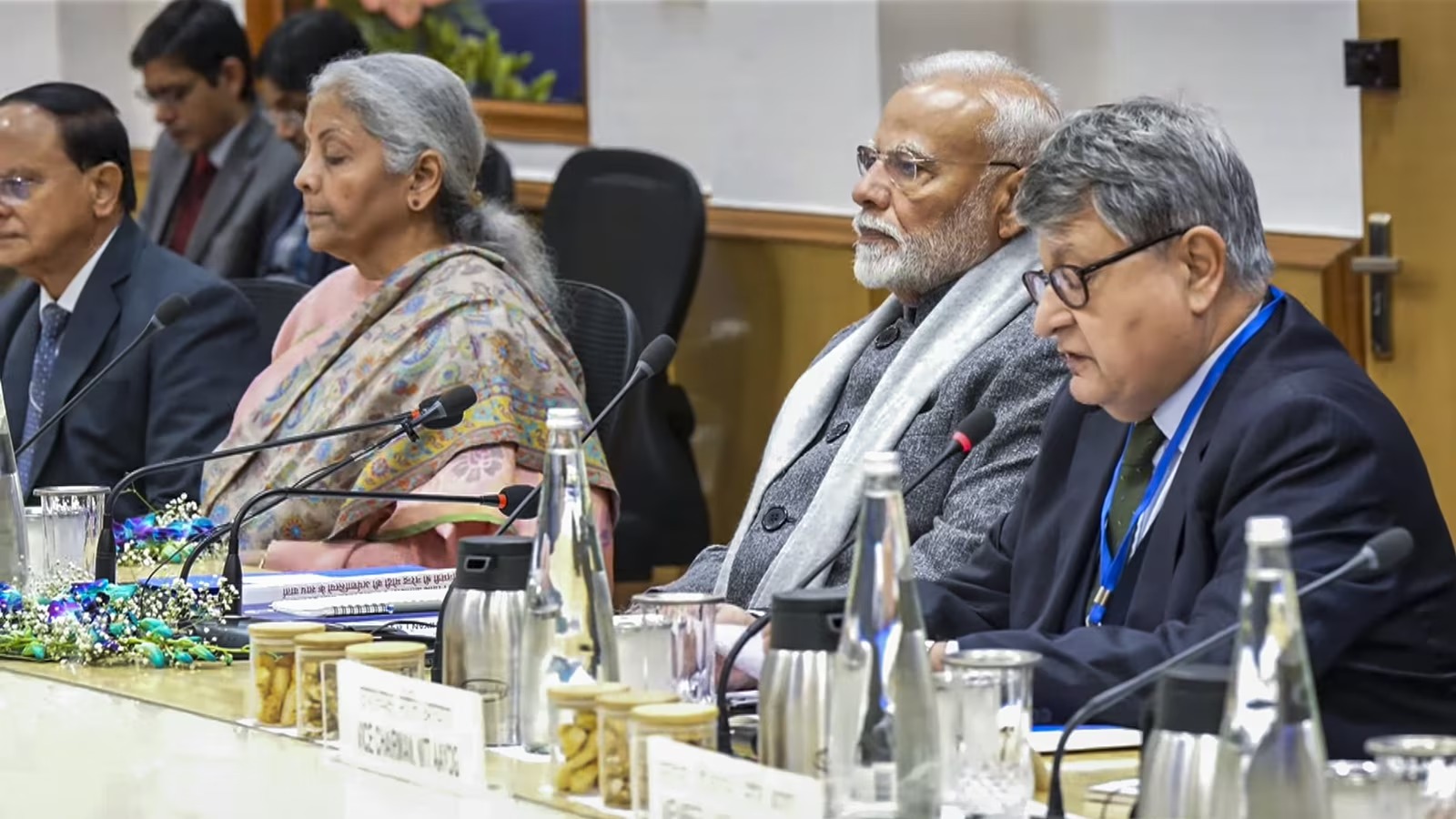
NEW DELHI — Prime Minister Narendra Modi announced a comprehensive economic roadmap on Thursday, establishing a new economic manifesto for India's long-term fiscal expansion. Speaking before central ministers and state representatives in New Delhi on June 11, 2026, the Prime Minister detailed a multi-layered development strategy designed to accelerate technological self-reliance, expand small-business manufacturing capacity, and formalize structural reforms across regional states. This blueprint arrives at a time when global financial supply chains face intense structural adjustments, making India's internal domestic market resilience a critical priority for the administration.
The policy architecture aims to smoothly transition India from a developing market economy to a fully developed nation ("Viksit Bharat") by the centenary of its independence in 2047. Rather than prioritizing short-term consumption stimulus, the new policy direction heavily emphasizes sustained capital expenditure, infrastructure building, and the active integration of localized labor markets into international production networks.
Accelerating Capital Expenditure and Infrastructure Growth
The foundational pillar of this updated policy framework lies in the aggressive deployment of public capital to modernize national infrastructure. According to regulatory briefings from the Ministry of Finance, public sector investments will prioritize high-speed transport networks, digital public infrastructure, and clean energy storage facilities to lower domestic logistical overheads.
Administrative data highlights that high logistics costs have historically minimized the global competitiveness of Indian manufacturing. By focusing capital allocations directly onto industrial corridors and dedicated freight paths, the central government aims to bring logistical expenses down from double-digit percentages of gross domestic product (GDP) to single-digit figures, matching global operational benchmarks.
Expanding MSME Value Chains and Export Horizons
A critical dimension of the new economic manifesto focuses on broadening the operational scale of Micro, Small, and Medium Enterprises (MSMEs). The central planning agencies have introduced targeted regulatory easing alongside credit facilitation programs to protect smaller enterprises against international raw material price volatility.
Official announcements from the Ministry of Commerce and Industry indicate that newly signed bilateral trade agreements are being synchronized with regional production hubs. The administration expects state authorities to establish specialized manufacturing export clinics, ensuring localized small businesses can access foreign consumer markets while strictly adhering to international regulatory and health standards.
Financial Governance and Cooperative Fiscal Planning
Achieving long-term macro stability requires systematic cooperation between the central administration and regional state governments. The Prime Minister's roadmap outlines a performance-based incentive structure for regional states that execute targeted labor, land, and power sector structural updates.
The policy model stresses that the realization of a developed economy depends on expanding individual state capacities. Central planning documents propose that states engage in a framework of competitive federalism, updating local regulatory systems to convert individual districts into standalone export zones, thereby minimizing bureaucracy for foreign and domestic corporate investors.
Official Sources Section
The details compiled within this report are drawn from official press releases issued by the Press Information Bureau (PIB), formal financial reports from the Ministry of Finance, and economic strategy frameworks documented by NITI Aayog.
Quote Section
"The execution of a new economic manifesto marks a defining transition toward building a structurally resilient and self-reliant nation. Our economic policies must systematically empower every citizen by strengthening the industrial, digital, and agricultural foundations of the country. By aligning central objectives with active state-level governance, we will unlock new pathways for growth, innovation, and global manufacturing prominence."
— Prime Minister Narendra Modi during a national development briefing on June 11, 2026
Why It Matters
For everyday consumers and citizens, these systematic policy updates mean broader access to technical training and modernized job opportunities within high-tech fields. For global corporate investors, the predictable infrastructure outlays offer stable, long-term conditions for foreign direct investment. Furthermore, domestic businesses stand to benefit from a significantly simplified regulatory framework, reduced transaction delays, and direct entry points into international trade channels via state-supported logistics networks.
Key Facts at a Glance
Centenary Benchmark: The national strategy sets a definitive target to transition India into a fully developed nation ("Viksit Bharat") by the year 2047.
Logistical Standardization: Capital allocation programs are explicitly focused on reducing structural supply-chain costs to match high-efficiency international benchmarks.
MSME Trade Assistance: Small scale manufacturers will receive targeted state assistance to adapt product standards to newly ratified international trade agreements.
Sub-National Governance Incentives: Financial allocations to regional states will remain tethered to the completion of specific structural updates within local land and electricity grids.
Frequently Asked Questions
What are the primary objectives of this updated economic blueprint?
The strategy prioritizes long-term manufacturing growth, robust infrastructure investment, systemic reduction of logistical inefficiencies, and structural improvements within local state governance.
How will this policy support small and medium enterprises (MSMEs)?
The framework establishes localized regulatory guidance centers, improves access to low-interest credit lines, and connects regional industrial clusters directly to global export channels.
Why is cooperative federalism emphasized in this financial manifesto?
Because land, labor, and power utilities are largely managed at the sub-national level, direct coordination between the central government and state administrations is critical to ensuring nationwide execution of industrial modernization programs.
Source: Press Information Bureau (PIB) India, Ministry of Finance Portal, NITI Aayog Official Website