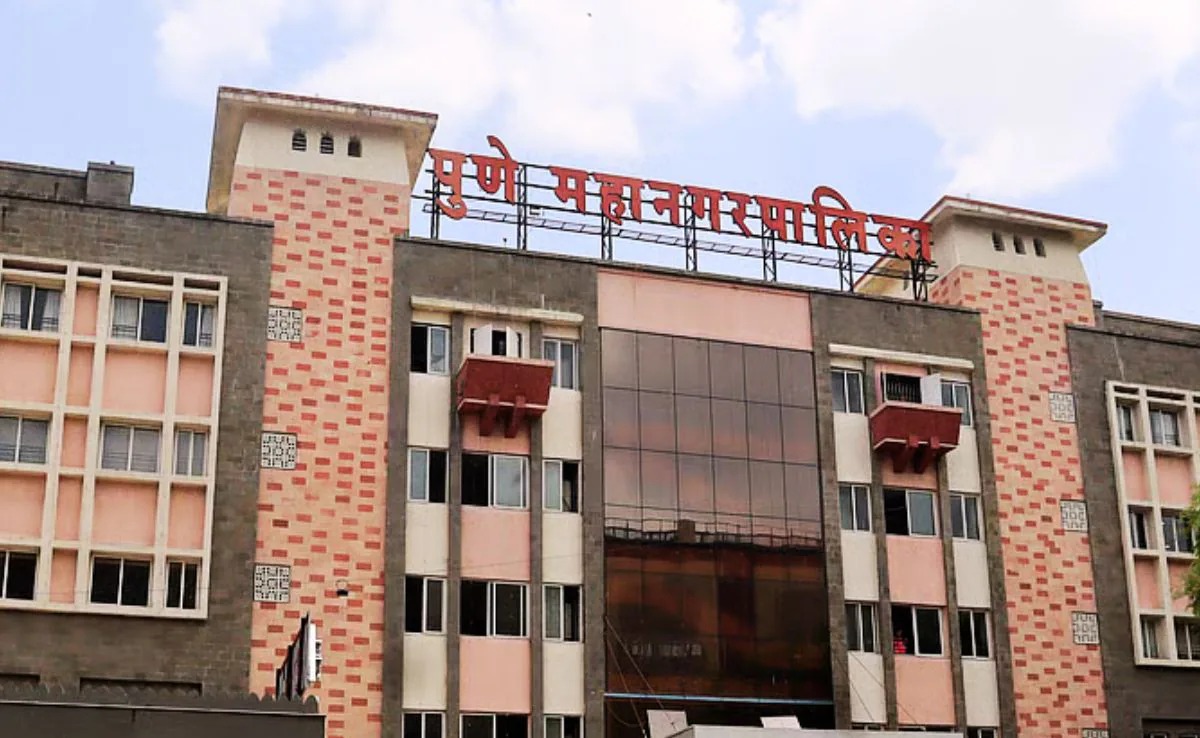
The Pune Municipal Corporation has deferred a ₹101 crore plan to outsource five civic schools to a private foundation. Amid mounting criticism over the financial model and public control, the standing committee has sent the proposal for further scrutiny by the education department to ensure transparency and accountability.
PUNE – The Pune Municipal Corporation (PMC) standing committee has officially put on hold a proposal to transition the management of five civic-run schools to a private entity under a Public-Private Partnership (PPP) model. The decision, announced this week, follows growing concerns from community members, activists, and political leaders regarding the transparency and financial implications of the project.
The proposal sought to hand over operations of five English-medium schools—located in Somwar Peth, Bhavani Peth, Bopodi, Yerawada, and Koregaon Park—to an external foundation. The arrangement, which would have spanned nine years, involved a projected expenditure of approximately ₹101 crore, or roughly ₹25,000 per student annually for an estimated 4,500 pupils.
Scrutiny Over Financial and Operational Control
The primary point of contention revolves around the division of responsibilities between the PMC and the private partner. While the civic body would retain financial responsibility for infrastructure maintenance, electricity bills, uniforms, and student amenities, the private foundation would oversee academic operations and management.
Critics of the project, including local political figures, have labeled the initiative a "flawed experiment." Concerns have been raised that the PMC is essentially subsidizing private control over government assets, potentially undermining the public character of these institutions. Others have questioned why the civic body would allocate such a significant budget to an external organization when the corporation already provides basic infrastructure and operational costs.
Path Forward and Administrative Review
Standing committee chairman Shreenath Bhimale confirmed that the proposal has been redirected to the education committee for a thorough review.
“The proposal came before the standing committee, but we directed the administration to first obtain the approval and remarks of the school committee,” Bhimale stated. “The school committee will examine the proposal in detail and submit its recommendations. Only after that will the standing committee take a decision.”
The administration has been tasked with addressing the gaps in the original proposal, specifically focusing on the financial rationale and the necessity of outsourcing management rather than strengthening existing internal administrative frameworks.
Impact on Students and Local Communities
For the 4,500 students currently enrolled across the five affected schools, the pause means that operations will continue under the existing framework while the review is underway. Parents and education advocates have expressed hope that the temporary hold will allow for a more robust public consultation process, ensuring that any future model prioritizes academic quality and equitable access rather than administrative outsourcing.
The broader educational landscape in Pune has recently faced scrutiny, with authorities also acting against unauthorized institutions in the city and Pimpri-Chinchwad areas. As the PMC navigates this PPP controversy, observers are watching closely to see whether the corporation will refine its policy on private collaborations or opt for a return to direct civic oversight.
Key Facts at a Glance
Project Scope: 5 English-medium PMC schools in Pune.
Budgeted Outlay: Approximately ₹101 crore over a 9-year contract term.
Student Impact: The proposal covers an estimated 4,500 students.
Current Status: Deferred pending review by the PMC education committee.
Retained Responsibilities: PMC continues to fund infrastructure, maintenance, and student welfare schemes.
FAQ
1. Why was the PPP school proposal put on hold?
The proposal was deferred following public and political criticism regarding the financial burden on the PMC and concerns over the transparency of outsourcing government-funded schools to a private foundation.
2. What happens to the five affected schools now?
There is no immediate change to school operations. The PMC will continue to manage them while the education committee conducts a detailed review of the proposal.
3. Which schools were included in the proposal?
The five schools are located in Somwar Peth, Bhavani Peth, Bopodi, Yerawada, and Koregaon Park.
4. What was the core financial concern?
Critics questioned why the PMC would pay approximately ₹25,000 per student annually to a private foundation while the civic body remains responsible for all infrastructure, utility, and welfare costs.
Source: Pune Municipal Corporation (PMC), Hindustan Times Pune, The Times of India Pune