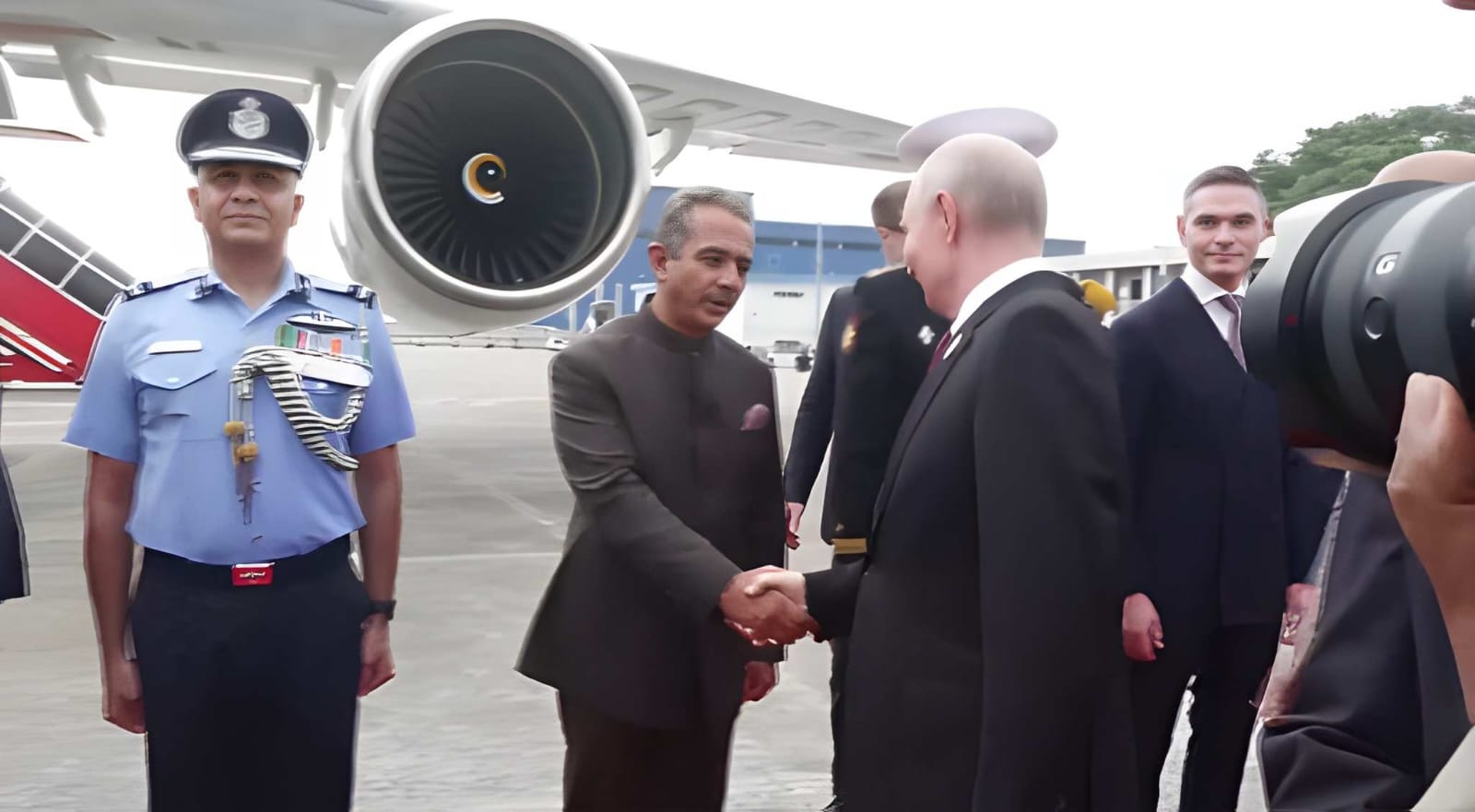
Russian President Vladimir Putin departed New Delhi after a two-day BRICS Summit, holding key bilateral talks with Prime Minister Narendra Modi. The leaders focused on expanding trade under the 2030 economic framework, energy security, and strengthening institutional mechanisms to promote a decentralized, multipolar global order.
Russian President Vladimir Putin concluded a two-day visit to New Delhi on Sunday, September 13, 2026, after participating in the 18th BRICS Summit hosted at Bharat Mandapam. Prime Minister Narendra Modi held high-level bilateral discussions with Putin on the sidelines of the summit, focusing on the Programme for Economic Cooperation 2030, energy security, and defense logistics. The high-profile diplomatic engagement underscored Moscow's push for a decentralized, multipolar global framework amid persistent Western economic pressures.
Bilateral Engagement and Economic Integration
During their formal meeting—held less than two weeks after their previous interaction at the Shanghai Cooperation Organisation (SCO) summit in Bishkek—Prime Minister Modi and President Putin reviewed long-term economic trajectories. According to statements from the Ministry of External Affairs (MEA) and official government releases, discussions centered on optimizing the Programme for Economic Cooperation 2030.
The leaders evaluated progress across key strategic sectors, including energy commerce, infrastructure development, high-technology cooperation, and defense collaboration. The dialogue also addressed maritime security challenges in the Black Sea and West Asia, which have impacted international shipping lanes and commercial transit corridors vital to emerging economies.
Sanctions and the Multipolar Order Debate
Addressing the BRICS Business Forum Leaders' Session earlier in the weekend, President Putin criticized Western trade measures, stating that Russia has faced over 30,000 individual sanctions—a figure he claimed exceeds twice the total number of sanctions imposed on all other nations combined. Putin warned against the weaponization of global trade networks and emphasized the necessity of expanding local-currency settlements and independent financial channels within the BRICS framework.
The summit culminated in the adoption of the New Delhi Declaration, forged after extensive negotiations led by India to bridge member positions on regional security and economic resilience. The consensus statement highlights a shared commitment among member states to reform global financial governance and support secure, non-dollar-dependent transactional pathways.
Official Sources Section
Factual details and diplomatic updates are referenced from official government announcements compiled by the Ministry of External Affairs (MEA), transcripts released by the Prime Minister's Office (PMO), and comprehensive reports from The Times of India and The Economic Times.
Quote Section
"Delighted to meet President Putin in Delhi, less than two weeks after our meeting in Bishkek, to discuss closer trade ties and strategic cooperation across energy, infrastructure, and defense," Prime Minister Narendra Modi stated that in a public address.
Why It Matters
For global investors, energy consumers, and international businesses, the conclusion of the Delhi BRICS Summit signals a sustained push toward alternative financial infrastructure and regional trade systems. As major economies navigate trade friction and supply chain disruptions, bilateral alignments between India and Russia reflect a calculated strategy to maintain market stability, safeguard energy imports, and preserve strategic autonomy within a shifting geopolitical landscape.
Key Facts at a Glance
Summit Conclusion: Russian President Vladimir Putin wrapped up his two-day visit to New Delhi on September 13, 2026.
Bilateral Focus: PM Modi and Putin discussed the implementation of the Programme for Economic Cooperation 2030.
Sanctions Commentary: Putin noted that Russia faces more than 30,000 international sanctions during his address to the BRICS Business Forum.
Global Security: Both leaders reviewed regional stability issues, emphasizing dialogue and diplomacy in West Asia and the Black Sea region.
FAQ Section
What were the primary topics discussed between PM Modi and President Putin in Delhi?
The leaders discussed expanding bilateral trade under the Programme for Economic Cooperation 2030, enhancing energy and defense ties, and addressing regional maritime security.
Why is the push for a multipolar world order significant for BRICS?
A multipolar framework allows emerging economies to reduce reliance on single-currency payment networks, insulate themselves from unilateral sanctions, and diversify global trade routes.
What framework agreement guides India-Russia economic targets?
Bilateral economic collaboration is primarily anchored by the Programme for Economic Cooperation 2030, covering infrastructure, technology, and commercial exchange.
Did the BRICS summit issue a joint declaration?
Yes, leaders unanimously adopted the New Delhi Declaration following extensive consensus-building on regional stability, trade barriers, and global governance reform.
Source: The Times of India, The Economic Times, Ministry of External Affairs (MEA) India