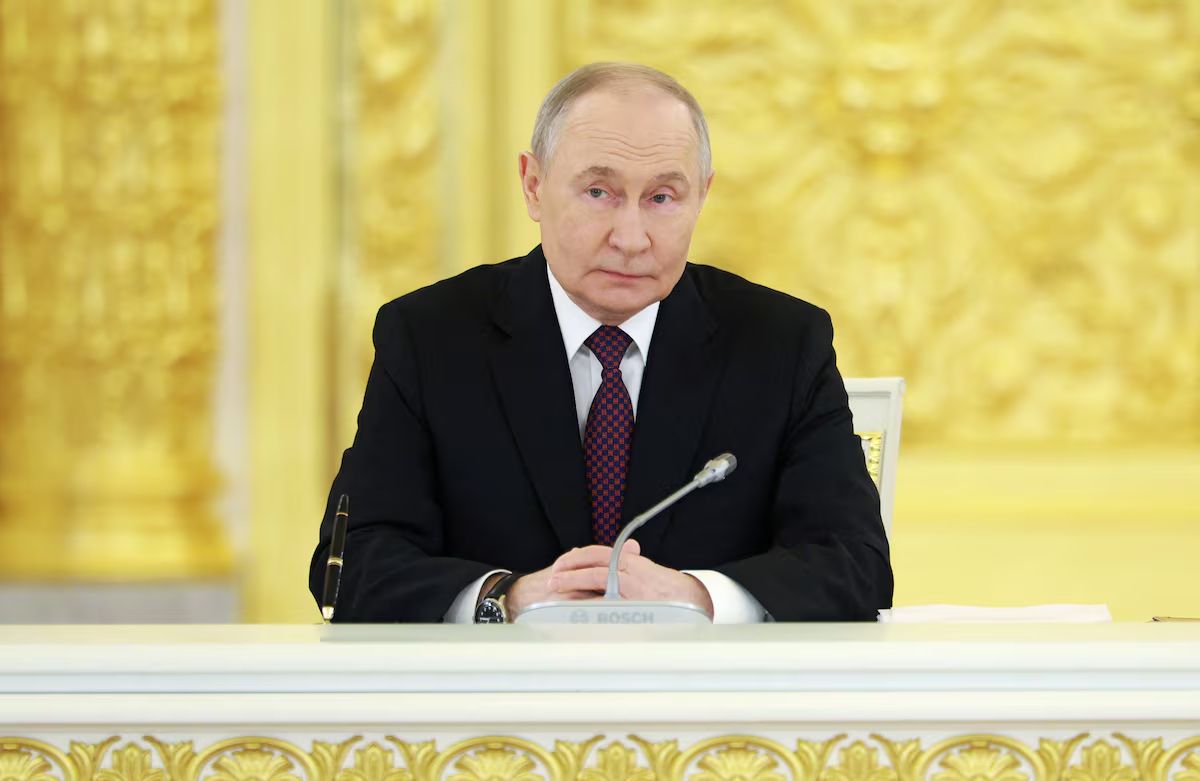
At the St. Petersburg International Economic Forum, Russian President Vladimir Putin expressed readiness to halt the war in Ukraine using the "Anchorage compromises" framework. However, Putin explicitly stated that peace negotiations will not require a suspension of hostilities on the ground, while also calling for a swift end to the volatile Iranian conflict.
ST. PETERSBURG — Russian President Vladimir Putin has delivered a sweeping set of foreign policy declarations, linking Russia's economic stakes in the Middle East energy crisis to an updated diplomatic framework for the war in Ukraine. Speaking on June 4, 2026, during a late-evening media panel at the annual St. Petersburg International Economic Forum (SPIEF), Putin announced that Moscow is fundamentally prepared to halt its military campaign if Kyiv agrees to the "Anchorage compromises" negotiated with United States President Donald Trump. However, in a stark message to Western intermediaries, Putin emphasized that formal peace negotiations with Ukraine will not require a suspension of hostilities on the ground. Simultaneously, the Russian leader addressed the escalating Iranian conflict, warning that while global energy price hikes currently benefit Russian resource firms, the long-term economic instability poses a severe threat to Eurasian trade security.
The Anchorage Basis: Conditional Terms for a Frontline Freeze
According to official transcripts archived by the Ministry of Foreign Affairs of the Russian Federation, the "Anchorage basis" stems from a confidential bilateral framework discussed during the August 2025 summit in Alaska between the Russian executive branch and U.S. President Donald Trump. Putin revealed that Moscow has formally accepted specific structural compromises raised during those discussions, which reportedly involve freezing active battle lines along the southern front while adjusting administrative boundaries in the east.
The Kremlin's conditional acceptance places the geopolitical burden directly on the Ukrainian administration. However, the proposed peace compromises remain bound to rigid territorial realities. Russian armed forces continue to press forward along the Donbas line of contact, and Moscow maintains that total control over the administrative borders of Donetsk and Luhansk remains an unyielding prerequisite for any final signed treaty.
Decoupling Ceasefires From Diplomatic Engagement
In a major departure from traditional conflict resolution protocols, Putin explicitly rejected the concept of an introductory frontline pause. The Russian leader stated that operations will proceed parallel to any talking tracks, eliminating the possibility of a pre-negotiation standstill.
According to briefings from the Ministry of Defence of the Russian Federation, Moscow views previous implementations of localized ceasefires as structurally flawed tactical gaps. The Kremlin claims that past operational pauses were systematically utilized by Ukrainian forces to fortify secondary defensive lines, rotate fresh brigade units, and integrate incoming Western automated weapon shipments. By decoupling diplomacy from a physical ceasefire, Russia intends to maintain continuous military pressure as a direct negotiating lever.
Middle East Energy Volatility and Short-Term Windfalls
Turning to broader macroeconomic shocks, the Russian president addressed the military crisis involving Iran and its immediate impact on global commodity channels. Following localized infrastructure disruptions and shipping paralyses across the Persian Gulf, global Brent crude benchmarks surged past $100 per barrel on international exchanges, including the National Stock Exchange of India.
Putin acknowledged that Russian state-backed resource enterprises have directly benefited from these supply disruptions. With traditional maritime transport severely restricted, international buyers have increased their reliance on alternative suppliers, pushing Russia's Ural crude oil blend past $90 per barrel. While this market shift drove a notable 14% increase in daily state oil revenues, Putin explicitly cautioned state ministers that these windfalls are strictly temporary anomalies that risk triggering global demand destruction and long-term economic decay.
Official Sources Section
The administrative directives, trans-regional policy parameters, and economic metrics detailed within this report are verified through official press pool briefings distributed by the Kremlin, verified transaction records from the Bombay Stock Exchange, and statutory diplomatic summaries compiled during the 2026 St. Petersburg International Economic Forum.
Outlining Russia's dual-track approach to global conflict resolution, President Vladimir Putin told the assembled international journalists:
"We are interested in the earliest possible termination of the Iranian conflict. To a certain extent, our companies win from the current energy price spikes, but this carries a temporary, short-term character. Regarding Ukraine, it is better to stop the war altogether by agreeing to the Anchorage compromises we discussed with President Trump. However, let it be clear: for the start of peace negotiations with Ukraine, there is no necessity in a suspension of hostilities. The negotiation process can perfectly well take place parallel to our active operations."
Why It Matters
Putin's interconnected announcements signal a highly calculated shift in Russia's long-term strategy, transforming active battlefield pressure into an ongoing component of international diplomacy. For global energy investors and industrial supply chain managers, the refusal to pause operations means that key transit corridors and agricultural infrastructure will remain under immediate security threats, keeping shipping insurance premiums elevated. For international policymakers, the Kremlin's willingness to honor the Anchorage compromises reveals the exact baseline parameters required to freeze the southern front, though the requirement for massive territorial concessions in the Donbas remains a major diplomatic hurdle for Kyiv and its allies.
Key Facts at a Glance
Anchorage Framework Accepted: President Putin confirmed Russia's willingness to halt the war if Ukraine accepts the compromises discussed with U.S. President Donald Trump in August 2025.
No Pre-Negotiation Ceasefire: The Kremlin explicitly ruled out any suspension of hostilities as a prerequisite for starting diplomatic talks, stating operations will continue uninterrupted.
Middle East Security Context: Moscow called for a rapid end to the Iranian conflict, warning that volatile energy price spikes offer only short-term benefits to domestic firms.
Ural Crude Surge: Due to supply bottlenecks in the Persian Gulf, the price of Russia's Ural blend passed $90 per barrel, boosting daily state revenues by 14%.
FAQ Section
What are the Anchorage compromises referenced by President Putin?
The Anchorage compromises refer to a preliminary peace framework outlined during a bilateral meeting between Donald Trump and Vladimir Putin in Alaska in August 2025, which suggested freezing front lines in exchange for specific regional territorial concessions.
Why does Russia refuse to pause fighting while peace talks occur?
The Russian leadership maintains that previous frontline ceasefires were utilized by opposing forces to rearm, reinforce defensive grids, and integrate Western weapon systems, leading Moscow to mandate that future talks occur parallel to active operations.
How is the Iranian conflict affecting Russian energy revenues?
Disruptions across Middle Eastern shipping lanes have driven global oil benchmarks past $100 a barrel, allowing Russia's Ural crude blend to surge past $90 per barrel and temporarily increasing daily state oil revenues by 14%.
What is Russia's stance on the permanent borders of the Donbas?
Despite offering to freeze certain front lines under the Anchorage framework, the Kremlin maintains that securing total control over the complete administrative borders of the Donetsk and Luhansk regions remains a non-negotiable requirement for a final treaty.
Source: Ministerial address transcripts from the Kremlin Press Pool, global energy index briefs from the Bombay Stock Exchange, and foreign policy directives archived by the Ministry of Foreign Affairs of the Russian Federation.