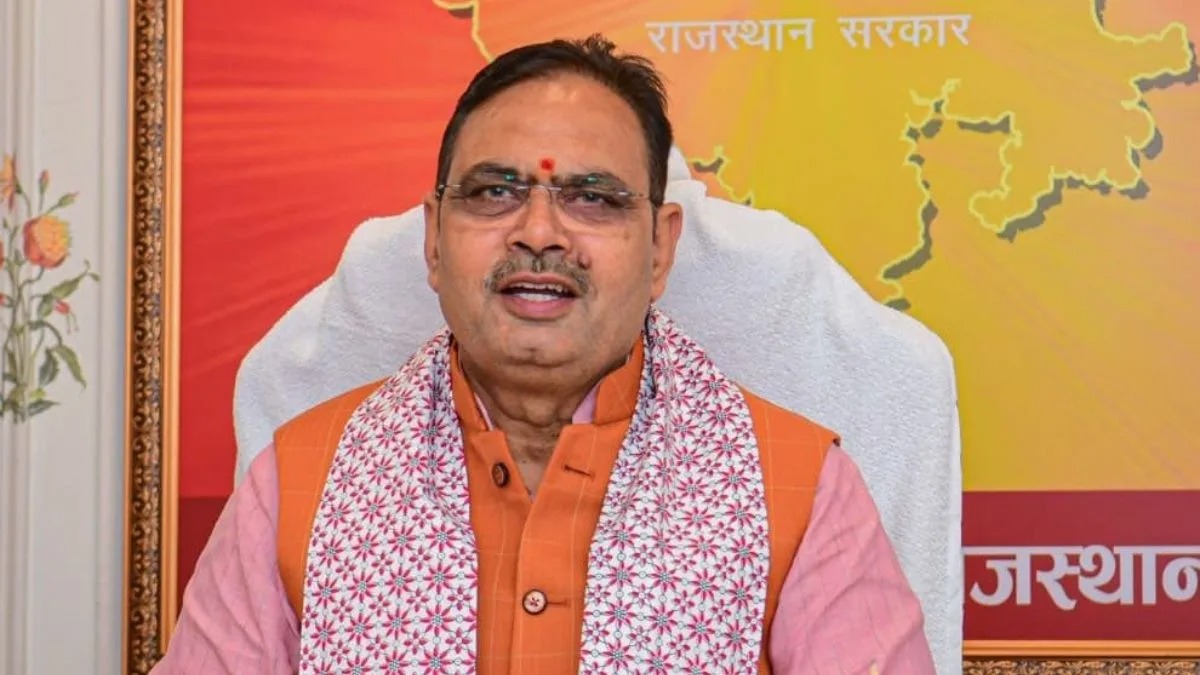
Rajasthan Chief Minister Bhajan Lal Sharma welcomed the signing of the Rs 34,102 crore Yamuna Water Agreement with Haryana in New Delhi. The historic pact ends a 30-year deadlock, paving the way for a 295.5-km underground pipeline network to deliver 577 million cubic metres of water to Rajasthan's Shekhawati region.
NEW DELHI — In a major breakthrough for interstate resource management, Rajasthan Chief Minister Bhajan Lal Sharma formally announced the resolution of a three-decade-old interstate water dispute following the signing of the long-awaited Yamuna Water Agreement with Haryana. Executed at a high-level summit in New Delhi on June 29, 2026, the Memorandum of Agreement (MoA) operationalizes the foundational 1994 Upper Yamuna Basin pact. The newly approved governance framework clears the path for an expansive 34,102 crore rupee ($341.02 billion INR$) subterranean engineering project designed to supply long-term drinking water to Rajasthan’s hyper-arid districts.
Technical Framework of the 34,102 Crore Rupee Infrastructure
The interstate agreement shifts northern India's hydraulic architecture away from conventional, high-evaporation open canal networks. Instead, the project implements a massive 295.5-kilometer underground pipeline system. Under the engineering layouts verified by the Central Water Commission, three parallel pipelines—each measuring 3.6 meters in diameter—will be laid to channel Rajasthan's allocated water share.
The infrastructure will transport approximately 577 million cubic metres (MCM) of utilisable surface water annually during the monsoon months. The flow will originate from the Hathnikund Barrage in Haryana, traveling via the Western Yamuna Canal system before discharging directly into the proposed Hansiyawas Reservoir in Rajasthan's Churu district.
Impact on Citizens, Agriculture, and Regional Stability
The immediate socio-economic beneficiaries of this massive infrastructure network are the citizens residing within Rajasthan's drought-prone Shekhawati belt, which encompasses Sikar, Churu, and Jhunjhunu districts. These territories have historically suffered from acute groundwater depletion and high salinity levels, which have triggered seasonal migration patterns.
| Project Metric | Specification Details |
| Total Estimated Cost | Rs 34,102 Crore |
| Pipeline Conduit Length | 295.5 Kilometers |
| Annual Water Volume | 577 Million Cubic Metres (MCM) |
| Core Target Benefit Area | Shekhawati Region (Churu, Sikar, Jhunjhunu) |
For agricultural businesses and local consumers, the pipeline ensures a reliable, non-saline drinking water grid. Furthermore, the systematic diversion of surplus monsoon water into artificial holding reservoirs will naturally recharge depleted regional aquifers, improving local farming viability. The pipeline network also features designated off-take provisions to supply drinking water to ten strategic industrial and municipal locations within Haryana.
Official Sources Section
According to official releases from the Union Ministry of Home Affairs, the historic accord was signed in the presence of Union Home Minister Amit Shah, Union Jal Shakti Minister C.R. Patil, Rajasthan Chief Minister Bhajan Lal Sharma, and Haryana Chief Minister Nayab Singh Saini. Administrative data uploaded to the Central Water Commission's e-PAMS portal indicates that a specialized administrative body, the Rajasthan Haryana Yamuna Water Project Special Purpose Vehicle (RHYW-SPV), will be set up to manage long-term operations, pipeline maintenance, and land acquisition coordination.
Quote Section
"Yesterday, a major water-related issue was resolved," stated Rajasthan Chief Minister Bhajan Lal Sharma during an official briefing on June 30, 2026. "In the last two and a half years, solutions have been found for projects that Rajasthan had been awaiting for decades. Soon after our government was formed, we signed an initial MoU with the Haryana government on February 12, 2024, to ensure Rajasthan receives its rightful share of water—as stipulated in our 1994 agreement."
Why It Matters
Resolving this water dispute establishes a clear legal template for cooperative federalism across India's river basins. For decades, legal claims to the Upper Yamuna remained unutilized due to a total lack of cross-border conveyance infrastructure. By establishing a joint Special Purpose Vehicle (SPV), both states bypass long-standing litigious blockages. This provides a direct framework to mitigate structural water shortages without disrupting the existing supply lines of neighboring states.
Key Facts at a Glance
Financial Scale: The infrastructure project commands a total estimated capital outlay of Rs 34,102 crore.
Engineering Scope: Involves three 3.6-meter diameter pipelines spanning 295.5 kilometers underground.
Logistical Corridor: Transports 577 MCM of Yamuna water from Haryana's Hathnikund Barrage to Rajasthan's Hansiyawas Reservoir.
Administrative Oversight: Managed via the newly formed Rajasthan-Haryana Yamuna Water Project SPV (RHYW-SPV).
FAQ Section
Why did the Yamuna Water Agreement take 30 years to implement?
While the baseline water allocation was decided under the 1994 Upper Yamuna Basin agreement, implementation stalled for over three decades due to disagreements regarding the canal routes, cost-sharing mechanics, and infrastructure design.
Which specific regions will receive water from this project?
The project primarily delivers drinking water to the water-stressed Shekhawati region of Rajasthan, specifically benefiting Sikar, Churu, and Jhunjhunu, while also supplying 10 locations within Haryana.
What is the role of the Special Purpose Vehicle (RHYW-SPV)?
The joint Special Purpose Vehicle is a dedicated administrative body formed by both state governments to oversee the land acquisition, construction, operational monitoring, and mechanical maintenance of the pipeline network.
Source: * Union Ministry of Home Affairs Press Desk