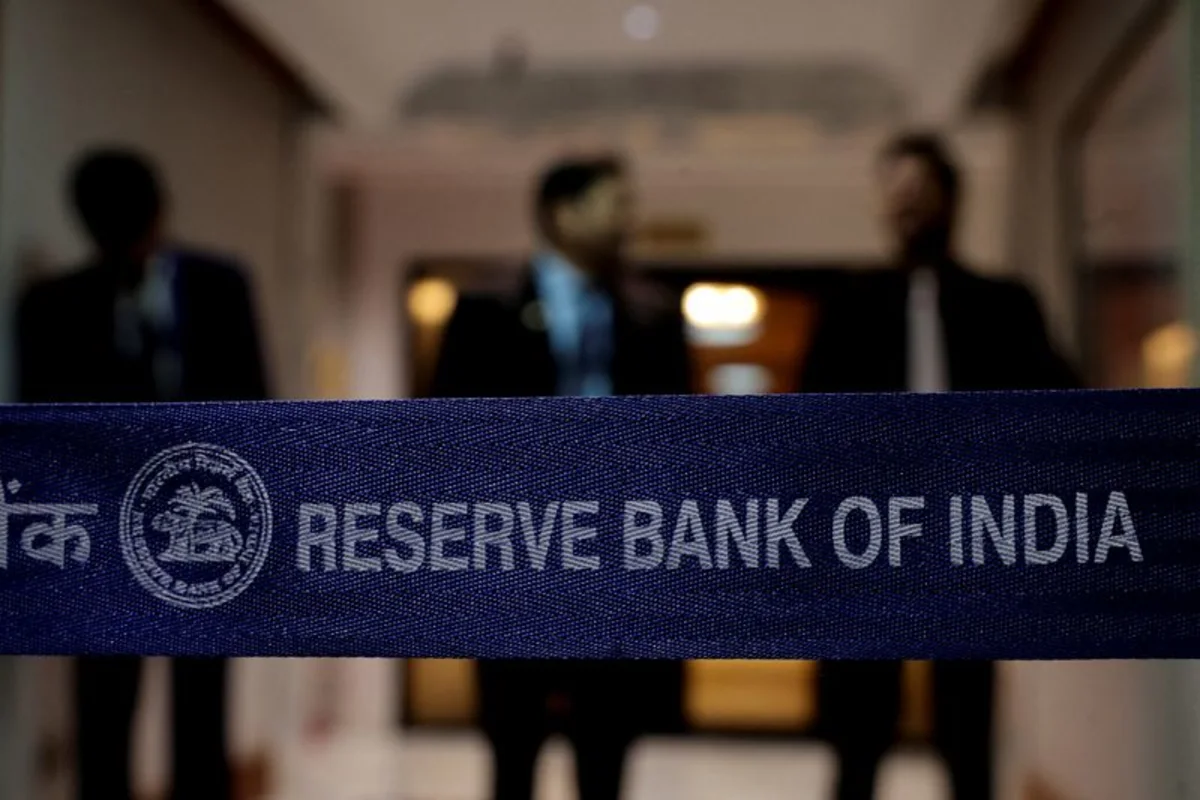
The Reserve Bank of India is executing September USD/INR sell-buy swaps to absorb excess rupee liquidity from commercial banks following record foreign capital inflows. Concurrently, central bank officials confirmed ongoing studies exploring the viability of gold tokenisation and digital financial assets to improve institutional trading and settlement efficiency.
MUMBAI — The Reserve Bank of India (RBI) is likely conducting sell-buy foreign exchange swaps in the USD/INR pair for the current month of September to drain surplus rupee liquidity from the domestic banking system, three treasury dealers said on Wednesday. Concurrently, a senior official at India's central bank stated that the monetary authority is actively exploring the viability of gold tokenisation alongside other real-world financial assets to modernize settlement architecture and broaden market participation. The dual developments highlight the central bank's twin focus: managing unprecedented near-term domestic liquidity pressures following historic dollar inflows while developing next-generation distributed ledger technology for institutional asset markets.
Central Bank Deploys Sell-Buy Swaps to Drain Surplus Cash
Foreign exchange dealers in Mumbai reported on Wednesday that the Reserve Bank of India stepped into the onshore currency market to execute USD/INR sell-buy swaps. In a sell-buy swap, the central bank sells US dollars in the spot market and simultaneously agrees to buy them back at a determined forward date.
The operation achieves an immediate contractionary effect on domestic money markets: selling spot foreign currency directly absorbs rupees from participating commercial banks. The central bank has faced massive liquidity accumulation across the banking system, with the net liquidity surplus reaching record levels exceeding ₹11 trillion following unprecedented foreign currency inflows under special non-resident deposit swap windows.
Money market desks noted that standard Variable Rate Reverse Repo (VRRR) auctions alone were experiencing uneven absorption due to upcoming corporate tax and GST outflows, prompting the central bank to utilize foreign exchange swaps as an alternative liquidity sterilization instrument.
Exploring Viability of Gold Tokenisation
Alongside market liquidity operations, a central bank official stated that the Reserve Bank of India is examining the feasibility of gold tokenisation among a wider basket of financial assets. The exploration builds on the regulator's ongoing trials under the wholesale Central Bank Digital Currency (CBDC) architecture and its conceptual Unified Markets Interface (UMI).
Gold tokenisation involves creating digital, blockchain-verified tokens that represent direct legal ownership of physical bullion stored in institutional vaults. For India—one of the globe's largest consumers of physical gold—tokenising the commodity provides critical structural advantages:
Monetising Idle Household Holdings: India holds an estimated 30,000 to 35,000 tonnes of idle gold across households and domestic trusts; digital tokenisation could bring latent physical wealth into productive financial circulation.
Fractional Ownership & Liquidity: Retail and institutional investors can trade precise, fractional digital units with real-time settlement without incurring high physical storage, making, or assaying costs.
Smart Contract Settlements: Integrating tokenised commodities with wholesale CBDC infrastructure facilitates Delivery-versus-Payment (DvP) transactions, lowering counterparty default risk across commercial banks.
Market Impact Across Investors, Traders, and Consumers
For domestic currency and debt markets, the central bank's sell-buy swaps provide immediate support to short-end interbank money market rates, steering the weighted average call rate closer to the benchmark policy repo rate. Corporate treasuries and importers benefit from the central bank's active presence, which tempers rupee volatility while sterilising foreign exchange buffers.
For retail consumers and gold investors, official institutional backing for gold tokenisation could establish a secure alternative to private digital gold platforms. Regulated tokenisation would ensure full reserve backing, audited bullion vaults, and uniform consumer protection under statutory central bank standards.
Official Sources
The market operations and policy exploration intersect multiple regulatory frameworks:
Official Statements
"According to traders, the Reserve Bank of India is likely conducting USD/INR sell-buy swaps maturing within September to temporarily drain surplus rupee liquidity resulting from heavy capital inflows."
"According to officials, the central bank is exploring the operational and regulatory viability of gold tokenisation and other financial assets under secure digital infrastructure to enhance market transparency, widen access, and streamline institutional settlement."
Why It Matters
The parallel developments demonstrate how modern central banking balances short-term market intervention with long-term technological modernization. While USD/INR swaps allow the RBI to sterilise banking liquidity without altering its underlying monetary policy stance, exploring tokenised gold tackles a longstanding economic challenge: financialising India's physical bullion to reduce import drag on the current account deficit.
Key Facts at a Glance
Monetary Operation: Current month September USD/INR sell-buy swaps executed by the RBI.
Primary Operational Goal: Draining persistent liquidity surplus in the domestic banking system.
Digital Asset Exploration: Feasibility study on gold tokenisation and financial asset digitization.
Technology Rails: Wholesale Central Bank Digital Currency (CBDC) and Unified Markets Interface (UMI).
Macro Context: System liquidity surplus hovering above ₹11 trillion following record foreign currency mobilisation.
Frequently Asked Questions (FAQs)
What is a USD/INR sell-buy swap?
A sell-buy swap is a transaction where the central bank sells US dollars for rupees in the spot market and simultaneously contracts to buy them back on a future date, absorbing domestic rupee cash from the banking system for that duration.
Why is the RBI absorbing banking liquidity now?
Surplus liquidity in the Indian banking system rose to record highs above ₹11 trillion following extensive foreign exchange inflows under special deposit facilities, pushing overnight interbank lending rates well below the policy repo rate.
What does gold tokenisation mean?
Gold tokenisation is the process of issuing blockchain-based digital tokens that represent fractional, verifiable ownership of physical gold held in audited custody vaults.
Will retail consumers be able to purchase tokenised gold directly from the RBI?
The RBI is currently exploring regulatory frameworks and institutional viability, particularly across wholesale financial markets and CBDC settlement rails, before considering any broader public access models.
Source: Market notifications and policy bulletins from the Reserve Bank of India, treasury execution desks via CCIL India, and macro publications from the Ministry of Finance.