RBI Governor Sanjay Malhotra announced strict monitoring to curb speculative currency trading while confirming no capital outflow restrictions are planned. To insulate the rupee from West Asia conflict shocks, the RBI kept the repo rate at 5.25% and removed key limits on foreign investments to attract robust dollar inflows.
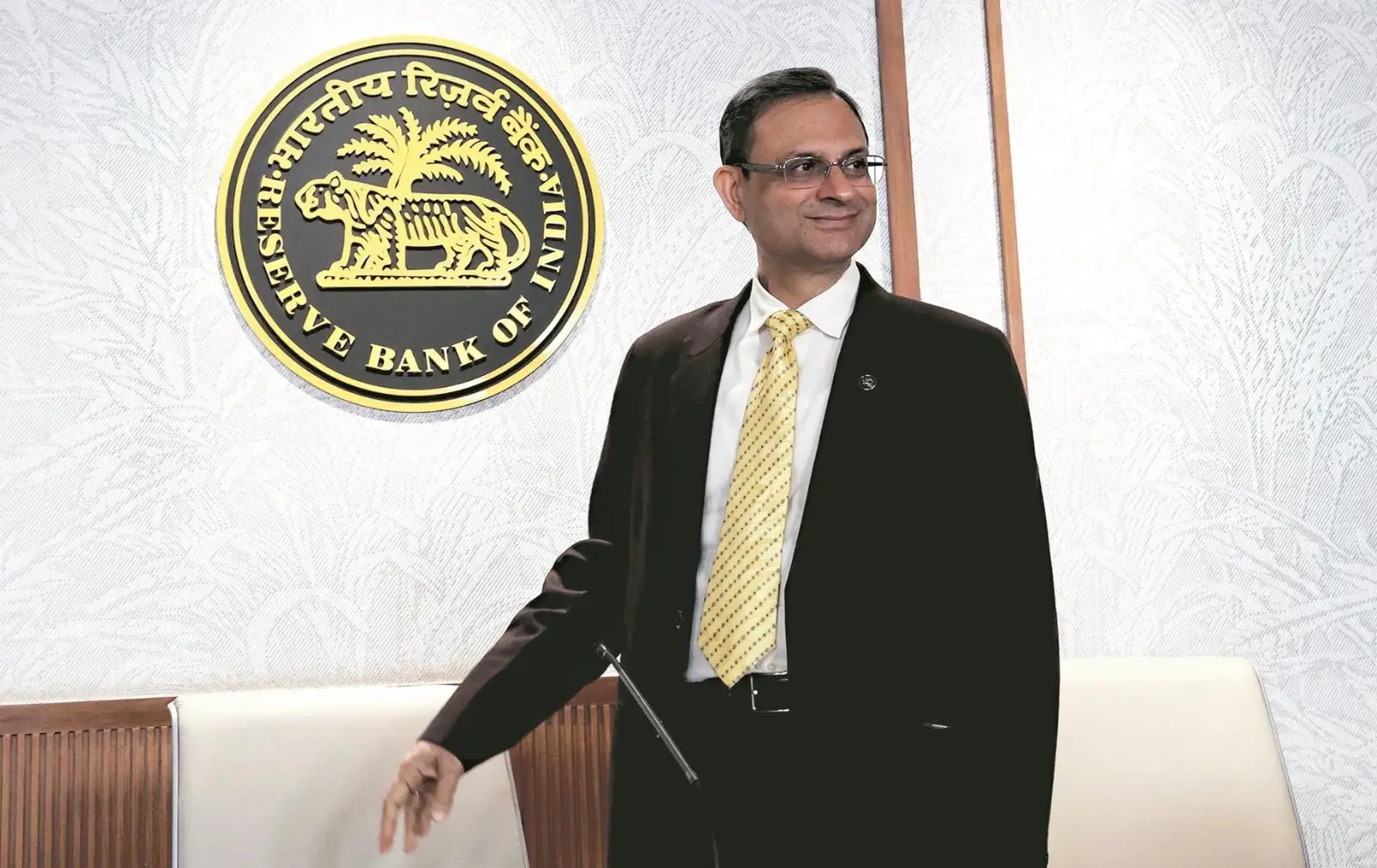
MUMBAI — Reserve Bank of India (RBI) Governor Sanjay Malhotra announced on Friday that the central bank will deploy decisive measures to curb speculative trading in the foreign exchange (FX) market if required. Speaking at the post-policy press conference following the Monetary Policy Committee (MPC) review on June 5, 2026, Malhotra reassured global markets that the RBI has no measures under consideration to restrict capital outflows. Instead, the central bank unveiled an array of liberalization measures to incentivize foreign capital inflows, helping protect the Indian rupee against mounting macroeconomic pressures triggered by the ongoing US-Iran conflict in West Asia.
RBI Targets FX Speculation Amid Rupee Volatility
The Indian rupee has faced intense depreciation pressure over the past year, falling more than 10% against the US dollar to historic lows, briefly touching 95.72 in early intraday trading before recovering to 95.24 post-announcement. Governor Malhotra emphasized that while the RBI does not target a specific exchange rate level, it will strictly guard against extreme volatility and artificial speculative loops that destabilize the domestic currency.
Concurrently, Malhotra pointed out that the central bank expects commercial banks to pass on some hedging costs to their customers. This structural adjustment is intended to encourage proper risk management among corporate borrowers rather than allowing unhedged exposures to aggregate risks across systemic financial channels.
Boosting Inflows: Liberalized Norms for Overseas Investors
To reinforce India's macroeconomic buffers, the RBI introduced multi-pronged capital liberalization steps to draw sustainable dollar liquidity into domestic debt and equity markets.
Government Securities Overhaul: Under the Fully Accessible Route (FAR), the RBI is expanding the universe of 'specified securities' by including all new issuances of 15-year, 30-year, and 40-year tenor Government Securities (G-Secs).
Regulatory Easing: Concentration, individual security, and short-term investment limits on Foreign Portfolio Investment (FPI) under the General Route are being completely removed.
Equity Market Expansion: The limits for equity market investments by Non-Resident Indians (NRIs) and Overseas Citizens of India (OCIs) without SEBI registration have been raised. This exact hassle-free trading facility has now been extended to all individual Persons Resident Outside India (PROIs).
Concessional Forex Swaps: The central bank will provide a concessional forex swap window until September 30, 2026, to incentivize External Commercial Borrowings (ECBs) by Public Sector Undertakings (PSUs). A identical swap facility covering full hedging costs will be open to Authorized Dealer (AD) banks to raise fresh 3-to-5-year Foreign Currency Non-Resident [FCNR(B)] deposits.
Official Sources Section
The directives, regulatory amendments, and policy projections detailed during this session were officially communicated through the Reserve Bank of India's statutory monetary policy statement and subsequent press briefings led by Governor Sanjay Malhotra in Mumbai.
Quote Section
"We shall put in place policies to meet the challenges while taking measures to further strengthen the macroeconomic fundamentals of the country," RBI Governor Sanjay Malhotra stated during the media briefing.
When questioned on domestic FX markets, Malhotra added: "The RBI will take measures to curb speculative trading in FX if required... There are no measures under consideration to restrict capital outflows."
Why It Matters
The combination of a neutral monetary stance and proactive capital market liberalization provides a twin safety net for the Indian economy. For corporate borrowers and importers, the stabilization of the rupee prevents import-led cost spikes, even as global crude oil remains highly volatile due to the West Asia impasse. For global investors and financial institutions, the removal of investment concentration limits opens massive entry windows into stable Indian sovereign debt.
| Macroeconomic Metric | Updated FY27 Projection | Previous Projection |
| Policy Repo Rate | 5.25% (Unchanged) | 5.25% |
| Real GDP Growth | 6.6% | 6.9% |
| CPI Inflation | 5.1% | 4.6% |
| Foreign Exchange Reserves | $682.3 Billion | Healthy Buffer |
Key Facts at a Glance
Speculation Crackdown: Governor Malhotra warned that market-intervening mechanisms will be activated to eliminate speculative FX trading if the rupee shows artificial volatility.
Outflows Untouched: The RBI categorically rejected rumors regarding capital controls, affirming that outbound investment channels remain fully liberalized.
Tenor Expansion: Foreign portfolio investors gain full access to long-term 15, 30, and 40-year sovereign bond issuances under loosened regulatory rules.
Growth and Inflation Adjusted: The MPC lowered FY27 economic growth forecasts to 6.6% while raising expected consumer inflation to 5.1% due to energy supply-chain shocks.
FAQ Section
Q1: Why is the RBI focusing on speculative trading in the FX market now?
A: The ongoing US-Iran conflict has escalated global energy costs and sparked foreign capital outflows, causing currency volatility. The RBI wants to ensure the rupee's movements are driven by real economic fundamentals, not speculative trading.
Q2: Will retail bank customers face higher costs due to hedging?
A: Governor Malhotra stated that banks are expected to pass on a portion of their hedging costs to corporate or institutional clients using forex derivative instruments, ensuring proper risk allocation across commercial sectors.
Q3: What are the new rules for NRI and foreign equity investments?
A: Investment caps for NRIs and OCIs trading on domestic stock exchanges without SEBI registration have been increased. This unified facility is now open to all individual Persons Resident Outside India (PROIs) to boost capital inflows.
Source: Reserve Bank of India Monetary Policy Statement, RBI Press Conference Transcript June 5, 2026.