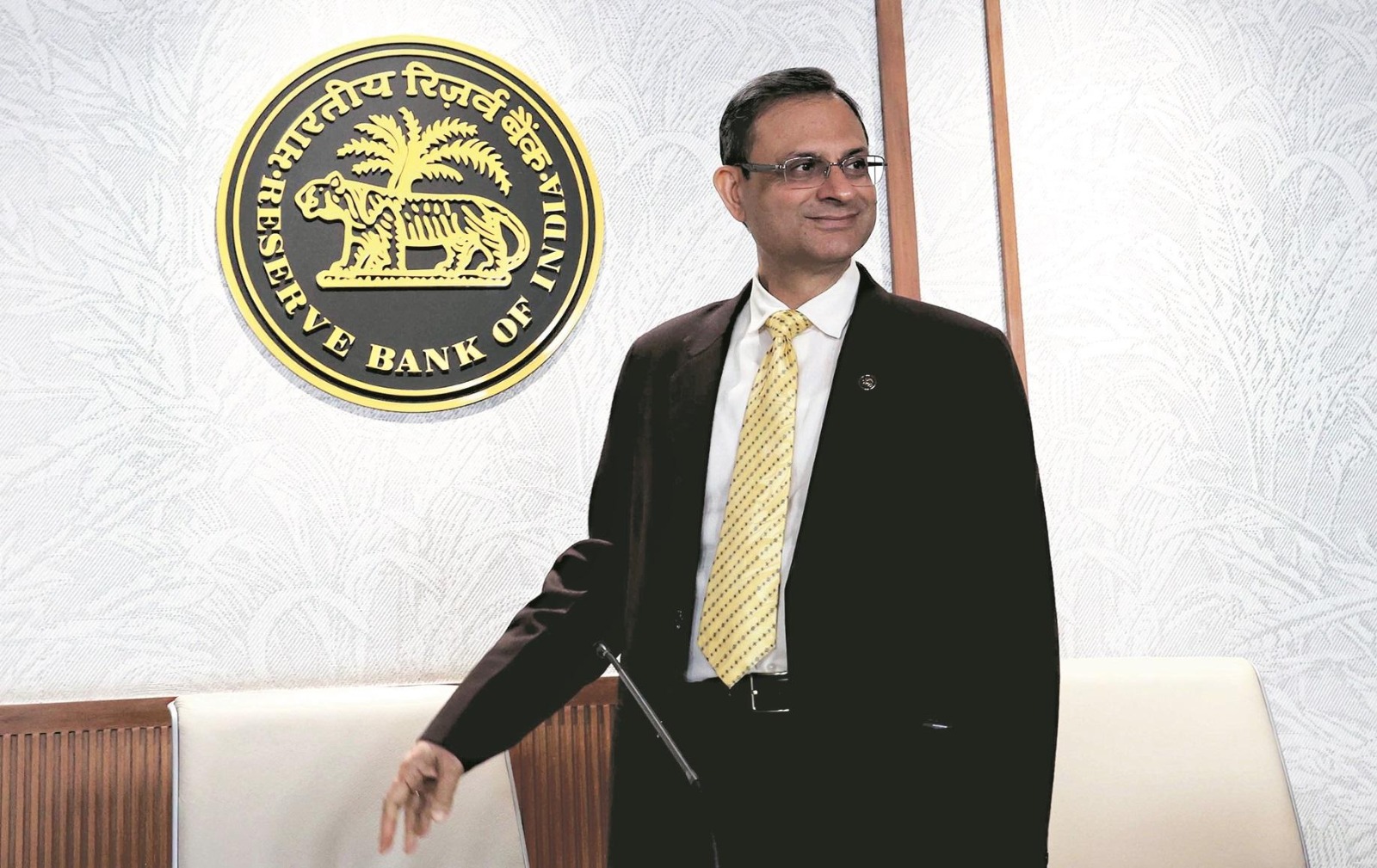
Reserve Bank of India (RBI) Governor Sanjay Malhotra confirmed on Friday that the central bank will not loosen foreign exchange exposure boundaries for domestic lenders, while simultaneously driving forward with stringent new regulations on bank financing for proprietary trading. Speaking at a banking confederation event in Mumbai, Governor Malhotra also revealed that the central bank is engaged in active, high-level discussions regarding institutional access to Anthropic's restricted cybersecurity artificial intelligence model, Claude Mythos, as part of an aggressive push to shield the nation's financial infrastructure from advanced digital threats.
The announcements underscore a firm regulatory stance aimed at mitigating systemic vulnerabilities across India’s banking sector. By refusing to discontinue the existing Net Foreign Exchange (FX) Position limits, the RBI is prioritizing currency stability and market insulation over institutional demands for greater trading flexibility. Furthermore, the central bank’s determination to implement rules blocking unsecured bank credit lines from funding speculative capital market activities signals a definitive tightening of credit risk frameworks.
No Relief for Banks on Net FX Position Limits
Addressing persistent inquiries from commercial banking representatives, Governor Malhotra clarified that the RBI has no plans to eliminate or expand the current caps governing banks' net overnight open foreign exchange positions. These regulatory limits are designed to prevent commercial banks from taking excessive speculative positions in foreign currencies, which can trigger severe balance sheet stress during periods of high global exchange rate volatility.
"There is absolutely no proposal under consideration to discontinue or dilute the Net FX Position limits for banks," Malhotra stated during his address. He emphasized that the limits remain a cornerstone of India’s macroprudential framework, ensuring that individual banking institutions maintain adequate capital cushions against sudden fluctuations in the rupee. Financial analysts note that maintaining these boundaries protects the domestic economy from external macroeconomic shocks and prevents destabilizing capital outflows.
Pushing Forward on Proprietary Trading Lending Curbs
In a move that will directly impact capital market intermediaries and proprietary trading firms, Governor Malhotra reiterated the central bank's unwavering intention to implement the proposed stricter rules on bank lending. Under the finalized framework, commercial banks will be explicitly prohibited from extending clean or unsecured credit facilities to stockbrokers and Capital Market Intermediaries (CMIs) for the purpose of proprietary trading or corporate investments.
According to guidelines originally outlined by the Reserve Bank of India, any banking facilities or guarantees issued to support the day-to-day operational requirements of trading entities must feature 100% collateral coverage. For proprietary trading guarantees specifically, banks must enforce at least 50% cash or cash-equivalent backing.
The enforcement of these rules is expected to compress overall trading volumes in high-leverage derivatives markets, such as Futures and Options (F&O), while lowering systemic leverage.
Active Discussions Ongoing for Claude Mythos AI Access
On the technological front, Governor Malhotra confirmed that the central bank is deeply involved in assessing the domestic deployment of Claude Mythos. Developed by US-based AI developer Anthropic, Claude Mythos is a highly restricted, frontier autonomous artificial intelligence model optimized for advanced multi-step cybersecurity testing and software engineering.
The model became a matter of global regulatory interest after demonstrating an unprecedented ability to autonomously map out and exploit dormant, decades-old vulnerabilities in legacy software frameworks. Given that a significant portion of India's core banking infrastructure utilizes layered legacy systems, the Ministry of Finance previously convened a high-level security meeting to assess its dual-use risks. Malhotra confirmed that the RBI is managing ongoing discussions regarding controlled access to the model via Project Glasswing—a defensive global consortium—to proactively patch deep-seated vulnerabilities across Indian financial networks before external threat actors can weaponize similar technologies.
Official Sources Section
The directives and strategic updates outlined by Governor Malhotra reflect official policy stances formalized in the regulatory pipelines of the Reserve Bank of India and coordinated alongside data directives from the Ministry of Finance. The incoming rules regarding stockbroker financing match the macroprudential capital market risk amendments slated for systemic execution across all scheduled commercial banks.
Quote Section
"According to officials at the central bank, the primary objective behind resisting structural changes to FX position caps is to shield domestic balance sheets from unpredictable global currency swings. Organizers and policy framework drafts state that credit lines must strictly serve production and infrastructure, rather than funding speculative proprietary market maneuvers."
Why It Matters
For everyday consumers and retail bank depositors, these strict regulatory boundaries ensure that commercial banks are not exposed to catastrophic losses from speculative market operations or currency betting. For institutional investors, stockbrokers, and proprietary trading desks, the rigid collateral demands mean higher funding costs, a need to source additional capital independent of bank lines, and a near-term contraction in trading liquidity. On a broader scale, the onboarding of offensive security tools like Claude Mythos highlights an aggressive, forward-looking shift to protect consumer financial records and wealth repositories from sophisticated digital incursions.
Key Facts at a Glance
FX Boundaries Kept: The RBI explicitly denied any upcoming relief or discontinuation regarding Net Foreign Exchange position caps for commercial banking units.
Collateral Rules Enforced: Bank lines to stockbrokers for proprietary trading now demand 100% collateral backing, with a minimum of 50% required strictly in cash or government securities.
Advanced Cyber Defense: Active regulatory discussions are underway to introduce Anthropic's gated "Claude Mythos" AI model into defensive banking workflows to hunt for hidden code flaws.
Market Impact: The lending curbs are anticipated to lower speculative volumes in Indian derivatives (F&O) markets by addressing excess institutional leverage.
FAQ Section
What is a Net FX Position limit, and why is it kept?
The Net Foreign Exchange Position limit restricts the volume of open currency bets a bank can hold overnight. The RBI keeps this limit to ensure banks do not experience debilitating losses if a foreign currency moves violently against their positions.
How do the new proprietary trading lending rules impact investors?
While long-term equity investors will experience minimal direct impact, proprietary trading firms and high-volume derivatives traders will face higher operational costs due to the strict 50% cash collateral mandate on bank-issued guarantees.
What is Claude Mythos and why is the RBI discussing it?
Claude Mythos is a highly specialized, unreleased AI model created by Anthropic that can autonomously scan computer code to find hidden software bugs. The RBI is exploring access to use its defensive capabilities to locate and fix security vulnerabilities within India's complex banking networks.
When will the proprietary trading lending restrictions take full effect?
The structural framework and tightened compliance standards are rolling out progressively across scheduled commercial banks under the RBI's updated Capital Market Exposure directives.
Source: Reserve Bank of India Official Statements, Ministry of Finance Security Briefings, CareEdge Regulatory Capital Market Impact Reports.