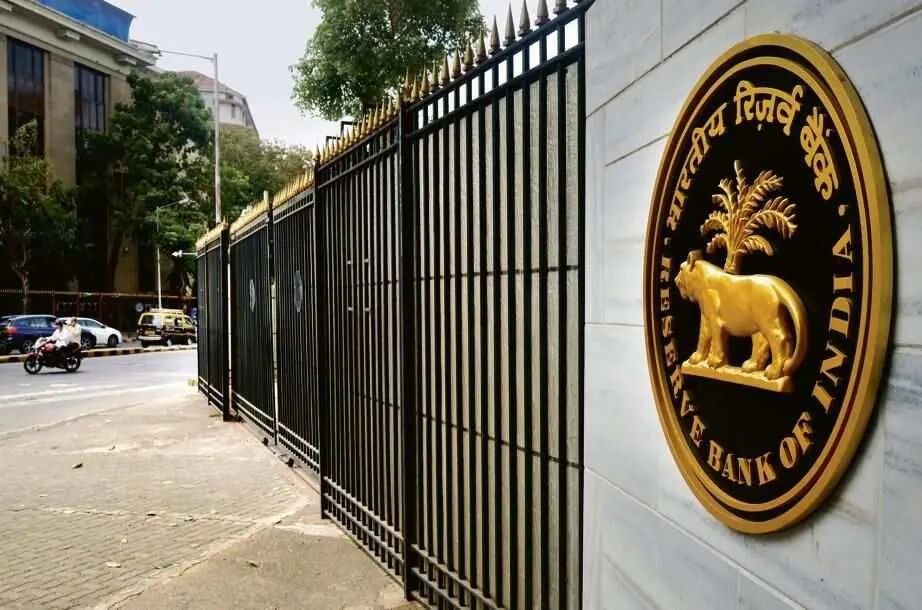
The Reserve Bank of India (RBI) reported a money supply (M3) growth of 11.9% as of June 15, 2026, indicating stable banking system liquidity. Simultaneously, the central bank introduced a Draft Master Direction to standardize and modernize secondary market transactions in Government Securities, reinforcing its commitment to financial market transparency.
The Reserve Bank of India (RBI) has reported that India’s money supply growth (M3) stood at 11.9% as of June 15, 2026, reflecting steady liquidity conditions across the banking system. Simultaneously, the central bank has released a new "Draft Master Direction on Secondary Market Transactions in Government Securities (G-Secs) Directions, 2026," as part of its ongoing efforts to modernize and harmonize India’s financial market infrastructure.
These developments come at a time when the central bank is balancing its commitment to sustaining economic growth with the necessity of maintaining price stability. The 11.9% M3 growth figure underscores the availability of funds for credit expansion, while the draft directions signal a shift toward a more transparent, technology-enabled framework for debt market operations.
Sustained Liquidity Amid Monetary Caution
The 11.9% expansion in M3 money supply provides a clear indicator of the liquidity environment as of mid-June 2026. This metric, which encompasses currency with the public, demand deposits, and time deposits, remains a key variable for the RBI in assessing systemic health.
According to the Reserve Bank of India (RBI), the current liquidity levels are sufficient to support private consumption and corporate investment, even as the central bank maintains a neutral policy stance to anchor inflation expectations. Recent Monetary Policy Committee (MPC) reviews have highlighted that while growth in India remains resilient, the central bank is closely monitoring global macroeconomic pressures, including input price volatility and geopolitical uncertainties.
Overhauling Secondary Market Transactions
In a significant regulatory update, the RBI has released the Draft Master Direction – Reserve Bank of India (Secondary Market Transactions in Government Securities) Directions, 2026. This proposal seeks to streamline the rules governing the trading, reporting, and settlement of Government Securities (G-Secs), the bedrock of India's sovereign debt market.
The draft directions aim to:
Enhance Transparency: Standardize execution and reporting protocols for all market participants.
Improve Efficiency: Simplify settlement procedures for various categories of investors.
Harmonize Regulations: Consolidate fragmented circulars into a single, comprehensive Master Direction to ensure better compliance and operational clarity.
Why It Matters
For investors, banks, and primary dealers, these two updates serve as vital guideposts for the fiscal year 2027. The steady 11.9% money supply growth suggests that banks are well-positioned to meet credit demand from sectors ranging from manufacturing to services. Meanwhile, the new G-Sec Master Directions are expected to lower the cost of compliance and increase liquidity in the debt market. By providing a clear and unified rulebook for Secondary Market Transactions, the RBI is working to deepen India’s financial markets, making them more attractive to both domestic and foreign institutional investors.
Key Facts at a Glance
M3 Money Supply Growth: 11.9% year-on-year, recorded as of June 15, 2026.
Regulatory Initiative: Release of the Draft Master Direction on Secondary Market Transactions in Government Securities Directions, 2026.
Strategic Objective: Modernizing market infrastructure to ensure parity with global standards and enhance transparency.
Policy Context: The central bank maintains a neutral monetary policy to navigate current global and domestic inflationary pressures.
FAQ
What does 11.9% M3 growth signal for the economy?
It indicates that broad money supply is expanding at a stable rate, ensuring that the banking system has the liquidity necessary to support ongoing economic activity and credit off-take.
Why is the RBI issuing new Master Directions for G-Secs?
The RBI is consolidating scattered instructions into a single, coherent framework to reduce ambiguity, modernize trading practices, and improve the operational efficiency of India's sovereign debt market.
How do these changes affect the average investor?
For retail investors in G-Secs or debt mutual funds, these changes lead to a more robust and transparent trading environment, which can result in better price discovery and more reliable market data.
Source: Reserve Bank of India (RBI), RBI Master Directions