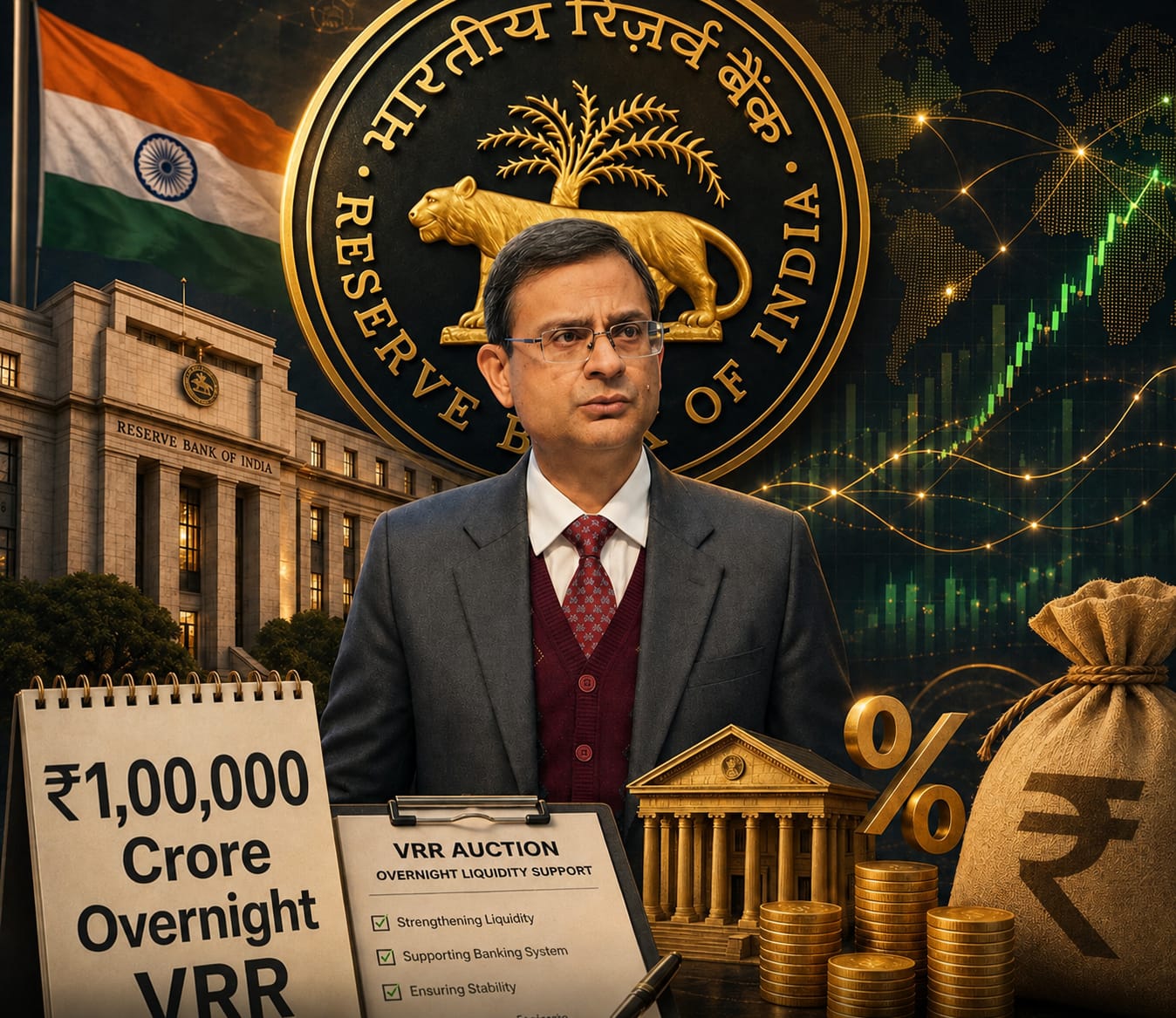
The Reserve Bank of India announced an overnight Variable Rate Reverse Repo auction for ₹1,00,000 crore to be held on August 13, 2026. The fine-tuning liquidity management operation aims to absorb surplus banking system cash and maintain short-term interest rates within the central bank's designated monetary policy corridor.
MUMBAI — The Reserve Bank of India announced on August 12, 2026, that it will conduct an overnight Variable Rate Reverse Repo auction under the Liquidity Adjustment Facility on Thursday, August 13, 2026. The central bank aims to absorb a notified amount of ₹1,00,000 crore (₹1 trillion) from the banking system following a review of current and evolving liquidity conditions. The operational intervention comes as surplus cash in India's banking sector has climbed significantly, putting downward pressure on overnight interbank lending rates.
Detailed Auction Parameters and Operational Timings
According to official Press Release 2026-2027/879 released by the central bank's Department of Communication in Mumbai, the overnight Variable Rate Reverse Repo auction will feature a one-day tenor.
Notified Amount: ₹1,00,000 crore (₹1.00 trillion)
Tenor: 1 Day (Overnight)
Bidding Window Timing: 09:30 AM to 10:00 AM IST on August 13, 2026
Date of Reversal: August 14, 2026 (Friday)
Operational Guidelines: Governed by the Reserve Bank's baseline framework issued in Press Release 2019-2020/1947 dated February 13, 2020
Eligible primary dealers and commercial banks can submit bids through the central bank’s electronic bidding platform during the designated half-hour window. Bids accepted under the overnight Variable Rate Reverse Repo auction will be reversed on the morning of August 14, returning funds to the banking system ahead of the weekend.
Liquidity Dynamics in the Banking System
The central bank's decision to announce a fresh Variable Rate Reverse Repo auction follows persistent liquidity accumulation across Indian money markets. Recent systemic surplus liquidity crossed ₹3.49 lakh crore, driven by robust foreign portfolio inflows, government expenditure releases, and foreign currency movements.
When excess cash builds up in the banking system, money market rates—such as the Weighted Average Call Rate and Tri-party Repo (TREPS) rate—risk dropping below the central bank's policy corridor floor set by the Standing Deposit Facility rate of 5.00%. By holding fine-tuning liquidity absorption operations, the authority ensures that overnight interest rates remain anchored close to the primary policy repo rate of 5.25%.
This latest overnight operation forms part of a continuous sequence of fine-tuning measures. Earlier in the week, the central bank conducted a combination of multi-day and overnight operations, including a 3-day reverse repo auction for ₹1.25 lakh crore and an overnight auction for ₹1 lakh crore.
Market Impact Across Key Stakeholders
The liquidity withdrawal operation carries direct operational and strategic implications for financial institutions, corporate treasuries, and broader capital markets:
Commercial Banks: Banks with surplus funds gain a risk-free overnight window to park unutilized cash with the central bank at competitive variable rates rather than leaving capital unremunerated.
Money Markets: By absorbing excess liquidity, the auction prevents short-term money market yields on Treasury bills, Commercial Paper, and Certificates of Deposit from falling unrealistically low.
Investors & Bond Yields: Bond market participants view liquidity management fine-tuning as a signal that monetary policy transmission remains tight, keeping short-dated government security yields stable.
Borrowers & Consumers: Individual retail borrowers and business loan seekers will see negligible immediate change in retail lending rates, as the operation merely targets transient daily cash surpluses rather than structural credit liquidity.
Official Sources Section
The details for this story were communicated through official announcements published by the Reserve Bank of India. Primary documentation includes Press Release 2026-2027/879 issued on August 12, 2026, by Ajit Prasad, Deputy General Manager (Communications) at the central office in Fort, Mumbai, alongside operational framework directives from Press Release 2019-2020/1947.
Quote Section
"On a review of current and evolving liquidity conditions, it has been decided to conduct a Variable Rate Reverse Repo (VRRR) auction on Thursday, August 13, 2026," stated Ajit Prasad, Deputy General Manager of Communications at the Reserve Bank of India.
Why It Matters
Fine-tuning tools like the overnight Variable Rate Reverse Repo auction allow central bankers to maintain strict operational control over short-term interest rates without altering key policy settings. Keeping interbank borrowing rates aligned with the policy corridor prevents financial distortions, curbs unanchored speculative lending, and reinforces price stability across the wider Indian economy.
Key Facts at a Glance
Auction Date: Thursday, August 13, 2026
Notified Size: ₹1,00,000 crore (₹1.00 trillion)
Tenor & Reversal: 1-day overnight tenure with reversal on Friday, August 14, 2026
Window Timing: 09:30 AM to 10:00 AM IST
Regulatory Authority: Reserve Bank of India (Liquidity Adjustment Facility)
Frequently Asked Questions (FAQ)
What is an overnight Variable Rate Reverse Repo auction?
An overnight Variable Rate Reverse Repo auction is a monetary liquidity management tool where the central bank borrows funds overnight from commercial banks at market-determined variable interest rates to absorb excess liquidity from the financial system.
When will the RBI conduct the ₹1 trillion auction?
The auction takes place on Thursday, August 13, 2026, between 09:30 AM and 10:00 AM IST, with reversal set for Friday, August 14, 2026.
Why is the RBI absorbing liquidity from banks?
The central bank is absorbing surplus cash to prevent short-term interbank lending rates from falling too far below its target monetary policy corridor, thereby maintaining financial stability.
How does this VRRR auction affect ordinary bank depositors?
It has no direct impact on savings accounts or deposit interest rates for retail consumers; it is a routine interbank liquidity management exercise conducted among institutional market participants.
Source: Reserve Bank of India