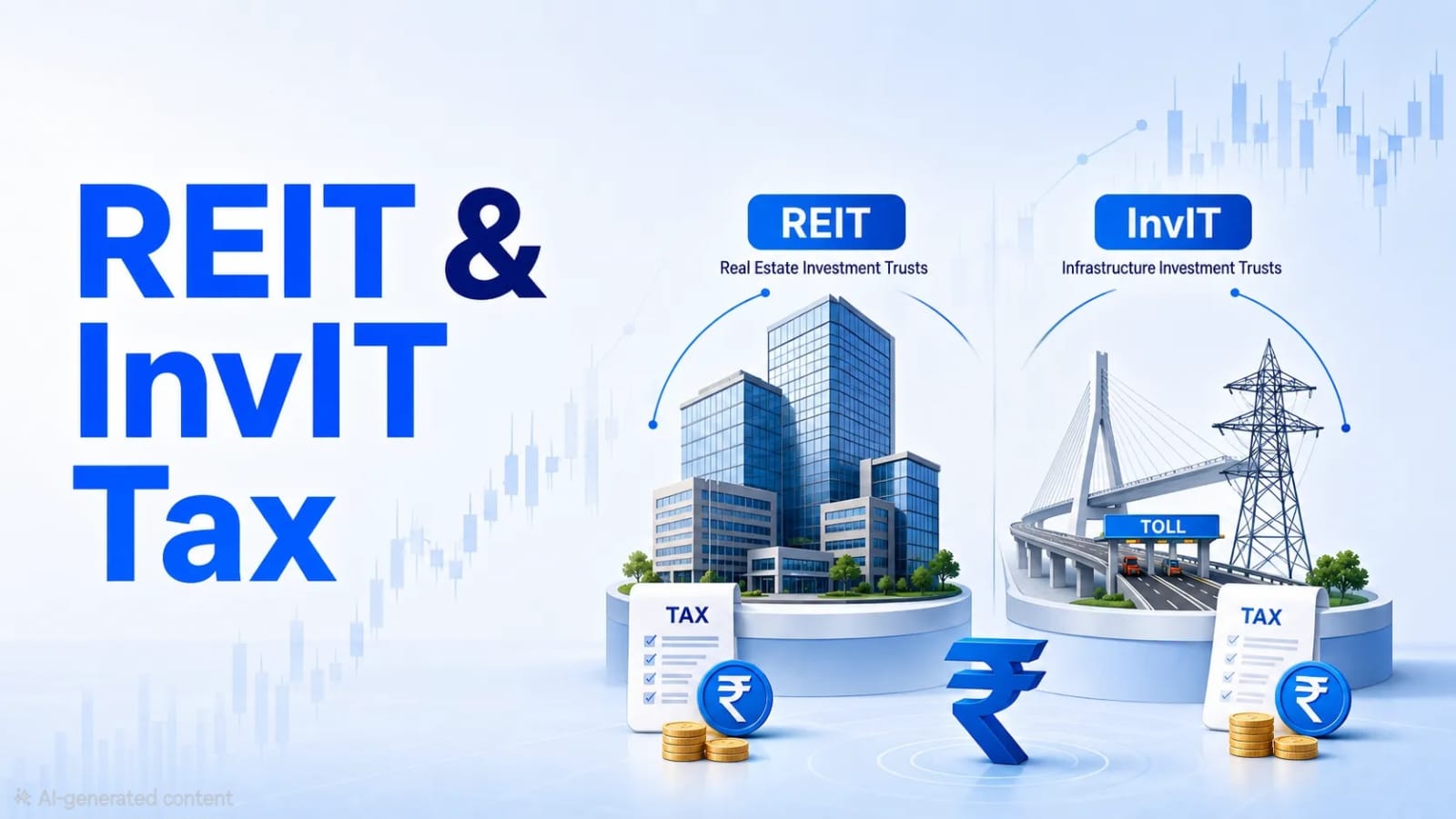
The Lok Sabha passed the Taxation and Other Laws (Amendment) Bill, 2026, restoring dividend tax exemptions for REIT and InvIT investors across all SPV tax regimes. However, total payouts are not entirely tax-free; interest, rental, and debt repayment components remain subject to standard income tax slab rates.
NEW DELHI — The Lok Sabha passed the Taxation and Other Laws (Amendment) Bill, 2026, on August 6, 2026, introducing significant modifications to the tax framework governing Real Estate Investment Trusts (REITs) and Infrastructure Investment Trusts (InvITs). The legislative amendment resolves a long-standing tax anomaly by extending tax exemptions to dividend distributions made to unitholders, regardless of whether the underlying Special Purpose Vehicle (SPV) opts for the concessional corporate tax regime. However, financial analysts and tax experts emphasize that the amendment does not render all REIT and InvIT payouts completely tax-free, as non-dividend distribution components remain subject to existing tax liabilities.
The policy shift is particularly critical for retail and institutional investors who rely on business trusts for passive income. While the new legislation closes a tax gap that previously penalized investors based on their SPV's chosen tax regime, distributions from REITs and InvITs are multi-component payouts that carry varying tax liabilities.
Dividend Exemption Delinked from SPV Corporate Tax Regimes
Under the prior framework, dividend income distributed by a business trust was exempt in the hands of unitholders only if the underlying SPV was taxed under the old corporate tax regime. If the SPV exercised the option to move to the concessional corporate tax regime under Section 200 of the Income-tax Act, the dividend payout lost its exempt status, forcing individual unitholders to pay tax at their applicable income tax slab rates.
The Taxation and Other Laws (Amendment) Bill, 2026, formally omits the restricting clause to ensure uniformity across business trust distributions. Under the amended law, dividend income received by investors from REITs and InvITs is fully exempt from tax regardless of the SPV’s election.
To maintain overall tax neutrality for the exchequer, the government balanced the investor-level exemption by proposing an increase in the surcharge levied on SPVs opting for the concessional regime. The surcharge for these entities will rise from 10 percent to 25 percent, increasing the effective corporate tax rate for such SPVs from 25.17 percent to approximately 28.60 percent.
Why Total Distributions Remain Partially Taxable
Despite the restoration of the dividend exemption, investment advisors caution that unitholders must carefully review the breakdown of their quarterly payout statements. Business trust distributions in India typically comprise four distinct financial categories, each evaluated independently for tax purposes:
Dividend Income: Fully exempt in the hands of the unitholder under the new amendment, eliminating dividend tax liability regardless of the SPV's regime choice.
Interest Income: Remains fully taxable in the hands of the investor at their marginal slab rate. Tax Deducted at Source (TDS) at 10 percent continues to apply for resident unitholders.
Rental Income: Fully taxable at the individual's applicable tax slab rates when distributed directly by real estate trusts.
Repayment of Debt / Amortization: Governed by specific provisions under Section 56(2)(xii) of the Income-tax Act, where distributions exceeding the issue price of units are treated as taxable income under "other sources".
For instance, if an investor receives a total distribution of ₹1,00,000 consisting of ₹40,000 in dividends and ₹60,000 in interest, only the ₹40,000 dividend portion qualifies for the tax exemption. The remaining ₹60,000 interest portion must be declared as taxable income in the investor's Income Tax Return (ITR).
Official Sources Section
According to official releases and legislative documents issued during the parliamentary session:
Ministry of Finance
: Statement of Objects and Reasons accompanying the Taxation and Other Laws (Amendment) Bill, 2026.
Parliament of India (Lok Sabha)
: Legislative proceedings and voting records for the passage of tax law amendments on August 6, 2026.
National Stock Exchange of India
: Circulars regarding distribution breakdowns and TDS compliance guidelines for listed REITs and InvITs.
Quote Section
According to officials from the Ministry of Finance:
"The proposed amendments in the taxation framework for business trusts seek to remove structural anomalies that created unintended tax burdens on retail investors. By standardizing the tax exemption on dividends, the government aims to establish a transparent, predictable investment climate while maintaining revenue neutrality through balanced corporate surcharge structures."
Industry organizers and asset managers stated that while the legislative update provides welcomed clarity, investors must maintain rigorous reporting practices based on official annual distribution statements provided by trust managers.
Why It Matters
The clarification of REIT and InvIT tax rules holds direct operational implications for market participants:
High-Net-Worth Individuals (HNIs): Investors in the 30 percent tax bracket stand to retain higher net income from dividend payouts, significantly improving post-tax yields relative to alternative fixed-income instruments.
Compliance Accuracy: Reporting entire REIT/InvIT distributions as tax-exempt on ITR forms leads to non-compliance notices due to unmatched interest income data reported via Annual Information Statements (AIS).
Capital Allocation: The removal of regime-linked dividend tax friction allows business trust managers to select SPV tax structures based purely on commercial asset management needs.
Key Facts at a Glance
Legislative Action: Lok Sabha passed the Taxation and Other Laws (Amendment) Bill, 2026, on August 6, 2026.
Dividend Exemption: Dividend distributions from REITs and InvITs are now tax-free for unitholders across all SPV tax regimes.
Taxable Components: Interest income, rental distributions, and debt repayments exceeding unit issue costs remain subject to taxation at slab rates.
SPV Trade-Off: Surcharge on SPVs choosing the concessional corporate tax regime increases from 10% to 25%, raising the effective SPV tax rate to 28.60%.
Frequently Asked Questions (FAQ)
Q1: Is the entire distribution from my REIT or InvIT now completely tax-free?
No. Only the dividend component of the payout is tax-free. Components classified as interest income, rental income, or capital returns above specified thresholds remain taxable under standard income tax slab rates.
Q2: How do I know which portion of my distribution is dividend and which is interest?
REITs and InvITs publish a quarterly payout breakup notice and issue an annual Form 16A or distribution summary to unitholders. This statement explicitly lists the exact breakdown between dividend, interest, rental, and debt repayment components.
Q3: What happens to Tax Deducted at Source (TDS) on REIT payouts?
Business trusts will continue to deduct TDS at 10 percent on taxable components, such as interest income distributed to resident unitholders. No TDS applies to the exempt dividend component under the updated rules.
Source: Ministry of Finance | Parliament of India | National Stock Exchange of India